
A few years ago, a nursing student preparing for her nurse practitioner certification felt confused while choosing between two options: AANP and ANCC.
Her mentor explained that both organizations certify nurse practitioners, but they follow different systems and goals. This small conversation highlights a common question in nursing education: what is the difference between AANP and ANCC?
Understanding the difference between AANP and ANCC is important for nurses who want to become certified nurse practitioners. While both certifications are respected in the healthcare field, they differ in exam structure, certification focus, and professional benefits.
Many nursing students often research the difference between AANP and ANCC before selecting which exam to take.For learners and professionals alike, knowing the difference between AANP and ANCC helps them choose the certification that best fits their career goals and workplace requirements.
Pronunciation
| Term | US Pronunciation | UK Pronunciation |
| AANP | /ˌeɪ eɪ ɛn ˈpiː/ | /ˌeɪ eɪ ɛn ˈpiː/ |
| ANCC | /ˌeɪ ɛn ˌsiː ˈsiː/ | /ˌeɪ ɛn ˌsiː ˈsiː/ |
Before diving deeper into the difference between AANP and ANCC, let’s explore the key distinctions that set these two certifications apart.
Key Difference Between the Two
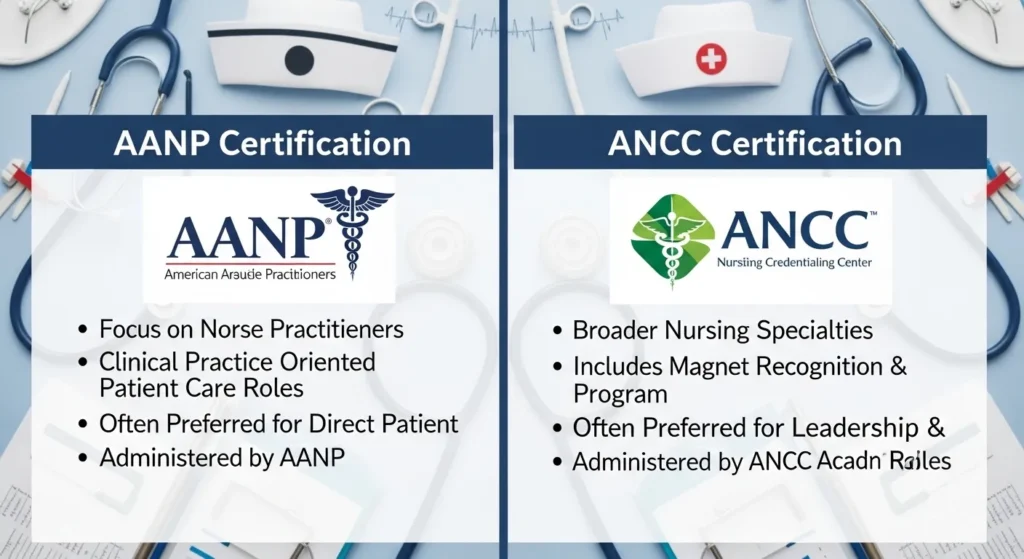
The main difference between AANP and ANCC lies in their certification approach.
- AANP focuses mainly on clinical practice and patient care.
- ANCC includes broader nursing topics such as research, leadership, ethics, and policy.
Why Their Difference Is Important for Learners and Experts
Understanding the difference between AANP and ANCC helps nursing students make informed career decisions.
Choosing the right certification affects job opportunities, specialization, and professional growth.
For healthcare institutions, knowing the difference between AANP and ANCC helps them recruit professionals with the right expertise.
In society, nurse practitioners certified by either organization play a crucial role in improving patient care, supporting doctors, and strengthening healthcare systems.
Difference Between AANP and ANCC
1. Certifying Organization
AANP certification is provided by the American Association of Nurse Practitioners.
Example 1: A family nurse practitioner may choose AANP for clinical practice certification.
Example 2: Many private clinics prefer AANP-certified practitioners.
ANCC certification is offered by the American Nurses Credentialing Center.
Example 1: Hospitals often recognize ANCC certifications.
Example 2: Nurses aiming for leadership roles may choose ANCC.
2. Exam Focus
AANP exams focus primarily on clinical knowledge and patient care.
Example 1: Questions about diagnosis and treatment plans.
Example 2: Clinical patient scenarios.
ANCC exams include clinical knowledge plus theory and leadership topics.
Example 1: Healthcare policy questions.
Example 2: Ethics and research questions.
3. Certification Title
AANP grants titles like FNP-C (Family Nurse Practitioner-Certified).
Example 1: A nurse practitioner may sign credentials as FNP-C.
Example 2: Clinics recognize this title for practice roles.
ANCC grants titles like FNP-BC (Family Nurse Practitioner-Board Certified).
Example 1: Hospitals may prefer board-certified nurses.
Example 2: Academic institutions value BC credentials.
4. Question Style
AANP questions are mostly clinical and straightforward.
Example 1: Patient diagnosis questions.
Example 2: Treatment selection scenarios.
ANCC questions are more diverse and theoretical.
Example 1: Questions about nursing leadership.
Example 2: Ethical decision-making cases.
5. Exam Length
AANP exams usually contain fewer non-clinical questions.
Example 1: Clinical case analysis.
Example 2: Medication treatment questions.
ANCC exams may contain additional policy and professional topics.
Example 1: Healthcare law scenarios.
Example 2: Nursing research interpretation.
6. Continuing Education Requirements
AANP requires clinical practice hours for renewal.
Example 1: Patient care experience.
Example 2: Clinical workshops.
ANCC allows broader professional activities.
Example 1: Research publication.
Example 2: Teaching nursing students.
7. Recognition
AANP is widely recognized for clinical practice.
Example 1: Private clinics.
Example 2: Community healthcare centers.
ANCC is recognized in hospitals and academic settings.
Example 1: Teaching hospitals.
Example 2: Nursing education programs.
8. Cost and Renewal Process
AANP renewal often focuses on clinical experience.
Example 1: Working hours with patients.
Example 2: Clinical seminars.
ANCC renewal includes professional contributions.
Example 1: Publishing research.
Example 2: Attending conferences.
9. Professional Development
AANP encourages strong clinical expertise.
Example 1: Improving diagnostic skills.
Example 2: Enhancing patient care.
ANCC promotes leadership and broader professional skills.
Example 1: Policy development.
Example 2: Healthcare management.
10. Career Orientation
AANP suits practitioners focused on direct patient care.
Example 1: Family practice clinics.
Example 2: Urgent care centers.
ANCC suits nurses interested in leadership or academic roles.
Example 1: Hospital administration.
Example 2: Nursing education.
Nature and Behaviour of Both
AANP emphasizes practical clinical skills and patient treatment. It reflects a hands-on nursing approach focused on diagnosis and care.
ANCC reflects a broader professional framework that includes research, ethics, and leadership along with clinical knowledge.
Why People Are Confused About Their Use
Many people confuse AANP and ANCC because both certify nurse practitioners and both are widely accepted. Their exams also cover similar clinical subjects, making them appear almost identical.
Table: Differences and Similarities
| Feature | AANP | ANCC |
| Organization | American Association of Nurse Practitioners | American Nurses Credentialing Center |
| Focus | Clinical practice | Clinical + leadership |
| Credential | FNP-C | FNP-BC |
| Exam Style | Clinical questions | Mixed topics |
| Recognition | Clinics | Hospitals & academia |
| Renewal | Clinical hours | Broader professional activities |
Which Is Better in What Situation?
AANP is often better for nurses who want to work directly with patients in clinical environments.
If someone plans to work in private clinics, community healthcare centers, or urgent care facilities, the AANP certification may align well with their career path.
ANCC, on the other hand, may be better for nurses interested in leadership roles, academic positions, or hospital-based careers.
Since ANCC includes broader professional topics like research and healthcare policy, it can open doors to administrative or educational roles.
Metaphors and Similes
- “Choosing between AANP and ANCC is like choosing between two paths in the same forest.”
- “AANP is as practical as a doctor’s stethoscope, while ANCC is as broad as a medical handbook.”
Connotative Meanings
AANP
- Positive: Practical, patient-focused
Example: “Her AANP certification reflects strong clinical expertise.” - Neutral: Professional nursing credential
ANCC
- Positive: Leadership-oriented, comprehensive
Example: “The ANCC certification shows advanced professional knowledge.” - Neutral: Broad nursing certification
Idioms or Proverbs Related to the Context
- “Knowledge is power.”
Example: Knowing the difference between AANP and ANCC helps nurses choose the best career path. - “The right tool for the right job.”
Example: AANP or ANCC depends on the nurse’s career goals.
Works in Literature
(Direct literary works on these organizations are rare, but they appear in professional nursing texts.)
- Nurse Practitioner Certification Review Medical Education Guide Various Authors 2019
- Advanced Practice Nursing Healthcare Textbook Lucille Joel 2018
Movies Related to Nursing
- “Patch Adams” 1998 USA
- “The English Patient” 1996 USA/UK
Frequently Asked Questions
1. What does AANP stand for?
AANP stands for American Association of Nurse Practitioners.
2. What does ANCC stand for?
ANCC stands for American Nurses Credentialing Center.
3. Is AANP easier than ANCC?
Some students feel AANP is more clinically focused, while ANCC includes broader topics.
4. Are both certifications accepted in the US?
Yes, both certifications are widely accepted by employers.
5. Can nurses choose either certification?
Yes, many nurse practitioners choose the one that best fits their career goals.
How Both Are Useful for the Surroundings
Both AANP and ANCC certified nurse practitioners improve healthcare systems by providing patient care, supporting doctors, and educating communities about health.
Final Words for Both
AANP and ANCC are both respected certifications. The choice depends mainly on career goals, workplace requirements, and personal interests.
Conclusion
Understanding the difference between AANP and ANCC helps nursing students and professionals make better career decisions.
Although both certifications allow nurses to practice as nurse practitioners, their focus and structure vary slightly. AANP emphasizes clinical patient care, while ANCC includes broader professional and leadership topics.
Both certifications are valuable and recognized across the healthcare system. Ultimately, the best choice depends on the nurse’s career goals, preferred workplace, and professional ambitions. By learning the difference between AANP and ANCC, aspiring nurse practitioners can confidently select the certification that aligns with their future path.

I am David, a passionate blog writer who loves creating informative and easy-to-understand content. I write articles that explain the difference between common topics, language concepts, and everyday knowledge. My goal is to help readers learn new things in a simple and clear way. Through research and practical examples, I try to provide useful and reliable information for students, learners, and curious readers around the world.