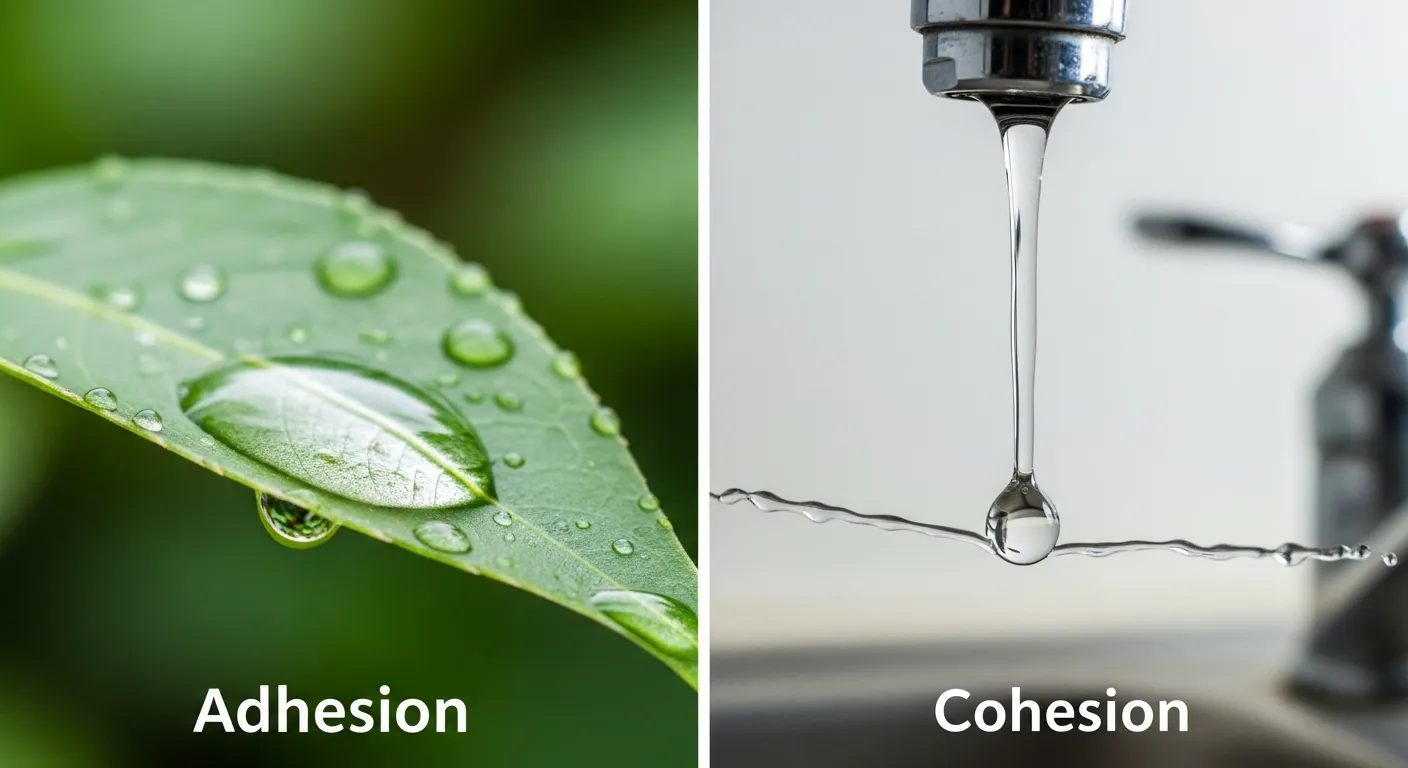
Imagine you spill a few drops of water on a glass table. Some drops stick to the surface, while others gather together to form a bead.
This simple moment shows the difference between adhesion and cohesion in action. Adhesion happens when water molecules stick to a different surface, such as glass.
Cohesion occurs when water molecules stick to each other.Understanding the difference between adhesion and cohesion helps explain many natural and scientific processes.
For example, plants pull water from the soil through tiny tubes because adhesion and cohesion work together. Scientists, students, and researchers often study this concept to understand liquids and molecular behavior.
When learning chemistry or physics, the difference between adhesion and cohesion becomes an essential concept. It explains why water climbs up narrow tubes, why raindrops form, and how liquids interact with surfaces. By exploring the difference between adhesion and cohesion, we can better understand the invisible forces that shape many everyday phenomena.
Key Difference Between Adhesion and Cohesion
The main difference is simple:
- Adhesion is the attraction between different types of molecules.
- Cohesion is the attraction between the same types of molecules.
For example, water sticking to glass shows adhesion, while water droplets forming together show cohesion.
Why Their Difference Is Important for Learners and Experts
Understanding the difference between adhesion and cohesion is important in science, technology, and everyday life.
Students learn these concepts to understand how liquids behave. Scientists use them to study plant biology, fluid mechanics, and surface chemistry.
In society, these forces influence agriculture, medicine, and engineering. For instance, adhesion helps paints stick to walls and adhesives bond materials.
Cohesion helps water move through plants and allows droplets to form in rain. Without understanding these forces, many scientific explanations about liquids and materials would remain incomplete.
Pronunciation
- Adhesion
- US: /ədˈhiːʒən/
- UK: /ədˈhiːʒən/
- US: /ədˈhiːʒən/
- Cohesion
- US: /koʊˈhiːʒən/
- UK: /kəʊˈhiːʒən/
- US: /koʊˈhiːʒən/
Linking Hook
Now that we understand the basic meaning of both terms, let’s explore the difference between adhesion and cohesion in detail through clear comparisons and real-life examples.
Difference Between Adhesion and Cohesion
1. Type of Attraction
Adhesion: Attraction between different substances.
Example 1: Water sticking to a glass surface.
Example 2: Paint attaching to a wall.
Cohesion: Attraction between similar molecules.
Example 1: Water molecules forming droplets.
Example 2: Mercury forming round beads.
2. Molecular Interaction
Adhesion: Involves interaction between two different materials.
Example 1: Glue bonding paper and cardboard.
Example 2: Tape sticking to plastic.
Cohesion: Involves internal bonding within the same substance.
Example 1: Water molecules pulling together.
Example 2: Liquid metal forming clusters.
3. Role in Surface Behavior
Adhesion: Determines how liquids spread across surfaces.
Example 1: Water spreading on clean glass.
Example 2: Ink sticking to paper.
Cohesion: Determines droplet formation.
Example 1: Raindrops forming in clouds.
Example 2: Water forming beads on wax.
4. Effect on Capillary Action
Adhesion: Pulls liquid upward along surfaces.
Example 1: Water climbing inside plant vessels.
Example 2: Liquid rising in a narrow straw.
Cohesion: Keeps molecules connected during the rise.
Example 1: Water molecules moving together upward.
Example 2: Continuous water column in plants.
5. Influence on Shape
Adhesion: Causes liquids to spread out.
Example 1: Water flattening on glass.
Example 2: Oil sticking to surfaces.
Cohesion: Causes liquids to form rounded shapes.
Example 1: Water droplets.
Example 2: Mercury beads.
6. Strength of Forces
Adhesion: Strength depends on surface properties.
Example 1: Water sticking better to glass than plastic.
Example 2: Glue bonding wood strongly.
Cohesion: Depends on intermolecular forces.
Example 1: Hydrogen bonding in water.
Example 2: Metallic bonding in liquid metals.
7. Importance in Nature
Adhesion: Helps water stick to plant cell walls.
Example 1: Water moving along plant tissues.
Example 2: Moisture sticking to soil particles.
Cohesion: Helps maintain water columns.
Example 1: Water traveling from roots to leaves.
Example 2: Droplet formation in rain.
8. Industrial Applications
Adhesion: Used in adhesives and coatings.
Example 1: Glue in furniture making.
Example 2: Paint sticking to buildings.
Cohesion: Important in liquid stability.
Example 1: Surface tension in detergents.
Example 2: Oil droplet formation.
9. Scientific Field Use
Adhesion: Important in surface chemistry.
Example 1: Biomedical adhesives.
Example 2: Coating technologies.
Cohesion: Important in fluid physics.
Example 1: Water tension studies.
Example 2: Liquid behavior research.
10. Visual Effect
Adhesion: Causes wetting of surfaces.
Example 1: Water spreading on glass.
Example 2: Dew sticking to leaves.
Cohesion: Causes bead formation.
Example 1: Water drops on wax.
Example 2: Mercury droplets.
Nature and Behaviour
Adhesion:
Adhesion occurs when two different substances attract each other at the molecular level. It often depends on the surface energy and chemical properties of the materials.
Cohesion:
Cohesion occurs within the same substance. Molecules pull toward each other because of intermolecular forces such as hydrogen bonding.
Why People Are Confused About Their Use
People often confuse adhesion and cohesion because both involve molecular attraction.
The difference is subtle: adhesion involves different substances, while cohesion involves similar molecules.
Since both often occur together such as in water movement through plants, learners sometimes mix the two concepts.
Table: Difference and Similarity
| Feature | Adhesion | Cohesion |
| Meaning | Attraction between different molecules | Attraction between similar molecules |
| Example | Water sticking to glass | Water forming droplets |
| Role | Helps liquids stick to surfaces | Helps liquids stay together |
| Occurrence | Between different materials | Within the same substance |
| Result | Wetting of surfaces | Formation of droplets |
Which Is Better in What Situation?
Adhesion is better when materials need to stick to surfaces. For example, glue, paint, and tape rely on strong adhesion. Without it, coatings and adhesives would not work properly.
Cohesion is better when maintaining the internal stability of a liquid. It allows droplets to form and keeps water moving through plants. Cohesion also creates surface tension, which supports small insects walking on water.
Use in Metaphors and Similes
- Adhesion metaphor: “Their friendship had adhesion like glue.”
- Cohesion metaphor: “The team showed cohesion like molecules in water.”
Simile example:
- “The group stayed together like molecules in cohesion.”
Connotative Meaning
Adhesion
- Tone: Neutral/Positive
Example: “The adhesion between team members kept the project strong.”
Cohesion
- Tone: Positive
Example: “Social cohesion helps communities live peacefully.”
Idioms or Proverbs
Though not common idioms, related expressions exist.
- “Stick together.”
Example: The family decided to stick together during difficult times. - “Bonds are like glue.”
Example: The two friends bonded like glue after years of friendship.
Works in Literature
- Cohesion The Social Cohesion Debate (Sociology, Jane Jenson, 1998)
- Adhesion Adhesion Science and Engineering (Scientific Text, D. E. Packham, 2005)
Movies Related to the Themes
- Cohesion (2013, USA) Sci-fi drama exploring group unity.
- Adhesion (2016, UK) Independent film about human connections.
Frequently Asked Questions
1. What is the main difference between adhesion and cohesion?
Adhesion is attraction between different substances, while cohesion is attraction between similar molecules.
2. Which force forms water droplets?
Cohesion forms droplets because water molecules attract each other.
3. What causes water to stick to glass?
Adhesion between water molecules and the glass surface.
4. Do adhesion and cohesion work together?
Yes, especially in processes like capillary action in plants.
5. Why are these forces important in nature?
They help water move through plants and influence many liquid behaviors.
How Both Are Useful for Surroundings
Adhesion helps materials stick together in construction, painting, and manufacturing. Cohesion helps liquids maintain structure and flow in natural systems like rivers, rainfall, and plant transport.
Final Words
Adhesion and cohesion are small molecular forces with huge effects. They influence natural systems, industrial processes, and everyday life.
Conclusion
The difference between adhesion and cohesion lies in the type of molecular attraction involved.Adhesion occurs between different substances, allowing liquids to stick to surfaces.
Cohesion occurs between similar molecules, allowing liquids to stay together and form droplets.Both forces are essential for natural processes such as plant water transport, rainfall formation, and surface interactions.
Understanding the difference between adhesion and cohesion helps students and scientists explain how liquids behave in different environments. When studied together, these forces reveal the fascinating interactions that occur at the microscopic level but shape the world we observe daily

I am Stephen King is a spiritual writer and digital creator dedicated to exploring the deeper meaning behind numbers, synchronicity, and divine guidance. Through his platform, spiritualdigits.com he shares insights on angel numbers, spiritual symbolism, and personal awakening to help readers align with their higher purpose. His work blends intuition, research, and practical wisdom to make spiritual concepts clear, accessible, and transformative.