Skincare can feel confusing, especially when you see ingredients like AHA and BHA on product labels. These two exfoliating acids are popular for improving skin texture, reducing acne, and giving a healthy glow. But many people are unsure which one to use and how they actually differ.
Featured Snippet (Quick Answer):
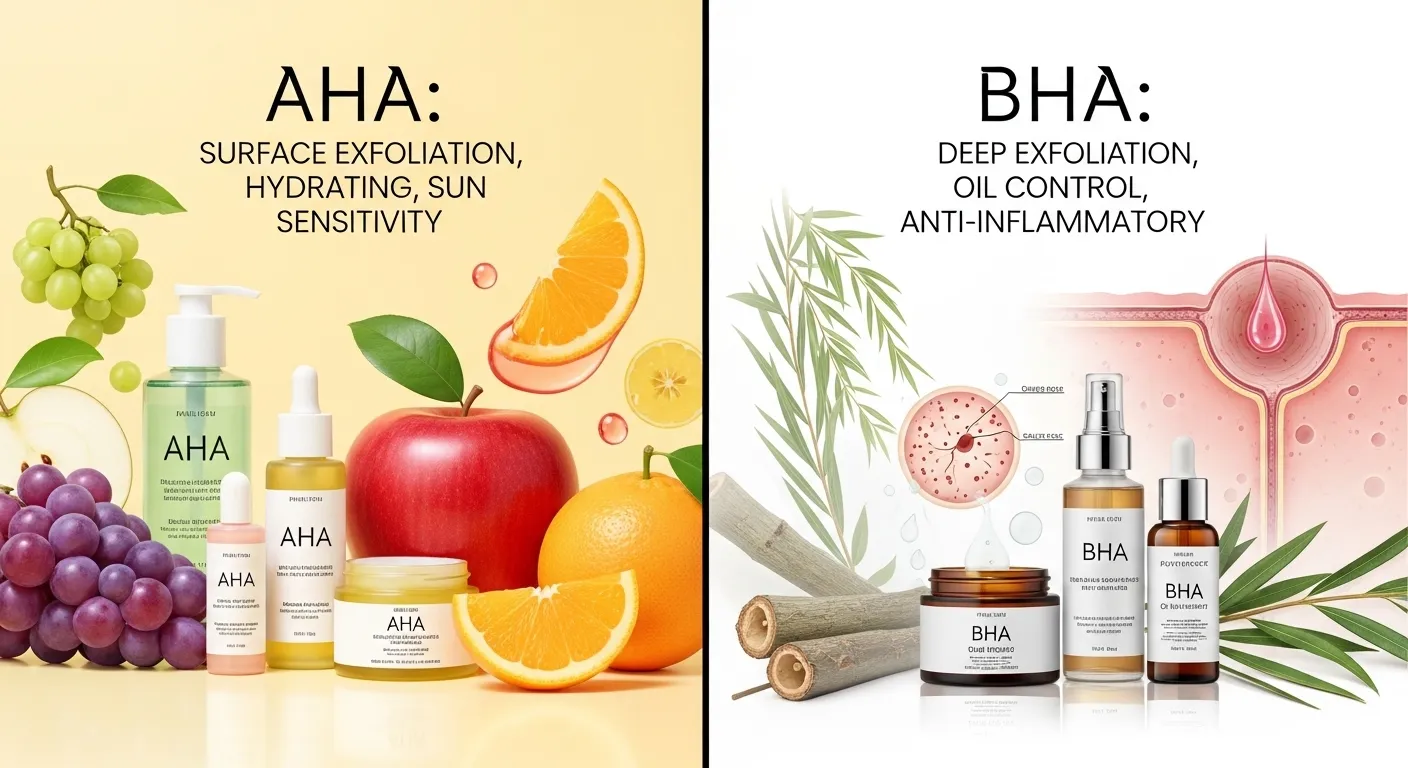
The difference between AHA and BHA is that AHA (Alpha Hydroxy Acid) works on the skin’s surface to remove dead cells and improve brightness, while Salicylic Acid (Beta Hydroxy Acid) goes deeper into pores to remove oil and treat acne. AHA is best for dry or dull skin, while Salicylic Acid is ideal for oily or acne-prone skin.
Understanding these acids can help you choose the right product for your skin type. Whether you want smoother skin, fewer breakouts, or a brighter look, knowing how AHA and Salicylic Acid work makes a big difference.
In this guide, you’ll learn what each acid does, how they compare, and when to use them. Let’s compare AHA and Salicylic Acid in detail below.
Quick Summary
Here’s a quick overview before we go deeper:
- AHA works on the surface and improves skin tone and brightness
- BHA penetrates pores and helps reduce acne and oil
- AHA is better for dry and sensitive skin
- Salicylic Acid is ideal for oily and acne-prone skin
Quick Comparison Table of AHA vs BHA
| Feature | AHA (Alpha Hydroxy Acid) | BHA (Beta Hydroxy Acid) |
| Texture | Lightweight, water-based | Slightly oily, oil-soluble |
| Taste (Chemical Nature) | Water-soluble acid | Oil-soluble acid |
| Usage | Surface exfoliation | Deep pore cleaning |
| Ingredients | Glycolic acid, lactic acid | Salicylic acid |
| Cooking Method | Not applicable (skincare) | Not applicable (skincare) |
| Skin Type | Dry, dull, sensitive | Oily, acne-prone |
| Penetration | Surface level | Deep into pores |
| Benefits | Brightens, smooths skin | Reduces acne, unclogs pores |
| Side Effects | Mild irritation possible | Can dry out skin |
| Nutrition/Calories | Not applicable | Not applicable |
What Is AHA? (Definition & Uses)
AHA stands for Alpha Hydroxy Acid, a group of acids derived from natural sources like fruits and milk. Common types include glycolic acid and lactic acid.
AHA works by gently removing dead skin cells from the surface. This process reveals fresh, new skin underneath, making your face look brighter and smoother.
Common Uses:
- Improving dull skin
- Reducing fine lines
- Evening out skin tone
- Boosting hydration
AHA is often found in toners, serums, and chemical peels. It is especially helpful for people with dry or aging skin.
What Is BHA? (Definition & Uses)
Salicylic Acid stands for Beta Hydroxy Acid, with salicylic acid being the most common type used in skincare.
Unlike AHA, Salicylic Acid is oil-soluble. This means it can go deep into the pores and remove excess oil, dirt, and dead skin cells.
Common Uses:
- Treating acne and blackheads
- Reducing oiliness
- Clearing clogged pores
- Calming inflammation
Salicylic Acid is widely used in acne treatments and is ideal for oily or combination skin types.
Key Differences Between AHA and BHA
Featured Snippet (Detailed Answer):
What is the difference between AHA and Salicylic Acid? The difference between AHA and BHA lies in how they work.
AHA exfoliates the skin’s surface to improve texture and brightness, while Salicylic Acid penetrates deep into pores to remove oil and treat acne. AHA suits dry skin, while Salicylic Acid is better for oily skin.
Surface vs Deep Action
AHA works on the top layer of skin, while BHA goes deep into pores.
For example, AHA helps remove dull skin, while BHA clears clogged pores causing acne.
Water-Soluble vs Oil-Soluble
AHA is water-soluble, and BHA is oil-soluble.
For instance, BHA can dissolve excess oil inside pores, unlike AHA.
Best for Skin Type
AHA is ideal for dry or sensitive skin, while Salicylic Acid suits oily skin.
For example, people with acne often prefer BHA for better results.
Main Function
AHA focuses on exfoliation and brightness, while Salicylic Acid targets acne and oil control.
For instance, AHA improves glow, while Salicylic Acid reduces breakouts.
Common Ingredients
AHA includes glycolic and lactic acids, while Salicylic Acid mainly includes salicylic acid.
For example, glycolic acid is popular in anti-aging products.
Acne Treatment Ability
BHA is more effective for acne than AHA.
For instance, BHA can reduce blackheads and whiteheads quickly.
Sensitivity Level
AHA can cause sun sensitivity, while BHA is generally gentler in sunlight.
For example, sunscreen is very important when using AHA products.
Hydration Effects
AHA can help improve skin moisture, while BHA may dry out skin.
For instance, AHA is often used in hydrating skincare routines.
Pore Penetration
BHA penetrates pores deeply, while AHA stays on the surface.
For example, BHA clears pores from inside, reducing future breakouts.
Detailed Comparison
When you compare AHA and BHA features, the biggest difference is how they interact with your skin. AHA works on the outer layer, making it great for improving skin tone and texture. On the other hand, BHA goes deeper, making it perfect for treating acne and oily skin.
If you are wondering how AHA is different from BHA, think of AHA as a surface cleaner and BHA as a deep cleaner. Both are effective, but they solve different problems.
Looking at AHA vs BHA pros and cons, AHA gives smoother and brighter skin but may cause irritation if overused. BHA is excellent for acne but can sometimes make skin dry.
If you’re trying to compare AHA and BHA features, the choice depends on your skin needs. AHA is better for glow and anti-aging, while BHA is better for acne and oil control.
Similarities
Despite their differences, AHA and BHA share some similarities:
- Both are chemical exfoliants
- Both remove dead skin cells
- Both improve skin texture
- Both are used in serums, toners, and peels
- Both can cause irritation if overused
When to Choose AHA vs Salicylic Acid
Choosing between these acids depends on your skin type and goals.
Choose AHA if:
- You have dry or dull skin
- You want brighter skin
- You are targeting fine lines
Choose BHA if:
- You have oily or acne-prone skin
- You struggle with blackheads
- You need deep pore cleaning
Simple Tip:
If your main concern is glow, go for AHA. If it’s acne, Salicylic Acid is the better choice.
FAQs
1. What is the difference between AHA and BHA for beginners?
The difference between AHA and Salicylic Acid is simple: AHA works on the skin surface, while Salicylic Acid works inside pores to remove oil and acne.
2. Can I use AHA and BHA together?
Yes, but carefully. Using both can be effective, but it may cause irritation if overused.
3. Which is better, AHA or BHA?
It depends on your skin. AHA is better for dry skin, while Salicylic Acid is better for oily and acne-prone skin.
4. Is AHA the same as BHA?
No, AHA is not the same as Salicylic Acid. They work differently and target different skin concerns.
5. How often should I use AHA or BHA?
Start with 2–3 times per week and adjust based on your skin’s tolerance.
Conclusion
Understanding the difference between AHA and BHA explained clearly helps you make better skincare choices. Both acids are powerful exfoliants, but they serve different purposes.
AHA is perfect for improving skin texture, brightness, and hydration. Salicylic Acid is ideal for deep cleaning pores and treating acne. If you’re asking which is better, AHA or BHA, the answer depends on your skin type and goals.
By choosing the right one or using both carefully you can achieve healthier, clearer, and more radiant skin.

I am D. H. Lawrence (David Herbert Lawrence) an influential English novelist, poet, essayist, and literary critic born on September 11, 1885, in Eastwood, Nottinghamshire, England. He is widely regarded as one of the most important writers of the 20th century.
I work often explored human relationships, emotional intimacy, industrialization, and the conflict between modern society and natural instincts.