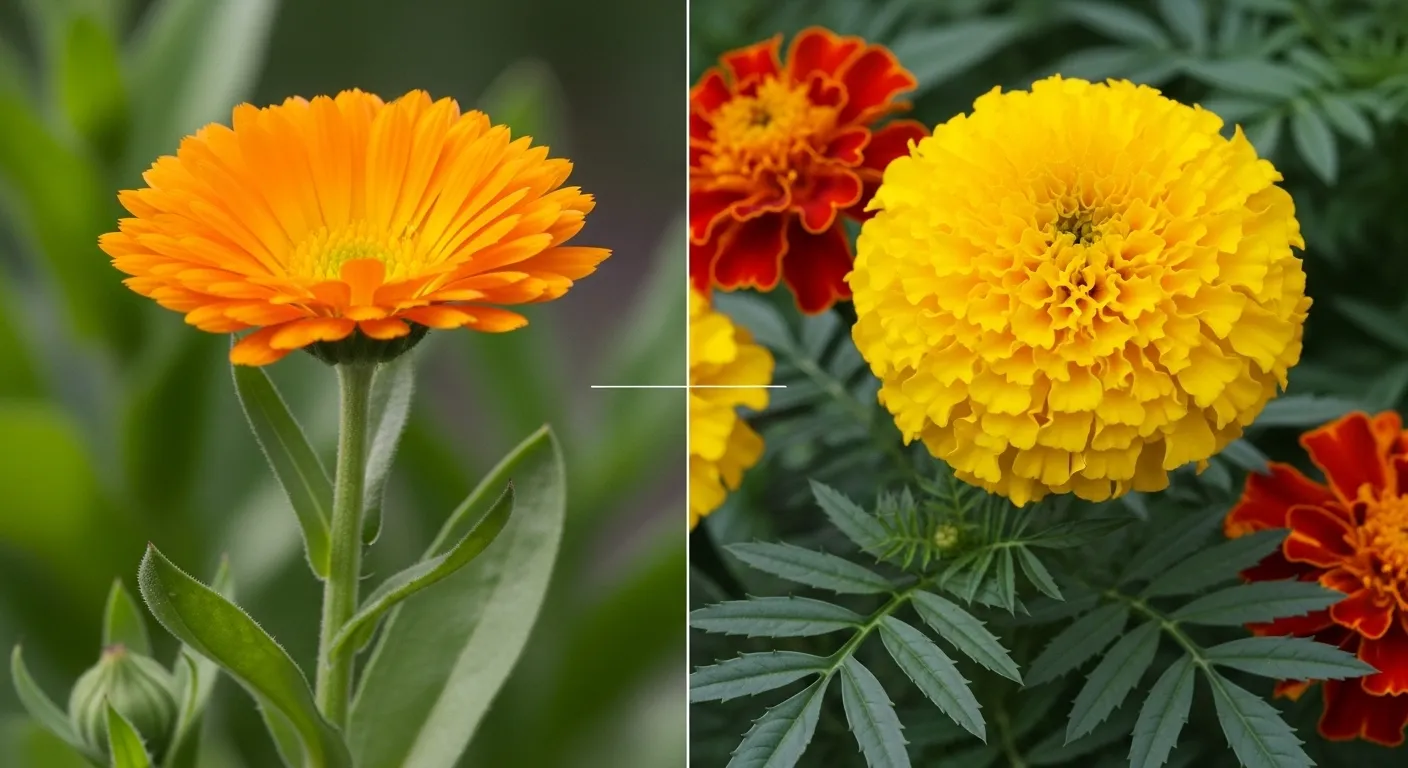
On a warm spring morning, a gardener plants bright orange and yellow flowers in his garden. He calls them marigolds, but his friend insists that some of them are actually calendula.
This small disagreement is common because these flowers look quite similar at first glance. The difference between calendula and marigold often confuses gardeners, students, and flower lovers around the world.
While both flowers belong to the same plant family and share similar colors, they are actually different species with unique characteristics and uses. Understanding the difference between calendula and marigold helps gardeners grow the right plant and use it properly in medicine or decoration.
In fact, the difference between calendula and marigold becomes clear when we explore their botanical background, uses, and growth patterns. Learning the difference between calendula and marigold also helps avoid confusion in gardening, herbal medicine, and education.
Key Difference Between the Two
The main difference between calendula and marigold is their botanical classification. Calendula belongs to the Calendula genus, while marigold belongs to the Tagetes genus. Although they look similar, they are separate plants with different characteristics and uses.
Why Is Their Difference Important to Know for Learners and Experts?
Understanding the difference is important for gardeners, herbalists, and researchers. Calendula is widely used in herbal medicine and skincare products because of its healing properties. Marigold, on the other hand, is commonly used for decoration and pest control in gardens.
If people confuse these flowers, they may use the wrong plant for medical or gardening purposes. For learners, knowing the distinction improves botanical knowledge.
For experts, it helps in research, agriculture, and horticulture. In society, both plants play roles in beauty, medicine, and environmental protection.
Pronunciation
Calendula
- US: /kəˈlɛn-dʒʊ-lə/
- UK: /kəˈlen-djuː-lə/
Marigold
- US: /ˈmer-i-goʊld/
- UK: /ˈmær-i-gəʊld/
Before exploring the details, let us look closely at the major differences between calendula and marigold in various aspects.
Difference Between Calendula and Marigold
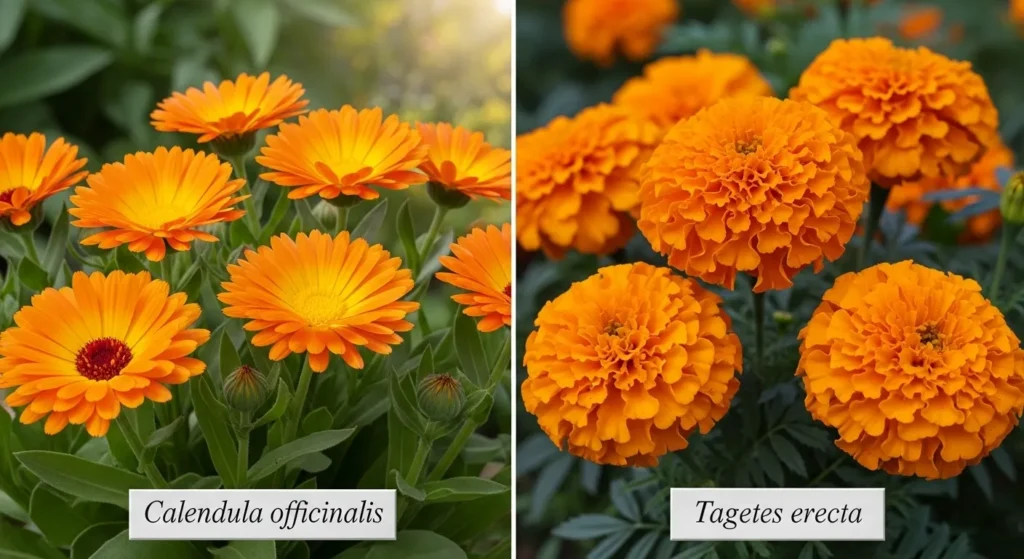
1. Botanical Classification
Calendula belongs to the Calendula genus, while marigold belongs to the Tagetes genus.
Examples:
- Calendula officinalis (pot marigold)
- Calendula arvensis
Examples:
- Tagetes erecta (African marigold)
- Tagetes patula (French marigold)
2. Appearance of Flowers
Calendula flowers look like small daisies with softer petals. Marigolds usually have fuller and more layered petals.
Examples:
- Calendula has simple, open petals.
- Calendula petals often appear lighter and softer.
Examples:
- Marigold petals are thick and dense.
- Marigolds often appear more round and fluffy.
3. Fragrance
Calendula has a mild and gentle scent, while marigold has a stronger and sometimes sharp smell.
Examples:
- Calendula is used in perfumes and herbal oils.
- Calendula flowers smell soft and natural.
Examples:
- Marigolds release a strong garden scent.
- The smell helps repel insects.
4. Uses in Medicine
Calendula is widely used in herbal medicine. Marigold is rarely used medically.
Examples:
- Calendula creams help heal skin wounds.
- Calendula tea may support digestion.
Examples:
- Marigolds are mainly ornamental.
- Some cultures use it in traditional remedies.
5. Gardening Purpose
Calendula is grown for beauty and herbal benefits. Marigold is often planted for pest control.
Examples:
- Calendula grows in herb gardens.
- Calendula attracts pollinators.
Examples:
- Marigolds repel harmful insects.
- Farmers plant marigolds near vegetables.
6. Flowering Season
Calendula often blooms in cooler seasons, while marigolds bloom strongly in warm climates.
Examples:
- Calendula grows well in spring.
- Calendula also blooms in mild winters.
Examples:
- Marigolds bloom in summer.
- Marigolds thrive in hot weather.
7. Leaf Shape
Calendula leaves are smooth and soft, while marigold leaves are divided and more complex.
Examples:
- Calendula leaves appear oval.
- They feel slightly sticky.
Examples:
- Marigold leaves are feathery.
- They look more structured.
8. Cultural Importance
Calendula is often used in herbal traditions. Marigolds are important in cultural festivals.
Examples:
- Calendula is used in natural skincare.
- It appears in herbal medicine books.
Examples:
- Marigolds decorate festivals and ceremonies.
- They are common in cultural celebrations.
9. Plant Height
Calendula plants are usually smaller than marigolds.
Examples:
- Calendula grows about 3060 cm.
- Suitable for small gardens.
Examples:
- Some marigolds grow up to 90 cm.
- Large varieties are used in landscaping.
10. Symbolic Meaning
Calendula symbolizes healing and warmth, while marigold often represents celebration and remembrance.
Examples:
- Calendula symbolizes protection.
- Associated with herbal healing.
Examples:
- Marigold symbolizes joy and festivals.
- Used in decorative garlands.
Nature and Behaviour
Calendula
Calendula is gentle in nature and grows well in cooler climates. It spreads easily and attracts bees and butterflies. The plant is often valued for its healing qualities.
Marigold
Marigold is stronger and more resilient. It grows quickly in warm weather and helps protect nearby plants by repelling pests.
Why People Are Confused About Their Use
People often confuse calendula and marigold because they look similar in color and shape. Both flowers are usually orange or yellow and belong to the same plant family.
Another reason for confusion is that calendula is sometimes called “pot marigold.” This name makes people believe both plants are the same, even though they belong to different botanical groups.
Table of Difference and Similarity
| Feature | Calendula | Marigold | Similarity |
| Genus | Calendula | Tagetes | Both from Asteraceae family |
| Appearance | Daisy-like flowers | Full layered flowers | Bright colors |
| Fragrance | Mild scent | Strong smell | Floral aroma |
| Use | Herbal medicine | Garden decoration | Used in gardens |
| Climate | Cooler seasons | Warm climates | Easy to grow |
| Cultural role | Healing symbol | Festival flower | Decorative use |
Which Is Better in What Situation?
Calendula
Calendula is better for herbal medicine, skincare products, and healing treatments. People often use it in creams, oils, and teas because it contains natural compounds that support skin health. If someone wants a flower for medicinal or herbal purposes, calendula is usually the better choice.
Marigold
Marigold is better for gardening and decoration. Its strong scent helps keep insects away from nearby plants.
Farmers and gardeners plant marigolds around vegetables to protect crops naturally. For landscaping, festivals, or pest control, marigolds are usually more useful.
Use in Metaphors and Similes
Calendula
- “Her kindness was like a calendar, gentle yet healing.”
- “Hope bloomed like a calendar in the cold days of life.”
Marigold
- “The celebration shone like a field of marigolds.”
- “Her smile was bright like a marigold in summer.”
Connotative Meaning
Calendula Positive / Neutral
Associated with healing, calmness, and natural beauty.
Examples:
- “Her presence was like a calendar, bringing comfort.”
- “The garden felt peaceful with calendula flowers.”
Marigold Positive
Often connected with joy, brightness, and celebration.
Examples:
- “The festival streets were filled with marigold happiness.”
- “His laughter was as bright as a marigold.”
Idioms or Proverbs
There are no common English idioms directly based on these flowers, but similar expressions exist.
Examples:
- “Bloom where you are planted.”
- “Every flower must grow through dirt.”
Works in Literature
Calendula
- Calendula Poetry collection by Vita Sackville-West (Poetry, 1930s)
- The Language of Flowers mentions calendula symbolism (Novel, Vanessa Diffenbaugh, 2011)
Marigold
- The Marigold Garden Short story reference (Fiction)
- The Marigolds by Eugenia Collier (Short story, 1969)
Movies Related to the Keywords
Marigold
- Marigold (2007, USA/India)
Calendula
- Appears symbolically in several documentaries about herbal medicine.
Frequently Asked Questions
1. Are calendula and marigold the same flower?
No. They belong to different genera even though they look similar.
2. Why is calendula called pot marigold?
It received this traditional name because its flowers resemble marigolds.
3. Which flower is used for medicine?
Calendula is widely used in herbal medicine and skincare.
4. Which flower repels insects?
Marigold plants naturally repel many garden pests.
5. Can both grow in the same garden?
Yes, both flowers can grow together if the climate suits them.
How Both Are Useful for Surroundings
Both plants help the environment in different ways. Calendula attracts pollinators such as bees and butterflies, which support plant reproduction.
Marigolds protect gardens by repelling harmful insects naturally, reducing the need for chemical pesticides. Together, they improve garden health and biodiversity.
Final Words for Both
Calendula and marigold may look similar, but each has its own unique identity.
Calendula shines in herbal medicine and gentle beauty, while marigold stands out for decoration and pest protection. Appreciating both flowers helps people use them wisely in gardens and daily life.
Conclusion
The difference between calendula and marigold becomes clear when we examine their botanical origins, uses, and characteristics.
Calendula belongs to the Calendula genus and is valued for its medicinal benefits, especially in herbal remedies and skincare.
Marigold, belonging to the Tagetes genus, is widely used in gardens for decoration and pest control.Although their bright colors make them look similar, their purposes and botanical backgrounds are quite different.
Understanding this difference helps gardeners, learners, and researchers use the right plant in the right context. Both flowers contribute beauty, environmental benefits, and cultural value to society. By recognizing their unique qualities, we can appreciate how each flower plays an important role in nature and human life.

I am E.M. Forster (1879–1970), a renowned English novelist and essayist, famous for A Room with a View, Howards End, and A Passage to India. I explore human relationships, social class, and personal freedom, making my work a key part of 20th-century English literature.