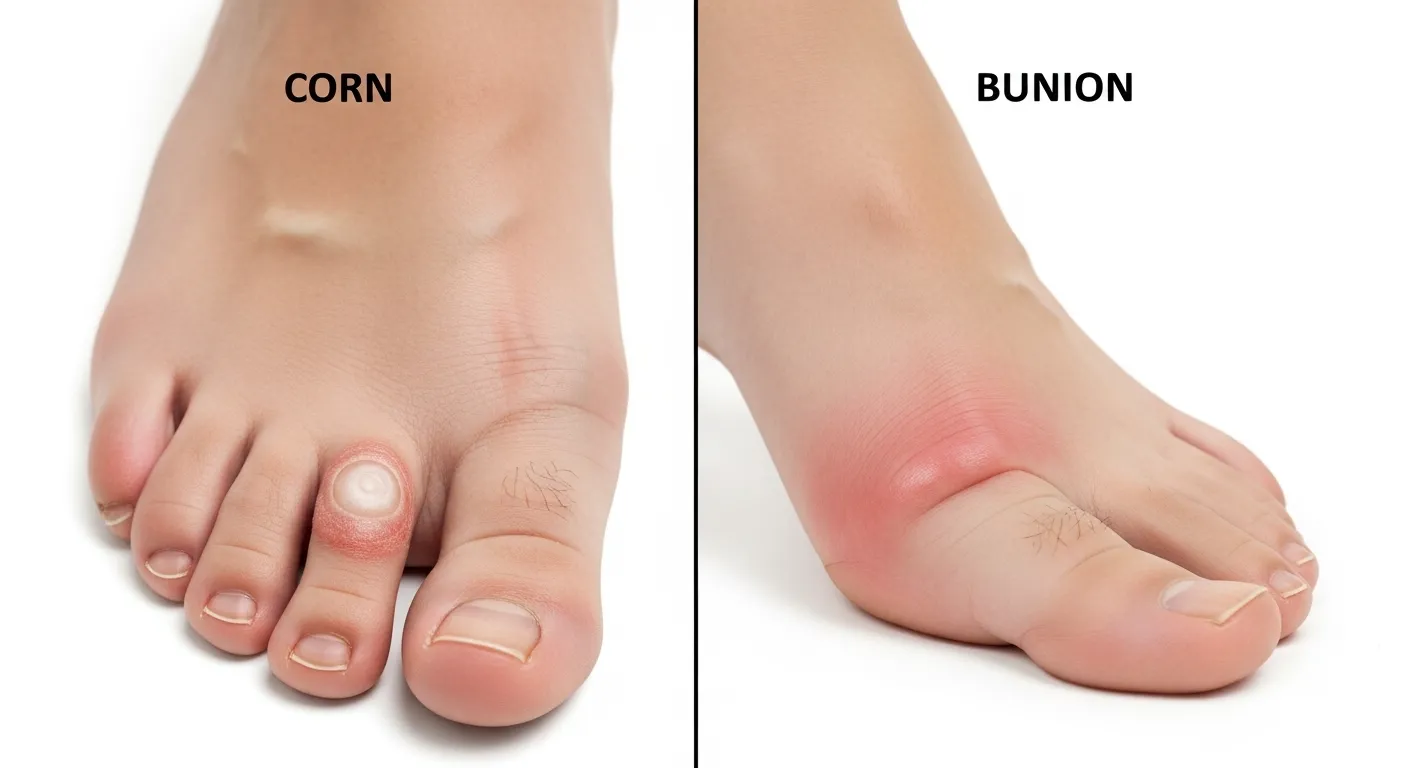
One day, a man bought a new pair of tight shoes. After a few weeks, he felt pain in his feet. A small hard spot appeared on his toe, and a bump started growing near his big toe joint. The doctor explained that the hard spot was a corn, and the bump was a bunion.
The difference between corn and bunion is important because many people think they are the same problem. In reality, they are different foot conditions with different causes and treatments. Learning the difference between corn and bunion helps people choose the right care for their feet.
Doctors often explain the difference between corn and bunion to patients so they can prevent pain and avoid worse problems. When people understand the difference between corn and bunion, they can choose better shoes and protect their feet.
Key Difference Between the Both
A Corn (foot condition) is a small, hard, thick area of skin. It usually forms because of pressure or rubbing on the foot.
A Bunion is a bony bump that grows at the base of the big toe. It happens when the big toe pushes toward the other toes.
Why Is Their Difference Necessary to Know for Learners and Experts?
Understanding the difference between corn and bunion is important for both students and medical experts.
For learners, it helps them understand how the human body reacts to pressure and injury. They learn that skin problems and bone problems are different.
For doctors and health experts, this knowledge helps them give the right treatment. A corn may be treated by removing pressure or using medicine. A bunion may need special shoes, therapy, or surgery.
In society, many people suffer from foot pain. Knowing the difference between corn and bunion helps people prevent long-term problems and live more comfortably.
Pronunciation of Both Words
Corn
- US: /kɔːrn/
- UK: /kɔːn/
Bunion
- US: /ˈbʌn.jən/
- UK: /ˈbʌn.jən/
Understanding these words clearly helps readers follow the rest of the discussion.
Difference Between Corn and Bunion
1. Basic Meaning
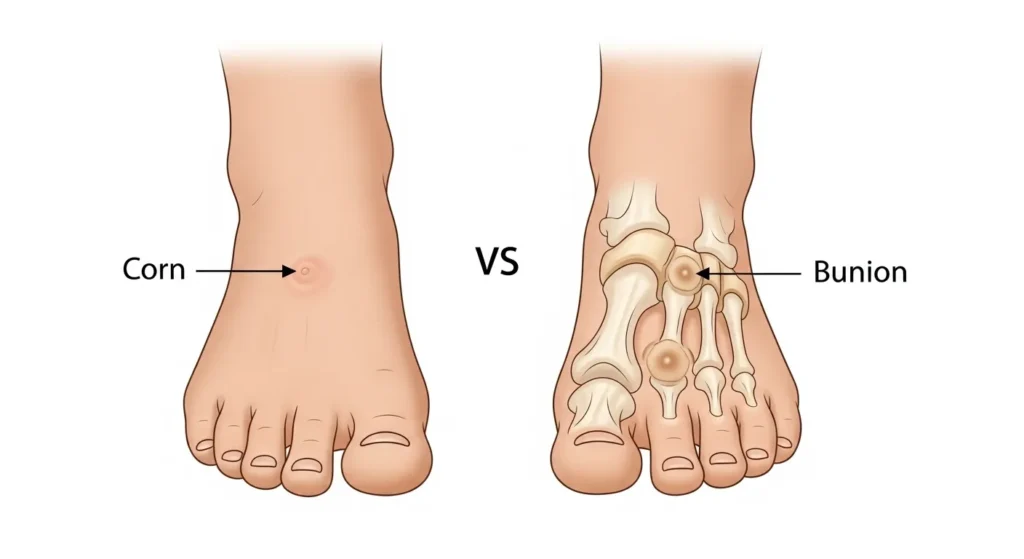
Corn is thick skin caused by pressure.
Bunion is a bone bump near the big toe.
Examples (Corn):
- A tight shoe caused a corn on his toe.
- Walking too much created a painful corn.
Examples (Bunion):
- Her big toe formed a bunion after years of tight shoes.
- The doctor said the bump was a bunion.
2. Location
Corn usually appears on toes or the bottom of the foot.
Bunion appears at the joint of the big toe.
Examples (Corn):
- The corn formed on the top of his toe.
- She had a corn under her foot.
Examples (Bunion):
- A bunion grew beside her big toe.
- His bunion was near the toe joint.
3. Cause
Corn happens due to friction and pressure.
Bunion happens due to bone movement or foot structure.
Examples (Corn):
- Tight shoes caused a corn.
- Long walking created a corn.
Examples (Bunion):
- Family history caused her bunion.
- Wearing narrow shoes worsened his bunion.
4. Appearance
Corn looks like a small hard circle.
Bunion looks like a large bump.
Examples (Corn):
- The corn looked yellow and hard.
- His toe had a round corn.
Examples (Bunion):
- The bunion formed a big bump.
- Her bunion was easy to see.
5. Pain Type
Corn hurts when pressed.
Bunion hurts when walking or wearing shoes.
Examples (Corn):
- Pressing the corn caused pain.
- His corn hurt when touched.
Examples (Bunion):
- Walking made her bunion hurt.
- Tight shoes made the bunion painful.
6. Body Part Involved
Corn affects skin.
Bunion affects bone and joint.
Examples (Corn):
- The corn was only on the skin.
- Skin became thick due to corn.
Examples (Bunion):
- The bunion changed the toe joint.
- Bone moved because of bunion.
7. Size
Corn is usually small.
Bunion is usually larger.
Examples (Corn):
- The corn was tiny but painful.
- She had a small corn on her toe.
Examples (Bunion):
- The bunion was large.
- His bunion grew bigger with time.
8. Treatment
Corn can be treated with pads and creams.
Bunion may need special shoes or surgery.
Examples (Corn):
- She used a pad for her corn.
- Cream helped remove the corn.
Examples (Bunion):
- The doctor suggested wide shoes.
- Surgery fixed his bunion.
9. Risk Level
Corn is usually mild.
Bunion can become serious.
Examples (Corn):
- His corn healed quickly.
- A small corn caused little trouble.
Examples (Bunion):
- Her bunion needed treatment.
- The bunion caused walking problems.
10. Growth
Corn may disappear when pressure stops.
Bunion usually stays and may grow.
Examples (Corn):
- The corn disappeared after new shoes.
- Less pressure removed the corn.
Examples (Bunion):
- The bunion slowly became bigger.
- His bunion stayed for years.
Nature and Behaviour of Both
Corn:
Corn behaves like a protective skin layer. The skin becomes thick to protect the foot from pressure. It grows slowly and may go away if the pressure stops.
Bunion:
A bunion changes the structure of the foot. The big toe moves toward other toes. Over time, the bump can become larger and more painful.
Why People Are Confused About Their Use
People are confused because both problems happen on the foot and cause pain. Both can also come from tight shoes.
Because they appear near the toes, many people think they are the same condition. In reality, one is a skin problem and the other is a bone problem.
Table: Difference and Similarity
| Feature | Corn | Bunion | Similarity |
| Type | Skin problem | Bone problem | Both affect feet |
| Size | Small | Larger | Both visible |
| Cause | Pressure | Bone shift | Tight shoes can cause both |
| Pain | When pressed | When walking | Both painful |
| Treatment | Pads, creams | Special shoes or surgery | Both need care |
Which Is Better in What Situation?
A corn is usually easier to treat. If a person changes shoes or reduces pressure, the corn may disappear. In this situation, corn is less serious and easier to manage.
A bunion needs more care. If the bump grows larger, it may affect walking. In some cases, doctors suggest surgery. In this situation, medical advice becomes very important.
Metaphors and Similes
Sometimes these words are used in comparisons.
Examples:
- “The problem grew like a bunion on the system.”
- “The issue stuck like a corn in a shoe.”
These comparisons describe something small but very annoying.
Connotative Meaning
Corn
- Tone: Negative or neutral
Example: “The small mistake became a corn in the plan.”
Bunion
- Tone: Negative
Example: “The delay became a bunion in the project.”
Idioms or Proverbs
These words rarely appear in common idioms, but simple expressions exist.
Examples:
- “Like a corn in the shoe” – something very annoying
Example: The noise was like a corn in the shoe during the meeting. - “Growing like a bunion” – slowly becoming worse
Example: The problem grew like a bunion over time.
Works in Literature
There are no famous novels or poems named exactly Corn or Bunion about the foot condition. These words mostly appear in medical or health books.
Movies Related to the Words
No major movies are made about these foot conditions directly. They mainly appear in medical documentaries or health programs.
Frequently Asked Questions
1. What is the main difference between corn and bunion?
Corn is thick skin, while bunion is a bone bump near the big toe.
2. Which one is more painful?
Both can hurt, but bunions may cause stronger pain when walking.
3. Can tight shoes cause both problems?
Yes, tight shoes are a common cause.
4. Can corn disappear on its own?
Yes, it may disappear when pressure stops.
5. Do bunions always need surgery?
No, many bunions are treated with special shoes and care.
How Both Are Useful for Surroundings
Even though they are health problems, they teach people the importance of foot care. Doctors use these conditions to educate people about proper shoes, posture, and health awareness. This knowledge helps society stay healthier.
Final Words for Both
Corn and bunion may look similar, but they are very different. One affects the skin, while the other affects the bone. Understanding their nature helps people prevent pain and protect their feet.
Conclusion
The difference between corn and bunion is simple but important. Corn is a thick, hard area of skin caused by pressure or friction.
Bunion is a bone bump that forms near the big toe joint. Both conditions can cause pain and discomfort, especially when wearing tight shoes. However, their causes, appearance, and treatments are different.
By learning the difference between corn and bunion, people can choose the right shoes, seek proper medical care, and avoid serious foot problems. This knowledge is helpful for students, doctors, and everyday people who want healthy and comfortable feet.

I am Stephen King is a spiritual writer and digital creator dedicated to exploring the deeper meaning behind numbers, synchronicity, and divine guidance. Through his platform, spiritualdigits.com he shares insights on angel numbers, spiritual symbolism, and personal awakening to help readers align with their higher purpose. His work blends intuition, research, and practical wisdom to make spiritual concepts clear, accessible, and transformative.