If you’re planning to buy or rent a home, you’ve likely come across terms like duplex and townhouse. At first, they may sound similar, but they have clear differences in structure, ownership, and lifestyle. Understanding these differences helps you make a smarter housing decision based on your needs and budget.
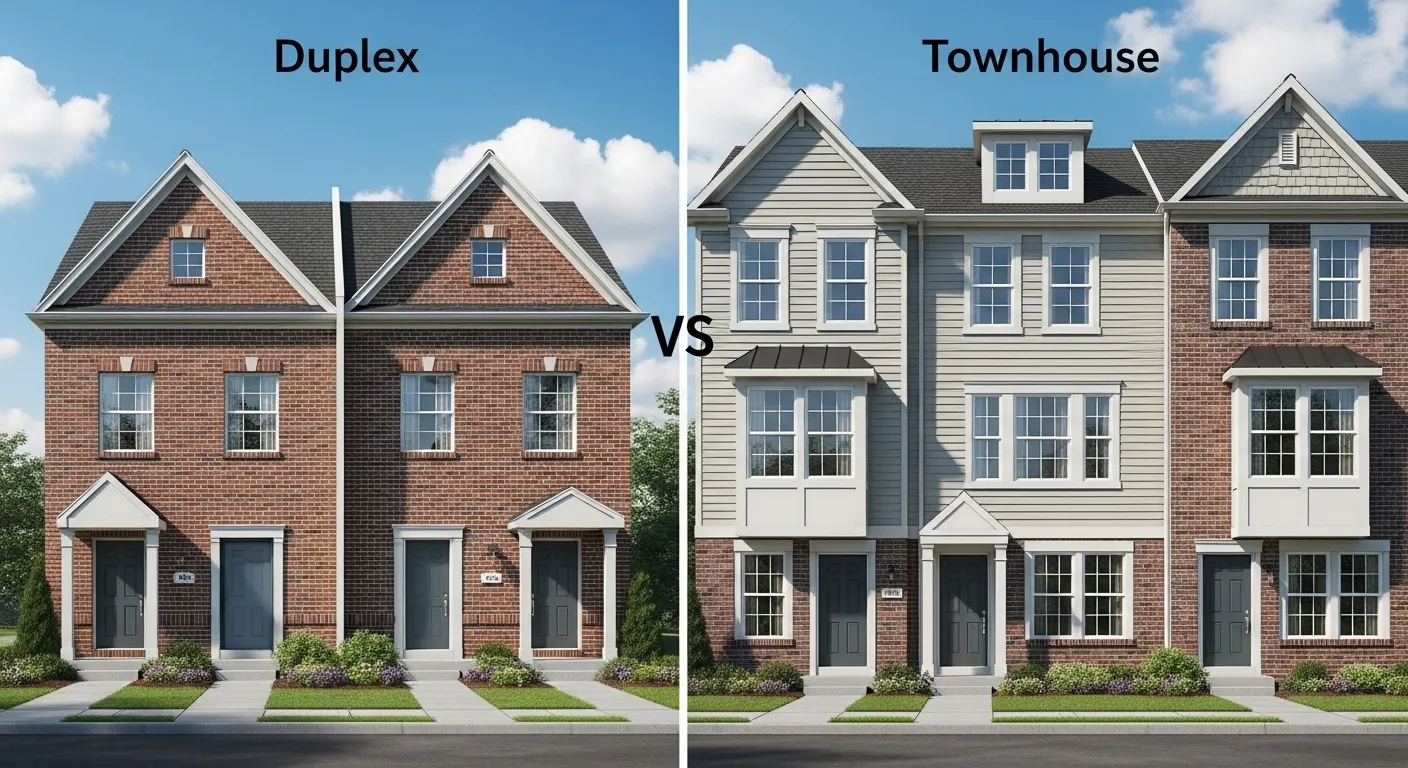
A duplex is a single building divided into two separate living units, while a townhouse is one of several attached homes in a row, each usually owned individually. The main difference lies in ownership style, layout, and how the properties are structured within a community.
Choosing between the two depends on your preferences, privacy, investment goals, or community living. Some people prefer duplexes for rental income, while others like townhouses for their organized neighborhoods and shared amenities.
In this guide, you’ll learn everything you need to know in simple terms. Let’s compare duplex and townhouse in detail below.
Quick Summary
Before diving deeper, here’s a quick overview to help you understand the basics:
- Duplexes have two units in one building, while townhouses are part of a row of homes
- Duplexes can be owned by one or two owners; townhouses are usually individually owned
- Townhouses often include shared community features like parking or parks
- Duplexes are more flexible for rental or investment purposes
Quick Comparison Table of Duplex vs Townhouse
| Feature | Duplex | Townhouse |
| Structure | Single building with two units | Row of attached homes |
| Ownership | One or two owners | Separate owner for each unit |
| Texture | Independent or semi-shared walls | Fully shared side walls |
| Taste | More private living | Community-style living |
| Usage | Living + rental income | Primary residence |
| Ingredients | Two separate living spaces | Multiple similar units in a row |
| Cooking Method | Independent utilities | Often shared systems/community rules |
| Layout | Side-by-side or top-bottom | Vertical multi-floor layout |
| Maintenance | Owner-managed | HOA (Homeowners Association) often involved |
| Nutrition/Calories | Lower shared cost (if renting) | Shared cost but HOA fees apply |
What Is a Duplex? (Definition & Uses)
A duplex is a residential building divided into two separate living units. These units can be side-by-side or stacked one above the other. Each unit has its own entrance, kitchen, bathroom, and living space.
Duplexes are popular among investors and homeowners who want extra income. You can live in one unit and rent out the other, making it a smart financial choice.
For example, a family might live on the ground floor while renting the upper unit to tenants. This setup helps cover mortgage costs and increases long-term property value.
Duplexes also offer more privacy compared to apartments since there are fewer shared spaces.
What Is a Townhouse? (Definition & Uses)
A townhouse is a multi-floor home that shares one or two walls with neighboring houses. These homes are built in rows and are common in urban and suburban areas.
Each townhouse is usually owned separately, even though they are physically connected. Most townhouses are part of a community managed by a homeowners association (HOA), which handles maintenance of shared spaces.
For instance, a townhouse owner might share walls with neighbors but have their own entrance, garage, and small yard. The HOA may take care of landscaping or security.
Townhouses are ideal for people who want a balance between apartment living and a detached house.
Key Differences Between Duplex and Townhouse
A duplex is a two-unit property in one building, while a townhouse is one unit in a row of similar homes, each with separate ownership. This difference affects privacy, cost, and lifestyle.
Ownership Structure
• Duplex ownership can belong to one person or be split between two owners
• Townhouses are typically owned individually
For example, one investor may own both units of a duplex, while in a townhouse row, each home belongs to a different owner.
Building Layout
• Duplexes have only two units in one structure
• Townhouses are part of a continuous row of homes
For instance, a duplex may have one unit upstairs and one downstairs, while a townhouse shares walls with neighbors on both sides.
Privacy Level
• Duplexes offer more privacy due to fewer shared walls
• Townhouses have shared walls with multiple neighbors
For example, duplex residents may only share one wall, while townhouse owners share walls on both sides.
Investment Potential
• Duplexes are great for rental income
• Townhouses are better for personal living
For instance, you can rent out half of a duplex, but renting a townhouse usually means giving up your entire home.
Maintenance Responsibility
• Duplex owners handle their own maintenance
• Townhouse owners often follow HOA rules
For example, townhouse communities may require monthly fees for landscaping or repairs.
Cost Structure
• Duplexes may have higher upfront costs but offer income potential
• Townhouses are often more affordable but include HOA fees
For instance, a townhouse might seem cheaper initially, but monthly fees add up over time.
Community Living
• Duplexes are more independent
• Townhouses are part of planned communities
For example, townhouse residents may share parks, gyms, or parking areas.
Design and Space
• Duplexes can vary in design and size
• Townhouses usually follow a uniform design
For instance, all homes in a townhouse row often look similar from the outside.
Flexibility
• Duplexes offer flexibility for renting or multi-family living
• Townhouses are less flexible due to HOA restrictions
For example, some townhouse communities limit rentals or modifications.
Detailed Comparison
When comparing duplex vs townhouse, the biggest difference lies in lifestyle and purpose. Duplexes are more flexible and often used for investment. They give you the option to generate rental income while living in the same building.
Townhouses, on the other hand, focus more on community living. They are designed for homeowners who prefer structured neighborhoods with shared services. While they may have rules, they also reduce maintenance stress.
If you want independence and income potential, a duplex may suit you better. If you prefer convenience and a community environment, a townhouse is a great choice.
Similarities
Even though they are different, duplexes and townhouses share some similarities.
Residential Use
Both are designed for people to live in comfortably.
For example, families commonly live in both types of homes.
Shared Walls
Both may involve shared walls with neighbors.
For instance, a duplex shares one wall, while a townhouse shares two.
Urban Popularity
Both are common in cities and suburbs.
For example, many new housing projects include townhouses and duplexes.
Affordable Alternatives
Both are usually cheaper than detached homes.
For instance, first-time buyers often compare duplex and townhouse options.
Multi-Floor Living
Both can have multiple levels.
For example, townhouses often have 2–3 floors, and duplexes can be stacked vertically.
Modern Designs
Both can feature modern layouts and amenities.
For instance, newer developments include garages, balconies, and smart home features.
(When people ask what is the difference between a duplex and townhouse, they are usually comparing cost, privacy, and ownership. Similarly, duplex vs townhouse pros and cons often depend on lifestyle needs.)
When to Choose Duplex vs Townhouse
Here’s a simple guide to help you decide:
Choose a Duplex if:
- You want rental income
- You prefer fewer neighbors
- You want more control over your property
- You plan to invest in real estate
Choose a Townhouse if:
- You prefer community living
- You want less maintenance responsibility
- You like shared amenities
- You want a lower upfront cost
Simple tip:
If your goal is income and flexibility, go for a duplex. If you want convenience and community, choose a townhouse.
FAQs
1. Is a duplex the same as a townhouse?
No, they are different. A duplex has two units in one building, while a townhouse is part of a row of homes with separate ownership.
2. Which is better: duplex or townhouse?
It depends on your needs. Duplexes are better for investment, while townhouses are better for community living.
3. Can you rent out a townhouse?
Yes, but some communities have restrictions. Always check HOA rules before renting.
4. Are duplexes more expensive than townhouses?
Duplexes may cost more upfront, but they can generate rental income, making them cost-effective over time.
5. Do townhouses have HOA fees?
Yes, most townhouses include HOA fees for maintenance and shared services.
6. Which offers more privacy?
Duplexes usually offer more privacy because they have fewer shared walls compared to townhouses.
Conclusion
Understanding the difference between duplex and townhouse helps you choose the right home based on your lifestyle and financial goals. Duplexes offer flexibility, privacy, and income opportunities, making them ideal for investors or multi-family living.
Townhouses, on the other hand, provide a structured and community-focused environment with shared amenities and lower maintenance responsibilities.
Both options have their advantages. The best choice depends on what matters most to you independence or convenience. Take your time, compare your priorities, and choose a home that truly fits your life.

I am D. H. Lawrence (David Herbert Lawrence) an influential English novelist, poet, essayist, and literary critic born on September 11, 1885, in Eastwood, Nottinghamshire, England. He is widely regarded as one of the most important writers of the 20th century.
I work often explored human relationships, emotional intimacy, industrialization, and the conflict between modern society and natural instincts.