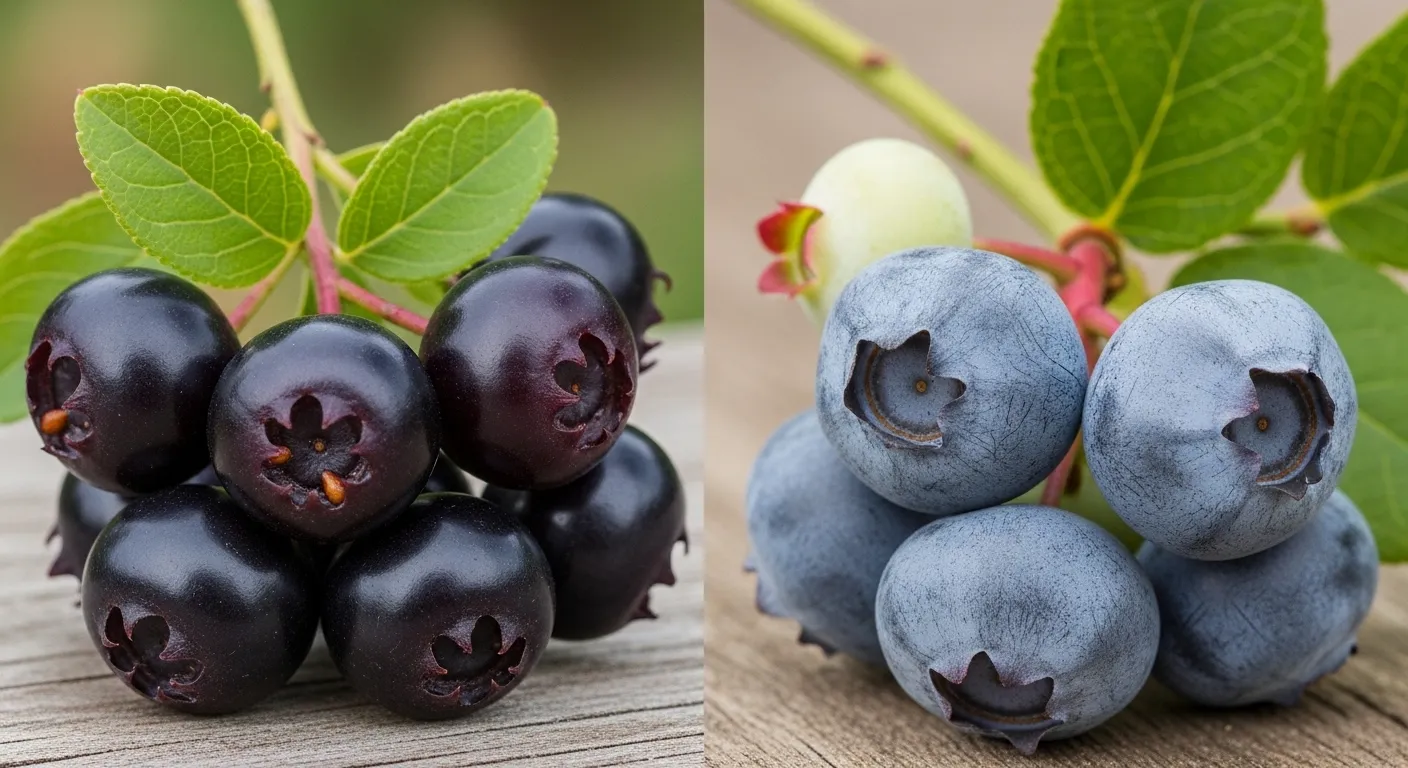
On a summer morning, a child and his grandmother walk through a forest looking for berries. The child picks a small blue fruit and asks, “Is this a blueberry or a huckleberry?”
Many people ask the same question because these berries look very similar. The difference between huckleberry and blueberry is not always easy to see at first. Both fruits are small, round, and blue or purple in color.
However, when people learn more about them, they start to notice the difference between huckleberry and blueberry in taste, seeds, and where they grow. Farmers, hikers, and berry lovers often want to know the difference between huckleberry and blueberry so they can choose the right fruit for cooking or picking. In simple words, understanding the difference between huckleberry and blueberry helps people enjoy nature and food better.
Key Difference Between Both
The main difference is in their seeds and growth. Blueberries have many tiny soft seeds, while huckleberries have larger and harder seeds that you can feel when you eat them.
Why Their Difference Is Important
Knowing the difference between these berries is important for both learners and experts. Students studying plants learn how similar fruits can belong to different plant groups. Farmers and gardeners need to know which berry grows best in certain soil and climate.
Chefs and food lovers also care about the difference because each berry has a unique taste and texture. For example, blueberries are common in cakes and muffins, while huckleberries are often used in jams and pies. Understanding their differences helps people make better choices in farming, cooking, and nature studies.
Pronunciation
- Huckleberry
- US: /ˈhʌkəlˌberi/
- UK: /ˈhʌkəlˌberi/
- US: /ˈhʌkəlˌberi/
- Blueberry
- US: /ˈbluːˌberi/
- UK: /ˈbluːˌberi/
- US: /ˈbluːˌberi/
Linking Hook
Although they look alike, a closer look reveals many clear differences between these two popular berries.
Difference Between Huckleberry and Blueberry
1. Seed Type
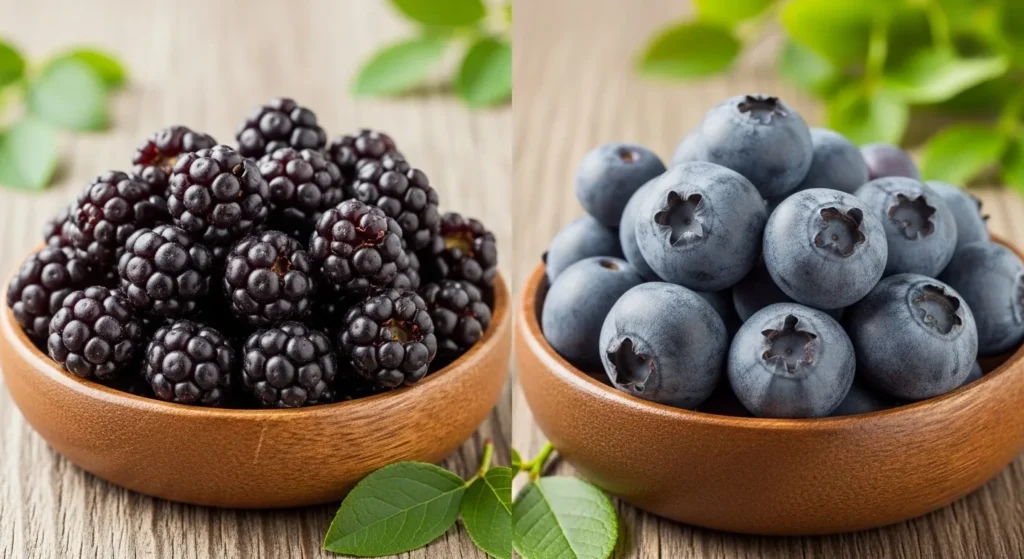
Huckleberries have large and hard seeds. Blueberries have tiny soft seeds.
Examples:
- When Sarah eats huckleberries, she feels the seeds while chewing.
- When Tom eats blueberries, he hardly notices the seeds.
2. Taste
Huckleberries often taste strong and sweet-tart. Blueberries usually taste mild and sweet.
Examples:
- Huckleberry jam has a bold flavor.
- Blueberry muffins have a gentle sweet taste.
3. Size
Huckleberries are often smaller. Blueberries are usually bigger and rounder.
Examples:
- Wild huckleberries look tiny on forest bushes.
- Store blueberries appear larger in fruit boxes.
4. Growing Area
Huckleberries grow mostly in wild forests. Blueberries grow in farms and gardens.
Examples:
- Hikers pick huckleberries in mountain forests.
- Farmers grow blueberries in large fields.
5. Color
Huckleberries can be dark purple or black. Blueberries are usually light blue with a pale coating.
Examples:
- Some huckleberries look almost black.
- Blueberries often look dusty blue.
6. Plant Type
Huckleberries grow on wild shrubs. Blueberries grow on cultivated bushes.
Examples:
- Wild bushes in forests produce huckleberries.
- Garden plants produce blueberries.
7. Availability
Huckleberries are rare in markets. Blueberries are very common in stores.
Examples:
- Many people never see fresh huckleberries in supermarkets.
- Blueberries are sold in most grocery stores.
8. Cooking Use
Huckleberries are famous in pies and syrups. Blueberries are common in cakes and pancakes.
Examples:
- A huckleberry pie has a rich flavor.
- Blueberry pancakes are popular at breakfast.
9. Price
Huckleberries are often more expensive. Blueberries are cheaper because farms grow them widely.
Examples:
- A jar of huckleberry jam can cost more.
- Blueberry jam is usually affordable.
10. Farming Difficulty
Huckleberries are hard to farm. Blueberries are easy to grow on farms.
Examples:
- Many farmers cannot grow huckleberries easily.
- Blueberry farms produce large harvests every year.
Nature and Behaviour
Huckleberry
Huckleberries are mostly wild plants. They grow in forests and mountains. They like natural soil and cool climates. These plants do not grow well on farms.
Blueberry
Blueberries are cultivated plants. Farmers grow them in fields and gardens. They adapt well to farming methods and produce fruit regularly.
Why People Are Confused About Their Use
People often confuse these berries because they look very similar in shape and color. Both fruits are small, round, and blue or purple. In photos or from a distance, they appear almost the same.
Another reason is that both berries are used in desserts, jams, and drinks. Many people also use the names interchangeably in casual speech. However, once someone learns about their seeds, taste, and growing places, it becomes easier to tell them apart.
Comparison Table
| Feature | Huckleberry | Blueberry | Similarity |
| Seed | Large and hard | Tiny and soft | Both have seeds |
| Taste | Strong sweet-tart | Mild sweet | Both are tasty |
| Size | Smaller | Larger | Both are small fruits |
| Growing place | Wild forests | Farms and gardens | Both grow on bushes |
| Color | Dark purple/black | Light blue | Both are blue-colored berries |
| Availability | Rare | Common | Both sold as fruit |
Which Is Better in Different Situations?
Huckleberries are better when someone wants a strong and unique berry flavor. They are excellent in homemade pies, syrups, and special desserts. Because they grow in the wild, people often see them as a rare treat. Travelers and hikers enjoy picking them in forests.
Blueberries are better for everyday cooking and healthy snacks. They are easy to find in markets and are often used in muffins, pancakes, smoothies, and salads.
Their mild sweetness makes them popular with children and adults. For daily meals, blueberries are usually the easier and cheaper choice.
Metaphors and Similes
These berries sometimes appear in comparisons and creative language.
- “Sweet as a blueberry muffin.”
- “Rare like a wild huckleberry.”
Such expressions highlight sweetness, rarity, or natural beauty.
Connotative Meaning
Huckleberry
- Often has a positive meaning related to adventure and nature.
Example: Someone may say, “He is a real huckleberry explorer.”
Blueberry
- Usually has a neutral or positive meaning related to health and sweetness.
Example: “Blueberry snacks are healthy for kids.”
Idioms or Proverbs
- “A huckleberry over my persimmon.”
Meaning: something better than expected.
Example: That new phone is a huckleberry over my old one. - “The pick of the blueberries.”
Meaning: the best choice.
Example: That student is the pick of the blueberries in the class.
Works in Literature
- “The Adventures of Tom Sawyer” Adventure Mark Twain 1876 (mentions huckleberry characters and nature).
- “Blueberries for Sal” Children’s Literature Robert McCloskey 1948
Movies
- “Huckleberry Finn” 1939 United States
- “The Adventures of Huck Finn” 1993 United States
FAQ Section
1. Are huckleberries and blueberries the same fruit?
No. They are different berries with different seeds and growing habits.
2. Which berry is sweeter?
Blueberries are usually sweeter and milder.
3. Can you grow huckleberries in gardens?
It is difficult because they grow best in wild forests.
4. Which berry is more common in stores?
Blueberries are much more common in supermarkets.
5. Are both berries healthy?
Yes. Both contain vitamins and antioxidants that are good for health.
Usefulness in Our Surroundings
Both berries are useful in daily life. They provide nutrition, vitamins, and natural sweetness. Farmers earn money from growing blueberries, while hikers and local communities value wild huckleberries.
These fruits also support wildlife because birds and animals eat them in forests. In kitchens, they improve many recipes such as pies, jams, pancakes, and smoothies.
Final Words About Both
Huckleberries and blueberries are small fruits with big value. One grows mostly in the wild, while the other grows easily on farms. Both add color, taste, and health benefits to our food.
Conclusion
In summary, the difference between huckleberry and blueberry appears in their seeds, taste, size, and growing places.
Huckleberries are usually wild berries with strong flavor and hard seeds. Blueberries are farm-grown berries with soft seeds and mild sweetness. Even though they look similar, their uses and availability are different.
Learning about these berries helps students understand nature and helps cooks choose the right fruit for recipes. Both berries remain important in food, culture, and nature. Whether someone enjoys wild huckleberries from the forest or sweet blueberries from the market, each fruit offers its own special charm and benefits.

I am E.M. Forster (1879–1970), a renowned English novelist and essayist, famous for A Room with a View, Howards End, and A Passage to India. I explore human relationships, social class, and personal freedom, making my work a key part of 20th-century English literature.