Dry indoor air can make your home uncomfortable, especially during winter or allergy season. It can cause dry skin, irritated sinuses, and even trouble sleeping. That’s why many people turn to devices like humidifiers and vaporizers to improve air quality and feel better at home.
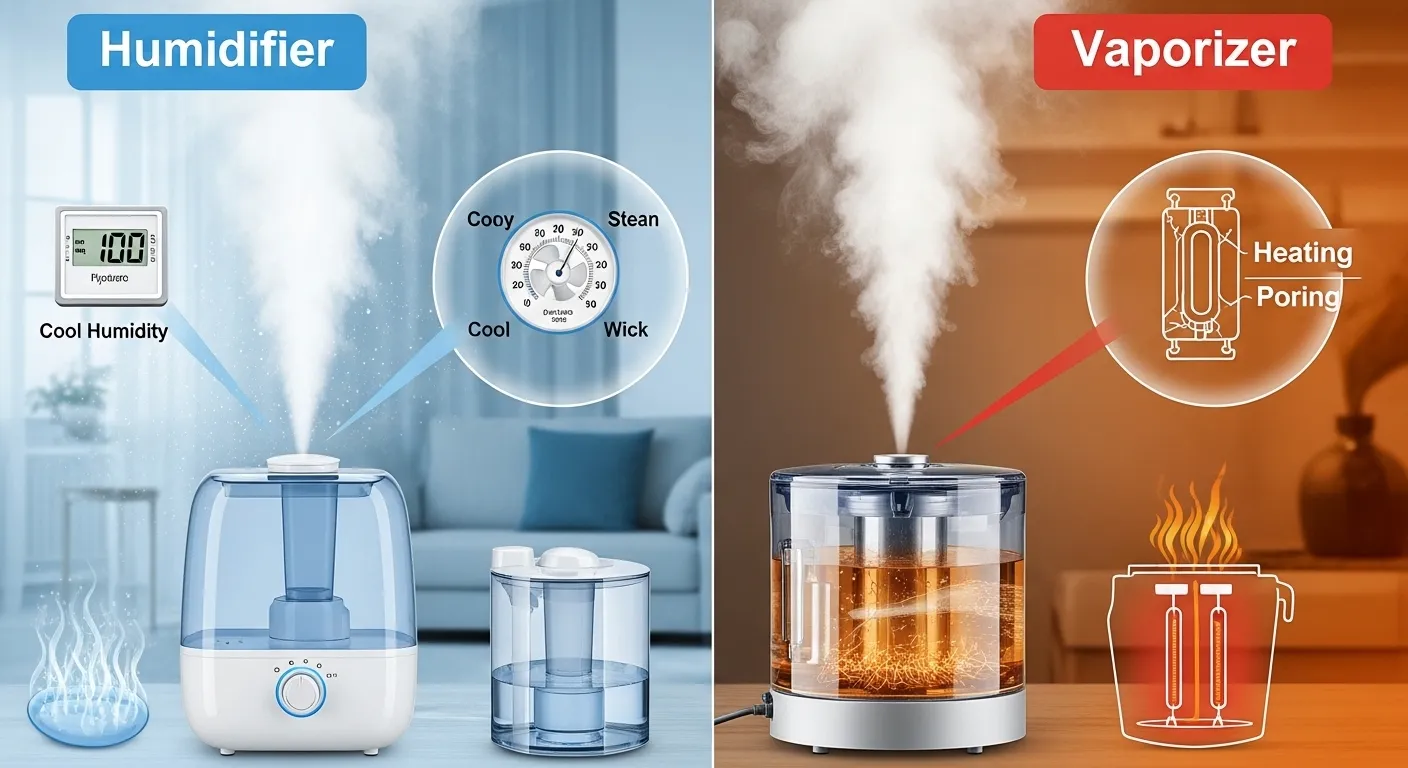
A humidifier adds moisture to the air in the form of cool mist, while a vaporizer produces warm steam by heating water. Both help increase humidity, but they work differently and suit different needs.
Understanding the difference between humidifier and vaporizer can help you choose the right option for your home, health, and comfort. Whether you’re dealing with allergies, a cold, or just dry air, picking the right device makes a big difference.
In this guide, you’ll learn how each device works, their pros and cons, and when to use one over the other. This will help you make a smart, practical choice without confusion.Let’s compare the humidifier and vaporizer in detail below.
Quick Summary
Here’s a simple overview before we dive deeper:
- Humidifiers use cool mist and are safer for homes with kids
- Vaporizers produce warm steam and can help with congestion
- Both increase indoor humidity but in different ways
- Your choice depends on safety, comfort, and health needs
Quick Comparison Table of Humidifier vs Vaporizer
| Feature | Humidifier | Vaporizer |
| Texture | Cool mist | Warm steam |
| Taste | Not applicable | Not applicable |
| Usage | Daily moisture control | Cold and flu relief |
| Ingredients | Water only | Water (can add inhalants) |
| Method | Ultrasonic or evaporative | Boils water to create steam |
| Temperature | Cool | Warm or hot |
| Safety | Safer for children | Risk of burns |
| Noise Level | Usually quiet | Slight bubbling noise |
| Maintenance | Needs frequent cleaning | Easier to clean |
| Nutrition/Calories | None | None |
What Is a Humidifier? (Definition & Uses)
A humidifier is a device that adds moisture to the air using cool mist. It works by either vibrating water into tiny droplets (ultrasonic) or using a fan to evaporate water into the air.
Humidifiers are commonly used to relieve dry skin, cracked lips, and irritated nasal passages. They are also helpful for people with allergies or asthma because they keep airways moist and comfortable.
These devices are ideal for everyday use, especially in bedrooms or offices. Since they don’t heat water, they are generally safer for homes with children and pets.
What Is a Vaporizer? (Definition & Uses)
A vaporizer is a type of humidifier that produces warm steam by boiling water. The steam is then released into the air to increase humidity.
Vaporizers are often used when someone has a cold, flu, or sinus congestion. The warm steam can help loosen mucus and make breathing easier. Some models allow you to add medicated inhalants for extra relief.
Because vaporizers use heat, they can pose a burn risk. However, they are effective for targeted relief during illness.
Key Differences Between Humidifier and Vaporizer
The main difference between a humidifier and a vaporizer lies in how they produce moisture. A humidifier releases cool mist, while a vaporizer creates warm steam by heating water. Both improve air humidity, but they differ in safety, usage, and effectiveness for specific needs.
Temperature Output
Humidifiers release cool mist, making them safe and comfortable for daily use. Vaporizers, on the other hand, produce hot steam.
For example, a humidifier is better for a child’s room, while a vaporizer suits cold relief for adults.
Method of Operation
Humidifiers use ultrasonic vibrations or evaporation to disperse moisture. Vaporizers boil water to create steam.
For instance, a humidifier runs quietly, while a vaporizer may make a slight boiling sound.
Safety
Humidifiers are generally safer because they don’t use heat. Vaporizers can cause burns if touched accidentally.
For example, families with young children usually prefer humidifiers for safety reasons.
Purpose of Use
Humidifiers are ideal for everyday comfort and dry air. Vaporizers are mainly used for temporary relief during illness.
For instance, use a humidifier during winter dryness, but a vaporizer during a cold.
Maintenance
Humidifiers require regular cleaning to prevent mold and bacteria buildup. Vaporizers are easier to clean due to boiling water.
For example, skipping cleaning in a humidifier can spread germs into the air.
Noise Level
Humidifiers are usually very quiet, especially ultrasonic models. Vaporizers may produce a gentle bubbling sound.
For instance, a humidifier is better for light sleepers.
Energy Consumption
Humidifiers generally use less electricity. Vaporizers consume more energy due to heating water.
For example, running a vaporizer all night may slightly increase your energy bill.
Additional Features
Some vaporizers allow adding medicated inhalants for therapy. Humidifiers usually do not support this feature.
For instance, a vaporizer can help deliver soothing vapors during a cough.
Climate Suitability
Humidifiers are suitable for warm or moderate climates. Vaporizers are more comfortable in cold weather.
For example, warm steam may feel uncomfortable in summer.
Detailed Comparison
When comparing humidifiers vs vaporizers, it’s clear that both serve the same basic purposeadding moisture to the airbut in very different ways.
If you’re wondering what is the difference between humidifier and vaporizer in daily use, it comes down to comfort and safety. Humidifiers are better for long-term use because they are safer and more energy-efficient. Vaporizers, however, are more effective for short-term relief, especially when dealing with colds or sinus issues.
In terms of performance, a humidifier spreads moisture evenly across the room. A vaporizer provides a more concentrated effect due to warm steam. This makes vaporizers useful when you need quick respiratory relief.
When people compare humidifier and vaporizer features, they often focus on maintenance and usability. Humidifiers need more frequent cleaning, while vaporizers are simpler but require caution due to heat.
Similarities
Despite their differences, both devices share several common benefits:
- Both increase indoor humidity levels
- Both help relieve dryness and irritation
- Both can improve breathing comfort
- Both are easy to use at home
- Both come in portable and room-sized models
When to Choose Humidifier vs Vaporizer
Choosing between the two depends on your needs and environment.
Choose a Humidifier if:
- You need daily moisture control
- You have children or pets at home
- You prefer quiet operation
- You want a safer option
Choose a Vaporizer if:
- You have a cold or congestion
- You want warm steam therapy
- You need quick relief for sinuses
- You don’t mind careful handling
Simple Tip:
If safety and daily comfort matter most, go with a humidifier. If you need fast relief from illness, a vaporizer is the better choice.
FAQs
1. Is a humidifier the same as a vaporizer?
No, they are not the same. A humidifier uses cool mist, while a vaporizer produces warm steam. Both add moisture but work differently.
2. Which is better: humidifier or vaporizer?
It depends on your needs. A humidifier is better for daily use and safety, while a vaporizer is better for cold and congestion relief.
3. Can I use a vaporizer every day?
You can, but it’s not always necessary. Vaporizers are best for short-term use, especially during illness.
4. Are humidifiers safer than vaporizers?
Yes, humidifiers are generally safer because they don’t use heat, making them suitable for children’s rooms.
5. Do vaporizers help with cough and cold?
Yes, the warm steam from vaporizers can help loosen mucus and soothe irritated airways.
Conclusion
Understanding the difference between humidifier and vaporizer helps you make a smarter decision for your home and health. While both devices improve air moisture, they serve different purposes.
Humidifiers are ideal for everyday comfort, offering safe and quiet operation. Vaporizers, on the other hand, provide powerful steam that’s great for relieving cold and congestion symptoms.
If you’re still deciding which is a better humidifier or vaporizer, think about your main needs: daily comfort or temporary relief. Once you know that, choosing the right device becomes much easier.
In the end, both options can improve your indoor environment; you just need the one that fits your lifestyle best.

I am D. H. Lawrence (David Herbert Lawrence) an influential English novelist, poet, essayist, and literary critic born on September 11, 1885, in Eastwood, Nottinghamshire, England. He is widely regarded as one of the most important writers of the 20th century.
I work often explored human relationships, emotional intimacy, industrialization, and the conflict between modern society and natural instincts.