Oxygen is essential for every cell in your body. When oxygen levels drop, it can quickly affect how your organs work. Two terms you may hear in medical settings are hypoxia and hypoxemia.
While they sound similar, they are not the same and understanding the difference is important for recognizing symptoms and getting the right treatment.
Featured Snippet:
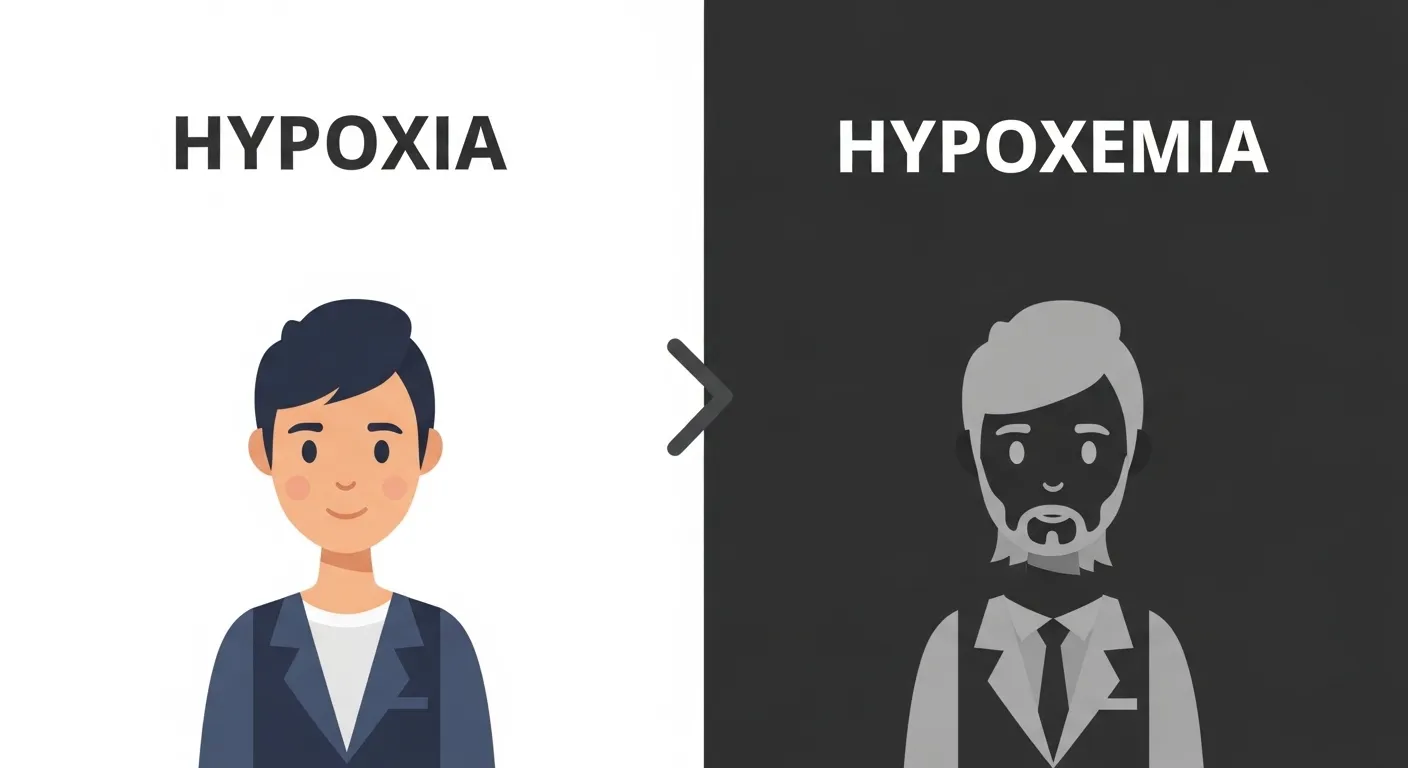
The difference between hypoxia and hypoxemia is that hypoxemia refers to low oxygen levels in the blood, while hypoxia means low oxygen levels in body tissues. Hypoxemia often leads to hypoxia, but tissue oxygen can also drop even when blood oxygen seems normal.
Both conditions can be serious and may happen due to lung problems, heart issues, or environmental factors like high altitude. Knowing how they differ helps doctors choose the right tests and treatments.
In this article, you’ll learn clear definitions, key differences, similarities, and when each condition occurs. This will help you better understand symptoms and medical advice.
Let’s compare hypoxia and hypoxemia in detail below.
Quick Summary
Here’s a simple overview before we go deeper:
- Hypoxemia = low oxygen in the blood
- Hypoxia = low oxygen in body tissues
- Hypoxemia often causes hypoxia, but not always
- Both conditions can be life-threatening if untreated
Quick Comparison Table of Hypoxia vs Hypoxemia
| Feature | Hypoxia | Hypoxemia |
| Definition | Low oxygen in tissues | Low oxygen in blood |
| Location | Body cells and organs | Arterial blood |
| Cause | Poor oxygen delivery or usage | Low oxygen levels in lungs or blood |
| Measurement | Harder to measure directly | Measured with blood tests (ABG, pulse oximeter) |
| Symptoms | Confusion, fatigue, organ dysfunction | Shortness of breath, blue lips |
| Severity | Can affect organs directly | Often leads to hypoxia |
| Treatment | Oxygen therapy, treat underlying cause | Oxygen therapy, improve lung function |
| Usage (Medical) | Refers to tissue-level issue | Refers to blood-level issue |
| Mechanism | Reduced oxygen supply or use | Reduced oxygen saturation in blood |
| Nutrition/Calories | Not directly related | Not directly related |
What Is Hypoxia? (Definition & Uses)
Hypoxia is a condition where the body’s tissues do not receive enough oxygen to function properly. Even if oxygen is present in the blood, it may not reach or be used by cells effectively.
This can happen due to poor blood circulation, blocked blood vessels, or problems with how cells use oxygen.
Common types of hypoxia include:
- Hypoxic hypoxia (low oxygen from lungs)
- Anemic hypoxia (low red blood cells)
- Circulatory hypoxia (poor blood flow)
- Histotoxic hypoxia (cells cannot use oxygen properly)
Doctors use this term when discussing how oxygen shortage affects organs like the brain, heart, and muscles.
What Is Hypoxemia? (Definition & Uses)
Hypoxemia refers to low levels of oxygen in the blood, especially in arterial blood. It is usually measured using:
- Pulse oximeter (SpO₂)
- Arterial blood gas (ABG) test
This condition often results from lung-related issues such as:
- Pneumonia
- Asthma
- Chronic obstructive pulmonary disease (COPD)
- High altitude exposure
Hypoxemia is important because it is often the first step that can lead to hypoxia if not treated.
Key Differences Between Hypoxia and Hypoxemia
What is the difference between hypoxia and hypoxemia?
The difference between hypoxia and hypoxemia is that hypoxemia is a problem with low oxygen in the blood, while hypoxia is when body tissues do not receive enough oxygen.
Hypoxemia can cause hypoxia, but Low oxygen can also occur due to poor circulation or cell dysfunction.
Location of the Problem
Hypoxia affects body tissues and organs, while hypoxemia occurs in the blood.
For example, a patient with poor circulation may have normal blood oxygen but still develop hypoxia in their limbs.
Measurement
Hypoxemia is easy to measure using tools like pulse oximeters or blood tests. Hypoxia is harder to measure directly.
For instance, doctors may suspect hypoxia based on symptoms like confusion rather than a direct test.
Causes
Hypoxemia is mainly caused by lung issues or low oxygen intake. Hypoxia can result from multiple factors, including poor blood flow or cellular problems.
For example, carbon monoxide poisoning causes hypoxia even if oxygen levels in blood appear normal.
Relationship Between Them
Hypoxemia often leads to hypoxia, but they are not always linked.
For instance, someone at high altitude may first develop hypoxemia, which later causes hypoxia.
Symptoms
Hypoxemia symptoms include shortness of breath and bluish lips. Hypoxia symptoms affect organs, such as confusion or chest pain.
For example, brain hypoxia may cause dizziness or memory issues.
Severity Impact
Hypoxia directly damages organs, making it more dangerous in the long term. Hypoxemia is often an early warning sign.
For instance, untreated hypoxia can lead to organ failure.
Treatment Focus
Hypoxemia treatment focuses on increasing oxygen in the blood. Hypoxia treatment targets improving oxygen delivery to tissues.
For example, oxygen masks treat hypoxemia, while improving blood flow treats Low oxygen.
Types
Hypoxia has several types based on causes. Hypoxemia is usually classified by severity levels.
For instance, hypoxia includes circulatory or histotoxic types, while hypoxemia is mild, moderate, or severe.
Underlying Mechanism
Hypoxemia occurs due to poor oxygen exchange in the lungs. Hypoxia happens when oxygen cannot reach or be used by tissues.
For example, lung disease leads to hypoxemia, while shock can cause Low oxygen.
Detailed Comparison
When comparing hypoxia vs hypoxemia, the key difference lies in where the oxygen problem occurs. Hypoxemia starts in the blood and is often easier to detect with tests. Hypoxia, on the other hand, reflects the actual impact on the body’s organs and tissues.
If you’re wondering how Low oxygen is different from hypoxemia, think of it as a chain: blood carries oxygen, and tissues use it. A problem in either step leads to different conditions.
In many cases, doctors first identify hypoxemia through testing and then evaluate whether it has progressed to hypoxia. This is why early diagnosis is critical.
Similarities
Despite their differences, these conditions share several features:
- Both involve low oxygen levels
- Both can be life-threatening
- Both may cause shortness of breath
- Both require quick medical attention
- Oxygen therapy is commonly used in treatment
When to Choose Hypoxia vs Hypoxemia
Understanding when each term applies is important:
Choose hypoxemia when:
- Talking about blood oxygen levels
- Using pulse oximeter readings
- Diagnosing lung-related issues
Choose hypoxia when:
- Referring to organ or tissue damage
- Discussing oxygen delivery problems
- Evaluating symptoms like confusion or fatigue
Simple tip:
If the issue is in the blood → hypoxemia
If the issue is in tissues → hypoxia
FAQs
1. Is hypoxia the same as hypoxemia?
No, hypoxia is not the same as hypoxemia. Hypoxemia affects blood oxygen, while Low oxygen affects tissues.
2. Can you have hypoxia without hypoxemia?
Yes, this can happen if blood oxygen is normal but tissues cannot use it properly, such as in poisoning cases.
3. Which is more dangerous: hypoxia or hypoxemia?
Hypoxia is generally more dangerous because it directly affects organs and can cause damage quickly.
4. How do doctors diagnose hypoxemia?
Doctors use pulse oximeters or arterial blood gas tests to measure oxygen levels in the blood.
5. Does hypoxemia always lead to hypoxia?
Not always, but if untreated, hypoxemia often progresses to Low oxygen.
Conclusion
Understanding the difference between hypoxia and hypoxemia is essential for recognizing how oxygen problems affect the body. Hypoxemia starts in the blood, while Low oxygen affects tissues and organs.
In simple terms, hypoxemia is about oxygen supply in the blood, and Low oxygen is about how well that oxygen reaches and supports your body’s cells. Both conditions are serious, but early detection and treatment can prevent complications.
By knowing these differences, you can better understand symptoms, medical advice, and the importance of timely care.

I am E.M. Forster (1879–1970), a renowned English novelist and essayist, famous for A Room with a View, Howards End, and A Passage to India. I explore human relationships, social class, and personal freedom, making my work a key part of 20th-century English literature.