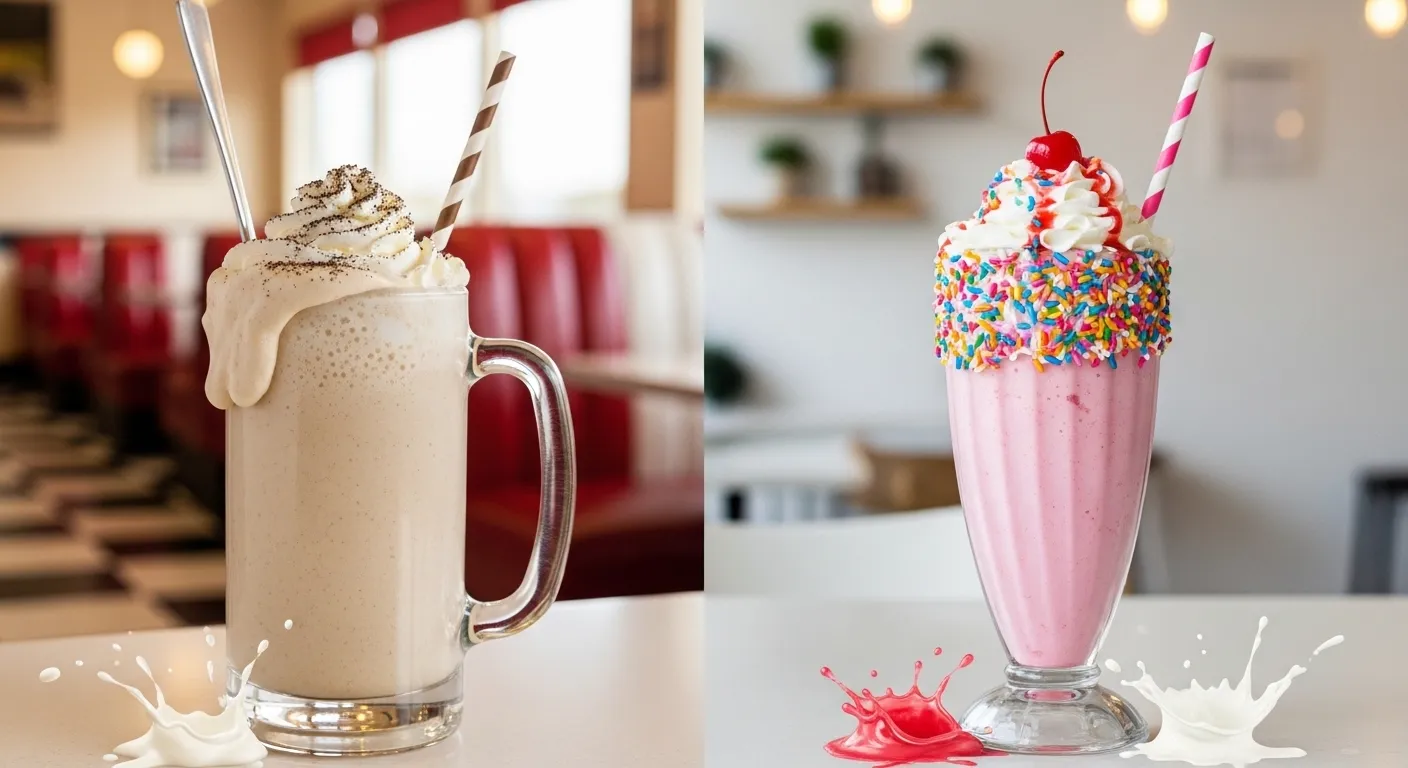
If you’ve ever looked at a dessert menu and wondered whether to order a malt or a milkshake, you’re not alone. Both drinks look similar, taste sweet, and are often served in the same tall glass. However, there are subtle differences that can change the entire flavor and texture experience. Understanding these differences helps you choose the drink that truly matches your taste.
A milkshake is a cold, creamy drink made with milk, ice cream, and flavorings like chocolate or fruit. A malt, on the other hand, is a milkshake with added malted milk powder, which gives it a slightly richer, toasted flavor. While both are popular treats, the added ingredient in malts creates a distinct taste and texture.
Knowing how these two drinks differ can help you make better choices whether you’re at a diner, café, or making one at home. In this guide, we’ll break down everything in a simple and clear way from ingredients to taste, nutrition, and when to choose each one.
Let’s compare malt and milkshake in detail below.
Quick Summary
Here’s a simple overview to help you quickly understand the main idea:
- A milkshake is made with milk, ice cream, and flavorings
- A malt includes all milkshake ingredients plus malted milk powder
- Malts have a slightly nutty, toasted flavor
- Milkshakes are more widely available and customizable
Quick Comparison Table of Malt vs Milkshake
| Feature | Malt | Milkshake |
| Main Ingredient | Malted milk powder added | No malted milk powder |
| Texture | Slightly thicker and smoother | Creamy and thick |
| Taste | Rich, slightly nutty, toasted | Sweet and creamy |
| Usage | Classic diner-style drink | Popular dessert beverage |
| Ingredients | Milk, ice cream, malt powder | Milk, ice cream, flavorings |
| Cooking Method | Blended | Blended |
| Nutrition | Slightly higher calories | Moderate calories |
| Calories | Higher due to malt powder | Slightly lower |
| Popularity | Less common today | Very popular worldwide |
| Customization | Limited flavors | Wide range of flavors |
What Is a Malt? (Definition & Uses)
A malt, often called a “malted milkshake,” is a sweet, cold drink made by blending milk, ice cream, and malted milk powder. This powder is made from barley, wheat flour, and milk, giving the drink a unique flavor.
The taste of a malt is deeper and slightly toasty compared to a regular milkshake. It’s especially popular in old-school diners and classic American dessert menus.
People usually enjoy malts as a nostalgic treat or when they want something richer than a typical shake. Chocolate and vanilla malts are the most common options.
What Is a Milkshake? (Definition & Uses)
A milkshake is a smooth and creamy drink made by blending milk, ice cream, and flavorings such as chocolate syrup, fruit, or vanilla extract.
It’s one of the most popular dessert drinks worldwide. You’ll find milkshakes in fast food restaurants, cafés, and ice cream shops.
Milkshakes are loved for their versatility. You can create endless variations, from strawberry and banana to cookies-and-cream and caramel.
Key Differences Between Malt and Milkshake
A malt vs milkshake comparison becomes clearer when you look at the details below.
Quick answer: The main difference between malt and milkshake is that a malt contains malted milk powder, which adds a richer, slightly nutty flavor and thicker texture.
Ingredients
A malt includes malted milk powder along with milk and ice cream, while a milkshake does not.
For example, if you add malt powder to a chocolate shake, it instantly turns into a chocolate malt.
Flavor
Malts have a deeper, slightly toasted flavor, while milkshakes are sweeter and more straightforward.
For instance, a vanilla malt tastes richer than a plain vanilla milkshake.
Texture
Malts tend to be slightly thicker and smoother due to the added powder. Milkshakes are creamy but lighter.
For example, a malt may feel denser when you sip it through a straw.
Nutritional Value
Malts usually have more calories and nutrients because of the added malt powder.
For instance, a malt might contain more carbohydrates compared to a regular milkshake.
Popularity
Milkshakes are more common and widely available, while malts are often found in classic diners.
For example, fast-food chains usually offer milkshakes but not malts.
Customization
Milkshakes come in many flavors and variations, while malts are usually limited to classic flavors.
For instance, you can easily find Oreo or mango milkshakes, but malt options are often just chocolate or vanilla.
Preparation
Both drinks are made by blending ingredients, but malts require an extra step of adding malt powder.
For example, a barista preparing a malt will measure and mix in the powder before blending.
Taste Preference
People who enjoy rich, complex flavors may prefer malts, while those who like simple sweetness may choose milkshakes.
For instance, someone who likes a bold taste may pick a malt over a regular shake.
Availability
Milkshakes are available almost everywhere, while malts are less commonly offered.
For example, you may need to visit a retro diner to find a traditional malt.
Detailed Comparison
When comparing malt and milkshake features in detail, the biggest difference lies in the added ingredient malted milk powder. This ingredient not only changes the taste but also slightly affects the texture and nutrition.
If you’re asking what is the difference between malt and milkshake in everyday terms, it comes down to flavor depth. A milkshake is sweet and creamy, while a malt adds a subtle roasted flavor that makes it more complex.
In terms of preparation, both drinks are simple to make at home. However, malts require an extra ingredient that may not always be available in every kitchen.
From a nutritional point of view, malts can be slightly heavier due to added sugars and carbohydrates from the malt powder. Still, both drinks are considered indulgent treats rather than everyday beverages.
Similarities
Despite their differences, malts and milkshakes share many common features:
- Both are cold, blended drinks
- Both use milk and ice cream as a base
- Both are served as desserts or treats
- Both can include chocolate, vanilla, or fruit flavors
- Both are popular in Western food culture
When to Choose Malt vs Milkshake
Choosing between these two depends on your taste and situation:
- Choose a malt if you want a richer, slightly nutty flavor
- Choose a milkshake if you prefer a classic sweet taste
- Pick a malt for a traditional diner experience
- Go for a milkshake if you want more flavor options
Simple tip: If you like deeper flavors, go for a malt. If you want something simple and sweet, choose a milkshake.
FAQs
Is a malt the same as a milkshake?
No, a malt is not the same as a milkshake. It includes malted milk powder, which changes the flavor and texture.
Which is better, malt or milkshake?
It depends on your taste. If you like rich flavors, a malt is better. If you prefer simple sweetness, a milkshake is a great choice.
Can you turn a milkshake into a malt?
Yes, simply add malted milk powder to a milkshake and blend it well.
Are malts healthier than milkshakes?
Not really. Malts may have slightly more nutrients, but they also have more calories.
Why do malts taste different?
Malts taste different because of malted milk powder, which adds a toasted, slightly nutty flavor.
Conclusion
The difference between malt and milkshake may seem small at first, but it makes a noticeable impact on taste and texture. A milkshake offers a classic, sweet, and creamy experience, while a malt adds a richer and slightly more complex flavor.
If you’re comparing malt vs milkshake for your next treat, think about what you enjoy most: simple sweetness or a deeper, nostalgic taste. Both drinks are delicious in their own way, and the best choice ultimately depends on your personal preference.
Now that you understand how a malt is different from a milkshake, you can confidently order or make the one that suits your taste best.

I am Stephen King is a spiritual writer and digital creator dedicated to exploring the deeper meaning behind numbers, synchronicity, and divine guidance. Through his platform, spiritualdigits.com he shares insights on angel numbers, spiritual symbolism, and personal awakening to help readers align with their higher purpose. His work blends intuition, research, and practical wisdom to make spiritual concepts clear, accessible, and transformative.