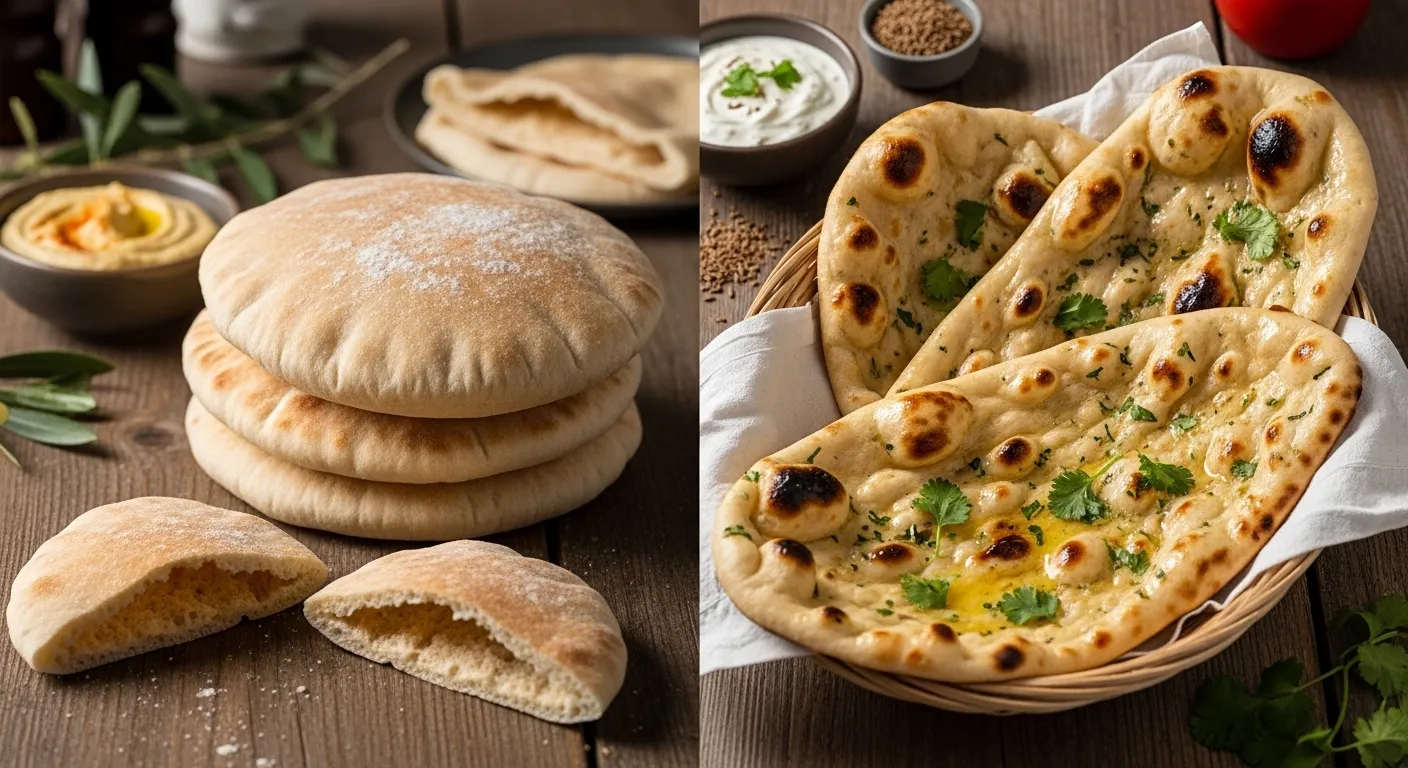
Have you ever ordered bread at a restaurant and paused at the choice between Pita and Naan? At first glance, they may seem similarboth are flatbreads, both are widely loved, and both pair well with a variety of dishes. However, the difference between pita and naan goes much deeper than appearance.
These two breads come from different regions, follow different cooking traditions, and serve different roles in meals. Pita is known for its light texture and handy pocket, making it ideal for wraps and sandwiches. Naan, on the other hand, is soft, rich, and often served as a comforting side with flavorful dishes like curries or grilled meats.
Understanding these differences can help you make better food choices, whether you’re cooking at home or ordering at a restaurant. It also helps you pair the right bread with the right meal for the best taste and experience.
This pita vs naan comparison highlights everything you need to know from ingredients and texture to nutrition and usage so you can confidently choose between them.
Let’s compare pita and naan in detail below.
Quick Summary
Here’s a quick overview to help you understand the basics before diving deeper:
- Pita is thin, light, and often used for wraps or sandwiches
- Naan is thicker, softer, and usually served with rich meals
- Pita is typically baked, while naan is cooked in a tandoor
- Naan contains dairy ingredients, while pita is usually dairy-free
Quick Comparison Table of Pita vs Naan
| Feature | Pita | Naan |
| Origin | Middle East | South Asia (India) |
| Texture | Thin and slightly chewy | Soft and fluffy |
| Taste | Mild and neutral | Rich and buttery |
| Usage | Wraps, sandwiches | Side with curries |
| Ingredients | Flour, water, yeast, salt | Flour, yogurt, milk, butter |
| Cooking Method | Oven-baked | Tandoor-cooked |
| Thickness | Thin | Thick |
| Shape | Round with pocket | Oval or teardrop |
| Calories | ~160–170 per piece | ~250–300 per piece |
| Dairy Content | Usually none | Often contains dairy |
What Is Pita? (Definition & Uses)
Pita is a traditional flatbread from the Middle East. It is made using simple ingredients like flour, water, yeast, and salt. When baked at high heat, the dough puffs up and creates a pocket inside.
This pocket is what makes pita unique. It allows you to fill the bread with ingredients like grilled chicken, vegetables, or falafel. Because of this, pita is often used for sandwiches and wraps.
Pita has a mild flavor, which makes it very versatile. It works well with dips like hummus or can be toasted into chips for snacks.
What Is Naan? (Definition & Uses)
Naan is a popular flatbread from South Asia, especially India. It is thicker and softer than pita and is traditionally cooked in a clay oven called a tandoor.
Unlike pita, naan often includes yogurt, milk, or butter in the dough. This gives it a richer taste and a soft, fluffy texture.
Naan is usually served warm as a side dish. It pairs perfectly with curries, kebabs, and lentil dishes. It can also be flavored with garlic, herbs, or cheese for extra taste.
Key Differences Between Pita and Naan
Texture
• Pita is thin and slightly chewy, while naan is soft and fluffy due to added dairy ingredients.
• The texture of naan feels richer and more indulgent compared to pita’s light bite.
• For example, pita is easier to fold for wraps, while naan feels more like a soft bread you tear apart.
Pocket vs No Pocket
• Pita forms a pocket when baked, making it ideal for stuffing. Naan does not create a pocket.
• This structural difference changes how each bread is used in meals.
• For instance, you can fill pita with salad and meat, but naan is used to scoop curry.
Ingredients
• Pita uses simple ingredients like flour, yeast, and water. Naan includes yogurt, milk, or butter.
• These added ingredients give naan a richer taste and softer texture.
• For example, naan often tastes slightly tangy because of yogurt.
Cooking Method
• Pita is baked in a standard oven at high temperatures. Naan is cooked in a tandoor oven.
• The tandoor gives naan a smoky flavor and charred spots.
• For instance, naan often has crispy edges from the clay oven.
Thickness
• Pita is thin and light, making it less filling. Naan is thicker and heavier.
• This makes naan more suitable for hearty meals.
• For example, one naan can feel as filling as two pitas.
Flavor
• Pita has a neutral flavor, while naan is rich and buttery.
• Naan can be enjoyed on its own, while pita usually needs fillings or dips.
• For instance, garlic naan can be eaten without any side dish.
Nutritional Value
• Pita generally has fewer calories and less fat than naan.
• Naan contains more calories due to butter and dairy ingredients.
• For example, a pita may have around 160 calories, while naan can exceed 250.
Shape and Appearance
• Pita is usually round and uniform. Naan is oval and often irregular.
• Naan may have bubbles and char marks from the tandoor.
• For instance, naan often looks more rustic compared to pita.
Usage Style
• Pita is commonly used for wraps and sandwiches. Naan is served as a side.
• Their usage depends on the type of meal you are preparing.
• For example, pita is great for lunch wraps, while naan is perfect with dinner curries.
Detailed Comparison
When comparing pita and naan in detail, their biggest differences lie in purpose and richness.
Pita is designed for convenience. Its pocket makes it ideal for quick meals like sandwiches or wraps. It is also lighter, making it a good choice for those looking for a lower-calorie option.
Naan, in contrast, focuses on flavor and texture. The use of dairy ingredients gives it a rich taste, while the tandoor cooking method adds a unique smoky flavor. It enhances the overall dining experience, especially when paired with bold dishes.
Another key point is versatility. While pita is more practical for everyday meals, naan is often chosen for special or traditional meals where flavor matters most.
Similarities
Despite their differences, pita and naan share several similarities:
- Both are flatbreads made mainly from wheat flour
- Both are popular in global cuisines
- Both are best served warm for better taste
- Both can be paired with dips, meats, or vegetables
When to Choose Pita vs Naan
Choosing between pita and naan depends on your needs and meal type:
- Choose pita if:
- You want a light and healthy option
- You need bread for wraps or sandwiches
- You prefer a simple taste
- Choose naan if:
- You want a rich and filling bread
- You are eating curry or grilled dishes
- You enjoy buttery and soft textures
Simple tip: Use pita for convenience and naan for comfort meals.
FAQs
1. Is pita healthier than naan?
Yes, pita is usually healthier because it has fewer calories and less fat.
2. Can naan replace pita in recipes?
Not always. Naan lacks a pocket, so it’s not ideal for stuffed recipes.
3. Why does pita form a pocket?
The pocket forms due to steam when the dough bakes at high heat.
4. Does naan always contain dairy?
Most traditional naan recipes include dairy, but some versions are dairy-free.
5. Which bread is better for dipping?
Both work well, but naan is better for thick sauces, while pita suits lighter dips.
Conclusion
The difference between pita and naan is clear when you look at their texture, ingredients, and uses. While both are delicious flatbreads, they are designed for different purposes.
Pita is light, simple, and perfect for wraps or quick meals. Naan is rich, soft, and ideal for pairing with flavorful dishes like curries.
By understanding these differences, you can choose the right bread for any meal. Whether you prefer the practicality of pita or the indulgence of naan, both offer unique benefits and taste experiences.

I am David, a passionate blog writer who loves creating informative and easy-to-understand content. I write articles that explain the difference between common topics, language concepts, and everyday knowledge. My goal is to help readers learn new things in a simple and clear way. Through research and practical examples, I try to provide useful and reliable information for students, learners, and curious readers around the world.