Choosing the right mobile plan can feel confusing with so many options available. Two of the most common types are prepaid and postpaid plans. Understanding the difference between prepaid and postpaid is essential for making an informed decision that fits your lifestyle, budget, and usage patterns.
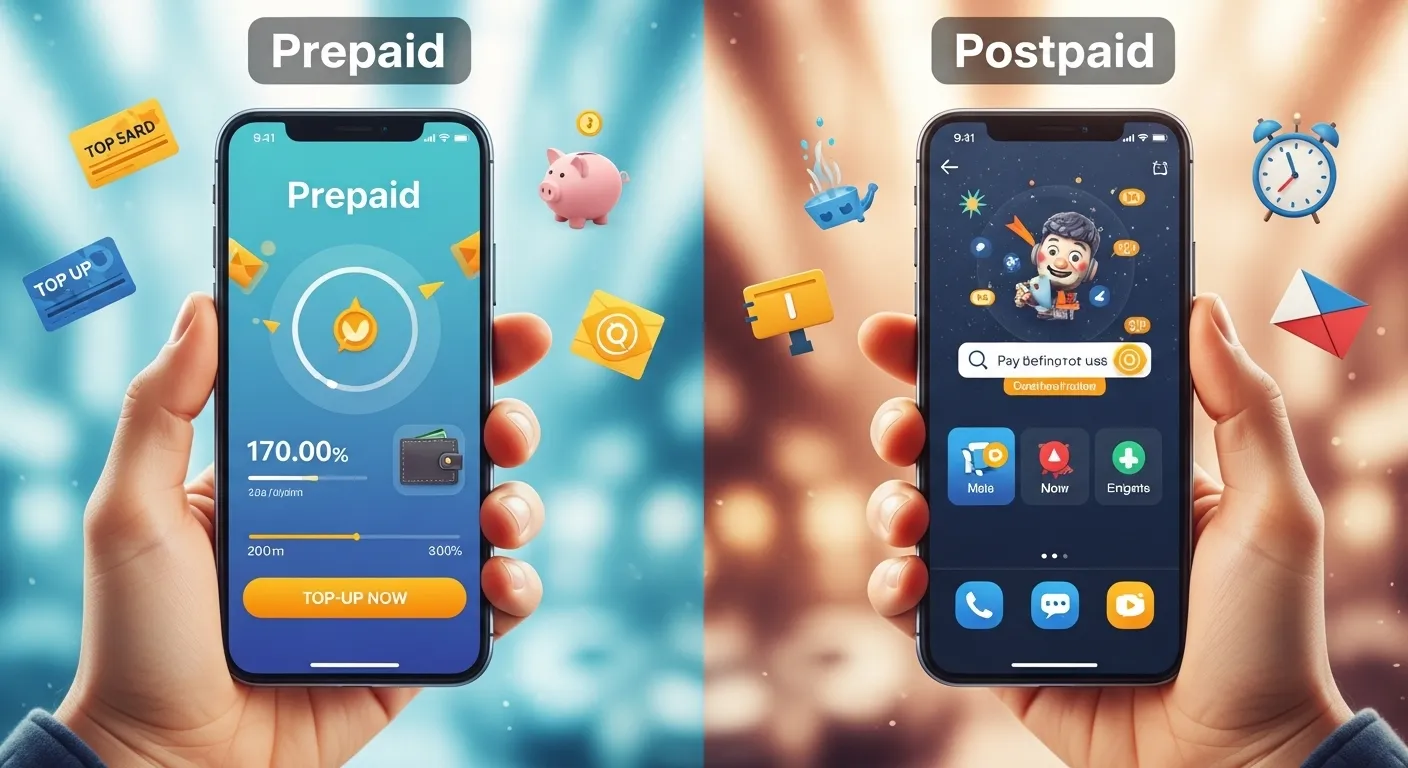
In simple terms, prepaid plans require you to pay upfront for your usage, while postpaid plans allow you to pay at the end of the billing cycle based on your consumption. Prepaid plans are flexible and help control spending, whereas postpaid plans offer convenience and additional perks like bundled services or credit benefits.
Many people struggle to decide which option is better for them. Are you a light user who wants full control over expenses? Or do you prefer unlimited usage and a monthly bill for convenience? The choice can impact your phone bills, mobile experience, and even your credit history in some cases.
In this guide, we’ll break down the key differences between prepaid and postpaid plans, explain how each works, compare their features, and help you decide which one suits your needs best. You’ll also learn about similarities, pros and cons, and common scenarios where one plan might outperform the other.
Let’s compare prepaid and postpaid in detail below.
Quick Summary
Here’s a brief overview before we dive deeper:
- Prepaid plans require upfront payment and offer flexible usage without long-term commitments.
- Postpaid plans are billed monthly and often include perks such as unlimited calls, text, or data bundles.
- Prepaid is ideal for budget-conscious users; postpaid is convenient for heavy users or families.
- The main difference lies in payment timing, plan flexibility, and additional benefits.
Quick Comparison Table of Prepaid vs Postpaid
| Feature | Prepaid | Postpaid |
| Payment Method | Pay upfront before use | Pay after usage (monthly billing) |
| Flexibility | High – easy to change or stop | Low – usually fixed contract period |
| Data & Talk Limits | Limited or adjustable | Often unlimited or high allowance |
| Plan Commitment | None | Often 12–24 months |
| Credit Check | Not required | Usually required |
| Benefits/Perks | Minimal | May include rewards, discounts, or devices |
| Usage Control | Easy – no surprise bills | Moderate – possible overage charges |
| Customer Support | Standard | Enhanced support often included |
| Extra Charges | Only if you top up more | Can include overage fees |
| Nutrition/Calories* | N/A – metaphorically, low “calorie” usage | High “calorie” usage, more features |
*This is a figurative comparison; postpaid plans usually “offer more” features, similar to higher nutrition content in meals.
What Is Prepaid? (Definition & Uses)
A prepaid plan is a mobile service that requires users to pay before using any data, calls, or messages. You buy a plan, top-up your balance, and then consume the services as needed. Prepaid is popular among students, casual users, and those who prefer no monthly obligations.
Uses:
- Short-term travel or temporary mobile needs
- Budget-friendly control over spending
- Users with unpredictable phone usage
For example, a student may buy a $20 prepaid plan every month to cover calls and social media, ensuring they never exceed their budget.
What Is Postpaid? (Definition & Uses)
A postpaid plan allows users to consume services first and pay at the end of the billing cycle, typically monthly. These plans often require a credit check and may include long-term contracts. Postpaid plans suit those who use mobile services heavily or need bundled perks such as data rollover, family plans, or premium devices.
Uses:
- Heavy data and call users
- Professionals requiring consistent connectivity
- Families sharing a single plan
For instance, a professional using unlimited calls and high-speed internet for work may choose a postpaid plan for convenience and predictable monthly billing.
Key Differences Between Prepaid and Postpaid
Here’s a clear, practical breakdown of the main differences:
Payment Timing
• Prepaid users pay before using services, while postpaid users are billed after usage.
• For example, a traveler topping up a prepaid SIM before visiting Europe avoids unexpected charges.
Flexibility
• Prepaid plans allow easy switching or stopping, whereas postpaid often requires a contract.
• For instance, someone moving frequently might prefer prepaid for easy cancellation.
Usage Limits
• Prepaid plans usually have data or call limits; postpaid often includes unlimited or high allowances.
• For example, a family using multiple devices may benefit from a postpaid unlimited data plan.
Credit Check Requirement
• Prepaid plans rarely need a credit check; postpaid plans often require it.
• For instance, a new user with no credit history can start prepaid immediately.
Cost Control
• Prepaid offers tight control to avoid overspending; postpaid may incur overage fees.
• For example, a student can manage a $30 prepaid plan without worrying about unexpected bills.
Perks and Benefits
• Postpaid plans often include extra perks like discounts on phones, reward points, or family bundles; prepaid has minimal extras.
• For instance, signing up for a postpaid plan may provide a free streaming subscription.
Contract Commitment
• Prepaid plans are usually contract-free, while postpaid may require 12–24 month commitments.
• For example, a short-term visitor prefers prepaid to avoid long-term obligations.
Customer Support
• Postpaid plans generally offer enhanced customer service compared to standard prepaid support.
• For instance, postpaid users may have dedicated helplines or priority service.
Billing Transparency
• Prepaid provides immediate insight into usage; postpaid bills are received later, sometimes causing surprises.
• For example, topping up prepaid credit shows instant balance updates, avoiding unexpected charges.
Convenience
• Postpaid plans offer convenience through automated billing, auto-pay, and bundled features; prepaid requires manual top-ups.
• For example, a busy professional might prefer postpaid to avoid repeated payments each month.
Detailed Comparison
When comparing both and consider these factors:
- Budget Control: Prepaid gives more control, ideal for low or irregular usage.
- Convenience: Postpaid is easier for heavy users with consistent consumption.
- Flexibility: Prepaid is better for travelers or short-term needs.
- Perks: Postpaid often provides more benefits like phone discounts or loyalty rewards.
- Credit Requirements: Postpaid may affect or require credit history.
Overall, Advance-paid offers freedom and budget control, while postpaid focuses on convenience, high usage, and additional features.
Similarities
- Both provide access to calls, texts, and mobile data
- Both allow choosing different data and talk packages
- Both are offered by most mobile carriers in the US and Europe
- Both can be used with smartphones, tablets, or hotspots
When to Choose Prepaid vs Postpaid
Prepaid:
- Short-term usage or temporary stay
- Budget-conscious users
- Irregular or low mobile usage
Postpaid:
- Heavy or unlimited mobile usage
- Desire for perks, rewards, or bundled services
- Professionals needing reliable monthly billing
Tip: If you want financial control, choose prepaid. If you want convenience and perks, postpaid is the better choice.
FAQs
1. What is the main difference between prepaid and postpaid?
Prepaid requires payment upfront, while postpaid bills you at the end of the month.
2. Is prepaid cheaper than postpaid?
It depends on usage. Prepaid can be cheaper for light users, while postpaid may be cost-effective for heavy users with unlimited plans.
3. Can I switch from prepaid to postpaid?
Yes, most carriers allow users to upgrade from prepaid to postpaid easily.
4. Do postpaid plans require contracts?
Typically, yes. Most postpaid plans have 12–24 month contracts, although some flexible options exist.
5. Which plan is better for families?
Postpaid is often better because of shared data, bundled services, and family-friendly perks.
6. Can I keep my number when switching between plans?
Yes, mobile number portability allows you to retain your number while changing plans.
Conclusion
Understanding the difference between prepaid and postpaid plans helps you choose the option that fits your lifestyle, budget, and mobile usage.
Prepaid is ideal for flexibility, budget control, and short-term use, while postpaid offers convenience, perks, and unlimited usage options. By evaluating your needs carefully, you can select a plan that ensures seamless connectivity without overspending or sacrificing features.
Choosing wisely ensures your mobile experience is both affordable and efficient. Whether you prioritize control or convenience, knowing the key differences between prepaid and postpaid will guide you to the best decision for your personal or family mobile needs.

I am James Anderson an English author known for his insightful and engaging writing in contemporary literature. With a focus on [insert genre, e.g., fiction, non-fiction, or specific themes], he explores complex human emotions and social dynamics, blending thought-provoking ideas with accessible storytelling. His work has earned recognition for its clarity, depth, and ability to connect with a wide audience, establishing him as a respected voice in modern English literature.