One day, a child helped their parents in the kitchen. The parents asked them to bring a fruit. The child returned with a tomato. The parent smiled and said, “That is also called a vegetable.” The child looked confused.
Many people face this same question. What is the difference between vegetable and fruit? We see them every day in meals and markets. However, the vegetable vs fruit question often confuses many learners.
For example, tomato, cucumber, and pumpkin create debate. Are they fruits or vegetables? Because of this, people often search for the difference between vegetables and fruit. Understanding the vegetable vs fruit meaning helps us learn about food and plants.
Therefore, this guide explains the difference between vegetable and fruit in very simple words.
Featured Snippet Answer
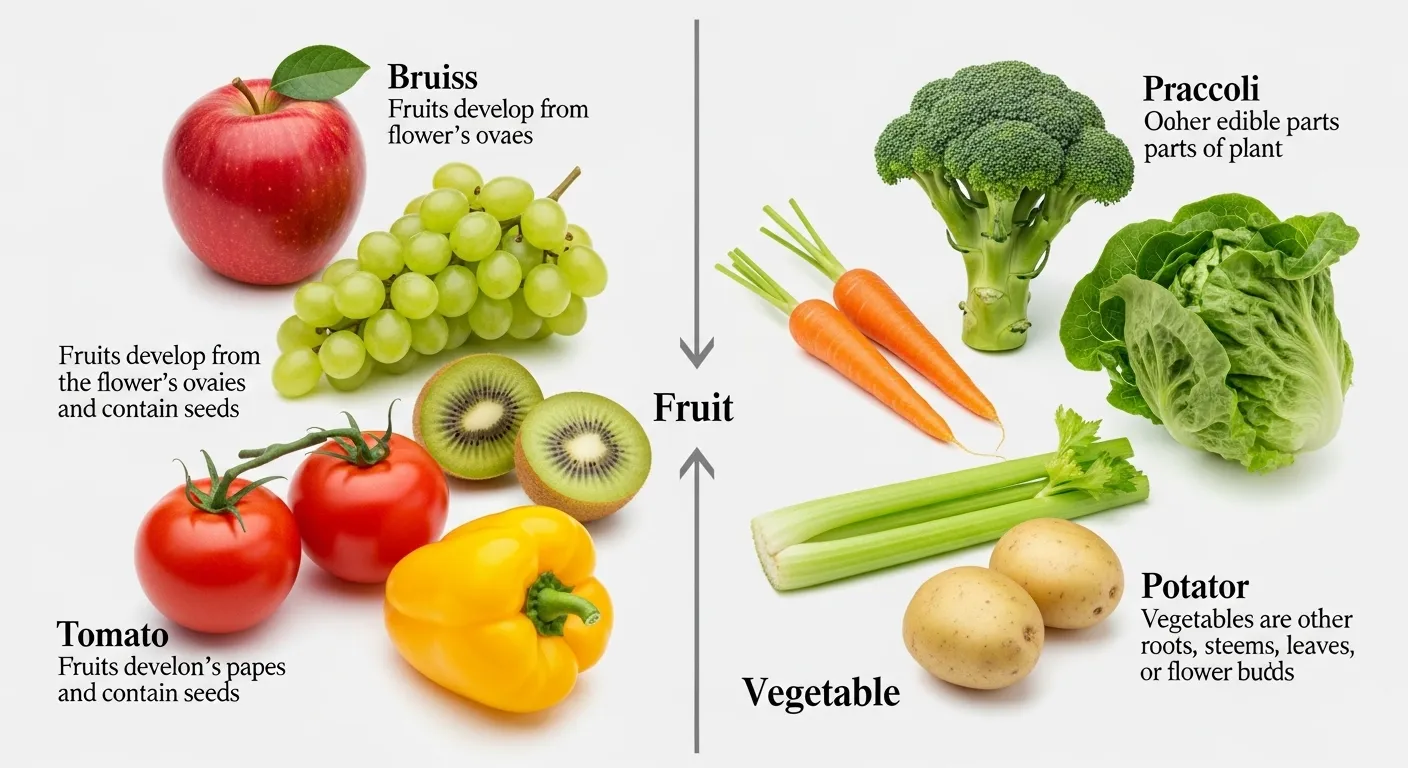
The difference between vegetables and fruit comes from plant biology. A fruit grows from a flower and holds seeds. However, a vegetable is any other edible plant part such as roots, stems, or leaves.
For example, apples and mangoes are fruits. Meanwhile, carrots and spinach are vegetables.
Key Difference Between Both
| Feature | Fruit | Vegetable |
| Plant origin | Grows from flower | Comes from other plant parts |
| Seeds | Usually contains seeds | Usually has no seeds |
| Taste | Often sweet | Often mild or savory |
| Use in meals | Often desserts or snacks | Often main meals or sides |
| Examples | Apple, mango | Carrot, spinach |
Quick Summary
The difference between vegetable and fruit mainly depends on plant structure. Fruits develop from flowers and contain seeds. Vegetables come from roots, stems, or leaves. Therefore, the fruit vs vegetable comparison is based on biology rather than taste.
What Is Fruit
A fruit is the part of a plant that grows from a flower. It usually contains seeds.
Plants create fruits to protect and spread seeds. Animals and humans eat the fruit and help spread the seeds.
Examples
- Apple
- Mango
- Orange
- Banana
These examples show the fruit vs vegetable definition clearly because each grows from a flower and holds seeds.
What Is Vegetable
A vegetable is any edible part of a plant that is not a fruit. It can be a root, stem, leaf, or flower.
People usually cook vegetables or eat them in meals.
Examples
- Carrot (root)
- Spinach (leaf)
- Potato (stem tuber)
- Broccoli (flower)
These examples help compare vegetables and fruits in simple plant terms.
Why Their Difference Is Important
Understanding the difference between vegetables and fruits helps in many ways.
First, it helps students learn plant science clearly. They can understand plant parts and plant growth.
Second, it helps cooks choose ingredients correctly. Fruits and vegetables play different roles in meals.
Finally, farmers and food experts also use the fruit vs vegetable comparison when growing and selling crops.
Pronunciation
Fruit
- US: /fruːt/
- UK: /fruːt/
Vegetable
- US: /ˈvɛdʒtəbl/
- UK: /ˈvɛdʒɪtəbl/
Learning pronunciation also helps understand the vegetable vs fruit meaning when speaking English.
Difference Between the Main Keywords
Here are 10 simple points explaining the difference between vegetable and fruit.
1. Plant Origin
Fruit grows from flowers. Vegetables grow from other parts.
Examples:
Fruit apple, mango
Vegetable carrot, potato
2. Seeds
Fruits usually contain seeds. Vegetables rarely contain seeds.
Examples:
Fruit watermelon, orange
Vegetable spinach, cabbage
3. Taste
Fruits are often sweet. Vegetables taste mild or savory.
Examples:
Fruit banana, grapes
Vegetable broccoli, onion
4. Cooking Use
Fruits are often eaten raw or in desserts. Vegetables appear in main meals.
Examples:
Fruit fruit salad, smoothie
Vegetable soup, stir-fry
5. Plant Parts
Fruits are reproductive parts. Vegetables are structural plant parts.
Examples:
Fruit tomato, cucumber
Vegetable lettuce, celery
6. Sugar Content
Fruits often contain more natural sugar. Vegetables usually contain less.
Examples:
Fruit mango, pineapple
Vegetable zucchini, kale
7. Market Classification
Stores often group foods by cooking use. Therefore, some fruits appear with vegetables.
Examples:
Fruit but sold as vegetable tomato
Vegetable carrot
8. Botanical Definition
Botany defines fruits by flower development. Vegetables have no strict botanical term.
Examples:
Fruit avocado
Vegetable spinach
9. Meal Role
Fruits often appear in snacks or desserts. Vegetables appear in main dishes.
Examples:
Fruit apple snack
Vegetable roasted potatoes
10. Examples That Cause Confusion
Some foods are fruits but treated as vegetables.
Examples:
Fruit botanically tomato, cucumber
Vegetable in cooking tomato sauce, cucumber salad
These examples clarify the vegetable vs fruit comparison.
Similarities Between Vegetable and Fruit
Even with the difference between vegetables and fruit, they share many features.
First, both come from plants.
Second, both provide vitamins and minerals.
Third, both help people stay healthy.
Finally, both appear in many meals around the world.
Therefore, the fruit and vegetable similarities are important for healthy diets.
Nature and Behaviour
Nature of Fruits
Fruits protect plant seeds. They also attract animals with color and sweetness. As a result, animals help spread seeds.
Nature of Vegetables
Vegetables support plant growth. Roots store food. Leaves make energy through sunlight.
Therefore, fruits and vegetables play different roles in plant life.
Why People Are Confused About Their Use
Many people confuse fruits and vegetables because of cooking traditions.
For example, tomatoes taste savory. Therefore, cooks treat them like vegetables.
Meanwhile, science says tomatoes are fruits because they grow from flowers and contain seeds.
As a result, the fruit vs vegetable confusion appears in kitchens and markets.
Which Is Better in Different Situations
Fruits and vegetables both offer strong health benefits. However, they serve different roles.
Fruits provide quick natural sugar and energy. Therefore, they work well for snacks and breakfast.
Vegetables provide fiber and nutrients. As a result, they support digestion and balanced meals.
Nutrition experts suggest eating both daily. A colorful mix of fruits and vegetables improves overall health.
Thus, the vegetable vs fruit benefits work best together.
Metaphors and Similes
Metaphors help explain the difference between vegetables and fruit.
A fruit is like a “seed container.” It protects and spreads plant seeds.
A vegetable is like the “working body” of the plant. Roots, stems, and leaves keep the plant alive.
Therefore, fruits and vegetables act like different parts of a team.
Connotative Meaning
Both words usually carry positive meanings.
Fruit often represents sweetness, reward, or success.
Example:
“The fruit of hard work brings success.”
Vegetables often represent health and nutrition.
Example:
“Children should eat vegetables for strength.”
Thus, both words have mostly positive connotations.
Idioms or Proverbs
Here are idioms related to these words.
The fruit of one’s labor
Meaning: results of hard work
Example: She enjoyed the fruit of her labor after finishing the project.
Cool as a cucumber
Meaning: calm and relaxed
Example: He stayed cool as a cucumber during the test.
These idioms show how fruits and vegetables appear in everyday language.
Works in Literature
Many books use fruits or vegetables as symbols.
The Grapes of Wrath
- Genre: Novel
- Writer: John Steinbeck
- Year: 1939
James and the Giant Peach
- Genre: Children’s fantasy
- Writer: Roald Dahl
- Year: 1961
These works show how food items can inspire storytelling.
Movies
Some films also feature fruits or vegetables.
Cloudy with a Chance of Meatballs
- Year: 2009
- Country: USA
VeggieTales Movies
- Year: 2002 onward
- Country: USA
These movies use food characters to teach lessons.
FAQ
What is the main difference between vegetable and fruit?
The difference between vegetables and fruit lies in plant biology. Fruits grow from flowers and contain seeds. Vegetables come from other plant parts.
Are vegetables and fruit the same?
No. Although both come from plants, they differ in structure. The fruit vs vegetable definition depends on plant reproduction.
Is tomato fruit or vegetable?
Scientifically, tomatoes are fruit. However, in cooking, it is often used as a vegetable.
How can we compare vegetables and fruits easily?
The easiest vegetable vs fruit comparison is seeds. If it grows from a flower with seeds, it is a fruit.
Why do people confuse fruit vs vegetable?
People classify foods by taste and cooking use. However, science classifies them by plant structure.
Usefulness in Our Surroundings
Fruits and vegetables appear everywhere in daily life.
We see them in kitchens, markets, farms, and restaurants. They also appear in school lessons about plant science.
Meanwhile, doctors recommend eating both for health. Fruits provide vitamins and energy. Vegetables provide fiber and minerals.
Therefore, understanding the difference between vegetables and fruit helps people choose healthy foods.
Final Words About Both
Fruits and vegetables are both valuable foods. Each plays a special role in plants and diets.
Fruits spread seeds and often taste sweet. Vegetables support plant growth and offer strong nutrition.
Understanding their differences helps people learn about plants, cooking, and health.
Conclusion
The difference between vegetables and fruits comes mainly from plant biology. Fruits grow from flowers and usually contain seeds. Vegetables come from other plant parts such as roots, stems, leaves, or flowers.
However, cooking traditions sometimes classify foods differently. For example, tomatoes are fruits in science but vegetables in cooking. Therefore, the fruit vs vegetable comparison depends on context.
Both fruits and vegetables provide important nutrients. Eating a variety of them supports good health. By understanding the difference between the keywords, learners can better understand plants, food science, and daily nutrition.

I am James Anderson an English author known for his insightful and engaging writing in contemporary literature. With a focus on [insert genre, e.g., fiction, non-fiction, or specific themes], he explores complex human emotions and social dynamics, blending thought-provoking ideas with accessible storytelling. His work has earned recognition for its clarity, depth, and ability to connect with a wide audience, establishing him as a respected voice in modern English literature.