Imagine a classroom where two students struggle to focus. One is prescribed Adderall, the other methylphenidate.
Both medicines help improve attention, yet they are not the same. The difference between Adderall and methylphenidate often confuses parents, teachers, and even students.
While both are used mainly to treat ADHD, the difference between Adderall and methylphenidate lies in their ingredients, effects, and duration.
Understanding the difference between Adderall and methylphenidate can help families make informed decisions. In fact, knowing the difference between Adderall and methylphenidate is important for safety, effectiveness, and overall well-being.
Both medicines belong to stimulant drugs, but they work in slightly different ways in the brain. Let’s explore their meanings first.
- Adderall is a brand-name medication made from mixed amphetamine salts.
- Methylphenidate is a stimulant medication commonly sold under brand names like Ritalin and Concerta.
Key Difference Between the Both
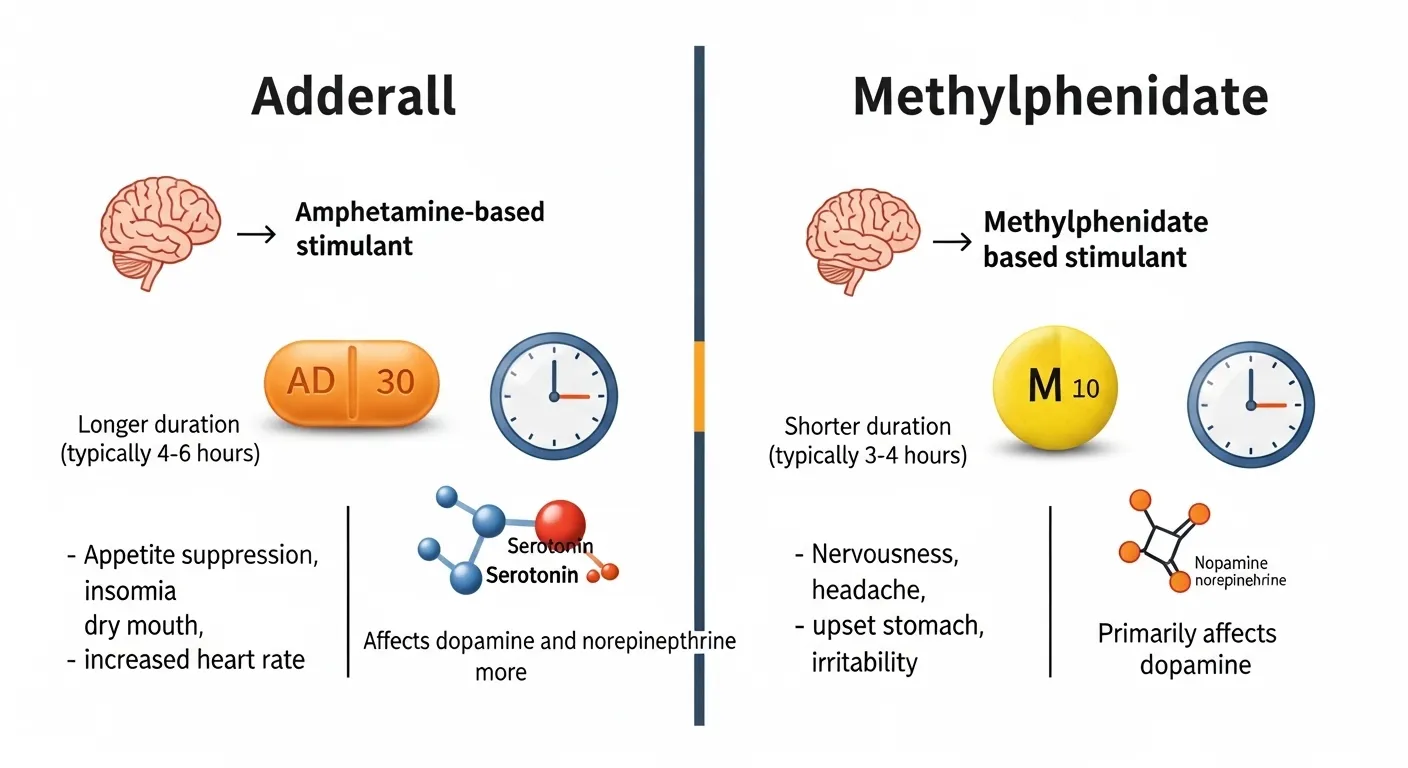
The main difference is their active ingredients. Adderall contains amphetamine salts, while methylphenidate contains a different chemical compound. Though both increase dopamine and norepinephrine in the brain, they do so in different ways.
Why Is Their Difference Necessary to Know for Learners and Experts?
Understanding these medicines matters because ADHD affects millions worldwide. Doctors, teachers, and parents must know which medication suits a person’s needs. Some individuals respond better to one drug than the other. Their difference influences:
- Treatment success
- Side effects
- Risk of misuse
- Social awareness about mental health
Proper knowledge reduces stigma and promotes responsible medical use in society.
Pronunciation (US & UK)
- Adderall
- US: /ˈædəˌrɔːl/
- UK: /ˈædəˌrɒl/
- US: /ˈædəˌrɔːl/
- Methylphenidate
- US: /ˌmɛθəlˈfɛnɪˌdeɪt/
- UK: /ˌmiːθəlˈfɛnɪdeɪt/
- US: /ˌmɛθəlˈfɛnɪˌdeɪt/
Now that we understand the basics, let’s move into a deeper comparison.
Difference Between the Keywords
1. Chemical Composition
Adderall contains amphetamine salts.
Methylphenidate contains methylphenidate hydrochloride.
Examples:
- A doctor prescribes Adderall for stronger stimulation.
- A child may respond better to methylphenidate due to body chemistry.
2. Mechanism of Action
Adderall releases more dopamine into the brain.
Methylphenidate blocks dopamine reuptake.
Examples:
- Adderall may feel more intense for some patients.
- Methylphenidate may feel smoother and steadier.
3. Duration of Effect
Adderall XR lasts up to 12 hours.
Methylphenidate forms vary from 3 to 12 hours.
Examples:
- A student needing all-day focus may take Adderall XR.
- Short-acting methylphenidate may help during school only.
4. Side Effects
Adderall may cause higher anxiety in some users.
Methylphenidate may cause headaches or stomach upset.
Examples:
- One patient reports nervousness on Adderall.
- Another reports mild nausea on methylphenidate.
5. Risk of Dependence
Adderall may carry a slightly higher abuse potential.
Methylphenidate also has abuse risk but differs in intensity.
Examples:
- College misuse cases often involve Adderall.
- Methylphenidate misuse also occurs but less frequently reported.
6. Approved Age Groups
Adderall is approved for children and adults.
Methylphenidate is widely prescribed for children.
Examples:
- Adults with ADHD often take Adderall.
- Pediatricians frequently prescribe methylphenidate.
7. Onset Time
Adderall works within 30–60 minutes.
Methylphenidate may act slightly faster.
Examples:
- A child notices quick focus improvement after methylphenidate.
- An adult feels alert after taking Adderall before work.
8. Brand Variations
Adderall has IR and XR forms.
Methylphenidate has many extended-release forms like Ritalin LA and Concerta.
Examples:
- A patient switches from Adderall IR to XR.
- Another shifts from Ritalin to Concerta.
9. Emotional Effects
Adderall may feel stronger or more energizing.
Methylphenidate may feel milder.
Examples:
- Some describe Adderall as intense.
- Others say methylphenidate feels balanced.
10. Cost and Insurance
Cost varies by region and brand.
Generic methylphenidate may be cheaper.
Examples:
- Insurance may fully cover generic methylphenidate.
- Brand Adderall may cost more without coverage.
Nature and Behaviour of Both
Adderall often acts as a stronger stimulant. It may increase energy and alertness noticeably.
Methylphenidate is often described as smoother and more controlled in effect.
Why Are People Confused About Their Use?
Both treat ADHD and narcolepsy. Both are stimulants. Their names are complex and scientific. Because they serve similar purposes, many assume they are identical but they are chemically different.
Table: Difference and Similarity
| Feature | Adderall | Methylphenidate | Similarity |
| Type | Amphetamine-based | Non-amphetamine stimulant | Both stimulants |
| Main Use | ADHD, Narcolepsy | ADHD, Narcolepsy | Same disorders |
| Abuse Risk | High | High | Controlled substances |
| Duration | Up to 12 hrs | 3–12 hrs | Long & short forms |
| Dopamine Effect | Releases dopamine | Blocks reuptake | Increase dopamine |
Which Is Better in What Situation?
Adderall may be better for individuals who need strong, long-lasting focus.
Adults with demanding schedules may prefer it because of its longer duration. It can help people who do not respond well to methylphenidate.
Methylphenidate may be better for children or individuals sensitive to amphetamines.
It may cause fewer intense side effects in some patients. Doctors often start with methylphenidate for younger patients.
How the Keywords Are Used in Metaphors and Similes
- “He works like he’s on Adderall” (meaning very energetic).
- “Her focus is as sharp as methylphenidate.”
These are informal comparisons showing increased concentration.
Connotative Meaning
Adderall
- Positive: Focus, productivity
- Negative: Pressure, misuse
- Neutral: Medical treatment
Example: “He needed Adderall to stay focused.”
Methylphenidate
- Positive: Stability, calm focus
- Negative: Medication dependency
- Neutral: Clinical therapy
Example: “Methylphenidate helped her learning process.”
Idioms or Proverbs Related
There are no direct idioms about these medicines, but related phrases include:
- “Burning the midnight oil” staying focused late.
- “A shot in the arm” something that boosts energy.
Example: Adderall gave him “a shot in the arm” during exams.
Works in Literature
- Buzzed: The Straight Facts About the Most Used and Abused Drugs Nonfiction, Cynthia Kuhn, 1998
- Driven to Distraction Psychology/Nonfiction, Edward M. Hallowell, 1994
Movies Related to ADHD or Stimulant Use
- Take Your Pills Documentary, 2018, USA
- A Brilliant Young Mind Drama, 2014, UK
Five Frequently Asked Questions
1. Are both used for ADHD?
Yes, both treat ADHD.
2. Are they addictive?
Both have abuse potential.
3. Do they work the same way?
No, their mechanisms differ.
4. Can children take both?
Yes, under medical supervision.
5. Which works faster?
Methylphenidate may act slightly faster.
How Both Are Useful for Surroundings
They improve productivity in schools and workplaces. They help individuals perform better academically and socially. Responsible use supports mental health awareness.
Final Words for Both
Adderall and methylphenidate are powerful tools in ADHD treatment. Their safe use depends on medical advice.
Conclusion
The difference between Adderall and methylphenidate lies in their chemical structure, effects, and patient response.Though both are stimulants used for ADHD and narcolepsy, they are not interchangeable without medical guidance.
Understanding their distinctions helps reduce confusion and ensures safe treatment. Whether for children or adults, choosing the right medication depends on individual needs, side effects, and professional advice. Awareness about these medicines promotes informed decisions and responsible use in society.

I am James Anderson an English author known for his insightful and engaging writing in contemporary literature. With a focus on [insert genre, e.g., fiction, non-fiction, or specific themes], he explores complex human emotions and social dynamics, blending thought-provoking ideas with accessible storytelling. His work has earned recognition for its clarity, depth, and ability to connect with a wide audience, establishing him as a respected voice in modern English literature.