Last year, a middle-aged shopkeeper felt his heart suddenly race while closing his store. He described it as “a bird fluttering in my chest.” Was it just stress, or something serious? This real-life situation explains the difference between AFib and palpitations.
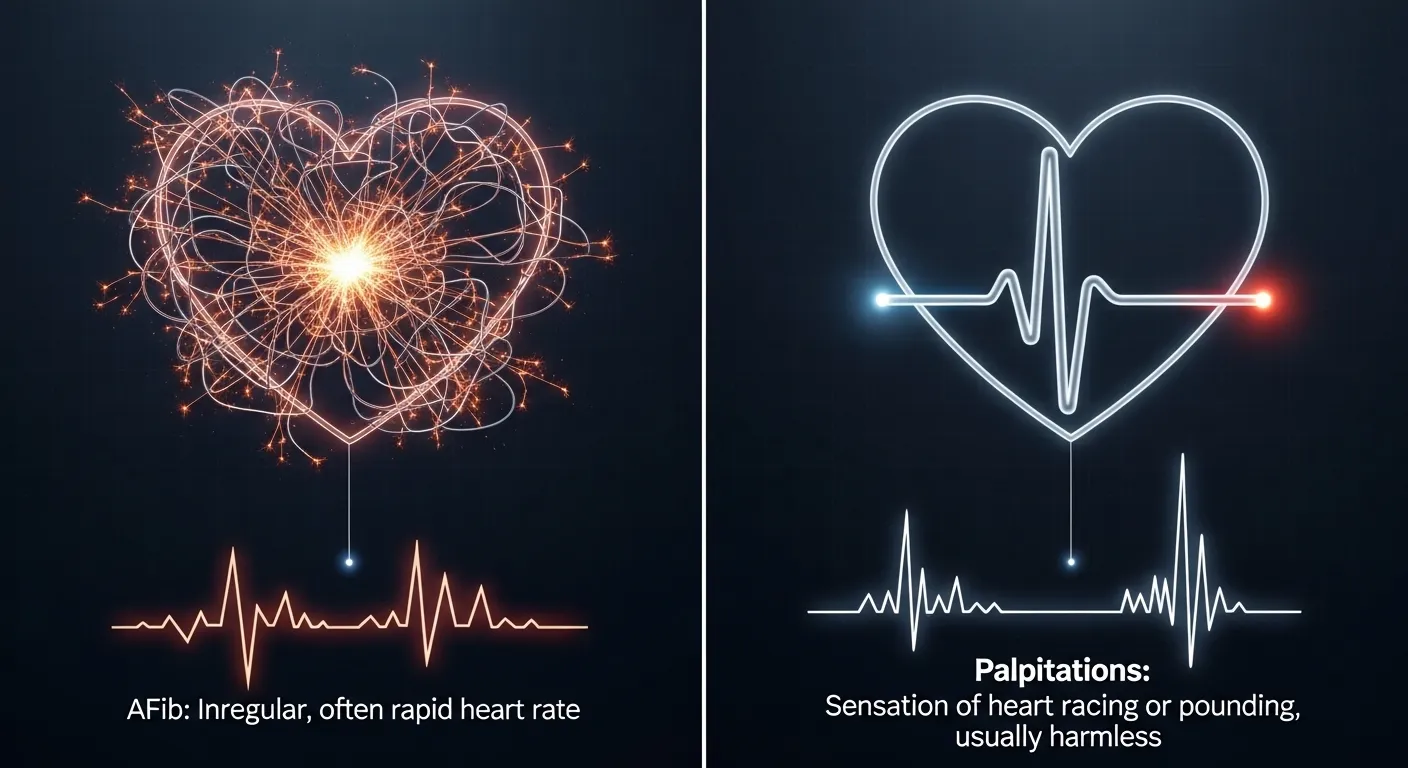
Atrial Fibrillation (AFib) is a medical condition where the heart beats irregularly and often too fast because of abnormal electrical signals. Palpitations, on the other hand, are the feeling or awareness of your heartbeat fast, pounding, or fluttering and may or may not indicate disease.
Understanding the difference between AFib and palpitations helps people respond correctly to symptoms. Many individuals confuse them, but knowing the difference between AFib and palpitations can prevent panic or even save lives. In simple words, the difference between AFib and palpitations lies in cause, seriousness, and medical risk.
Before we explore deeply, let’s first understand how these two heart-related terms sound and connect to our daily health.
Pronunciation (US & UK)
AFib (Atrial Fibrillation)
- US: /ˈeɪ.fɪb/ (AY-fib)
- UK: /ˈeɪ.fɪb/
Palpitations
- US: /ˌpæl.pɪˈteɪ.ʃənz/
- UK: /ˌpæl.pɪˈteɪ.ʃənz/
Now that we understand the sounds and basic meaning, let’s move toward the real medical and practical differences.
Key Difference Between the Both
The key difference between AFib and palpitations is that AFib is a diagnosed heart rhythm disorder, while palpitations are a symptom or sensation. AFib is a condition; palpitations are a feeling.
Why Is Their Difference Necessary to Know for Learners and Experts?
Understanding the difference between AFib and palpitations is important for students, healthcare professionals, and society.
For learners, it builds medical awareness and prevents misinformation. For experts, it helps in accurate diagnosis and treatment. In society, knowing the difference reduces unnecessary fear and encourages timely medical care. Many strokes are linked to untreated AFib, so early knowledge can protect lives. At the same time, not every flutter is dangerous, sometimes it’s just anxiety or caffeine.
Health education empowers communities and reduces emergency risks.
Difference Between AFib and Palpitations
1. Nature
AFib is a heart disorder.
Palpitations are sensations.
Examples (AFib):
- A patient diagnosed after ECG testing.
- Irregular heartbeat lasting for hours.
Examples (Palpitations):
- Feeling a heartbeat after drinking coffee.
- Nervousness before an exam.
2. Cause
AFib is caused by abnormal electrical signals in the heart.
Palpitations can be caused by stress, caffeine, exercise, or illness.
AFib Examples:
- High blood pressure damage.
- Heart valve disease.
Palpitations Examples:
- Anxiety attack.
- Energy drink intake.
3. Seriousness
AFib can be life-threatening.
Palpitations are usually harmless.
AFib Examples:
- Risk of stroke.
- Risk of heart failure.
Palpitations Examples:
- Temporary racing heart.
- Short flutter during fear.
4. Duration
AFib may last minutes to permanently.
Palpitations usually last seconds or minutes.
AFib Examples:
- Chronic AFib patient.
- Repeated episodes weekly.
Palpitations Examples:
- Quick heartbeat during exercise.
- One-time stress episode.
5. Diagnosis
AFib requires medical tests like ECG.
Palpitations may not require tests unless frequent.
AFib Examples:
- Confirmed by cardiologist.
- Holter monitor detection.
Palpitations Examples:
- Self-noticed sensation.
- No abnormal ECG result.
6. Treatment
AFib needs medication or procedures.
Palpitations often need lifestyle change.
AFib Examples:
- Blood thinners prescribed.
- Electrical cardioversion.
Palpitations Examples:
- Reduce caffeine.
- Practice relaxation.
7. Risk Level
AFib increases stroke risk.
Palpitations rarely increase risk.
AFib Examples:
- Blood clot formation.
- Hospital admission.
Palpitations Examples:
- No clot formation.
- No hospitalization needed.
8. Heart Rhythm Pattern
AFib rhythm is irregular and chaotic.
Palpitations may feel strong but rhythm can be normal.
AFib Examples:
- Uneven pulse.
- Skipped beats frequently.
Palpitations Examples:
- Fast but regular rhythm.
- Strong pounding heartbeat.
9. Age Group
AFib is common in older adults.
Palpitations are common at any age.
AFib Examples:
- Patients over 60.
Palpitations Examples:
- Teen anxiety.
- Athlete after sprint.
10. Medical Attention
AFib requires urgent monitoring.
Palpitations only need attention if severe.
AFib Examples:
- Emergency visit.
- Long-term cardiology care.
Palpitations Examples:
- Ignore if rare.
- Doctor visits are frequent.
Nature and Behaviour
AFib behaves unpredictably and disrupts heart rhythm. It may worsen over time.
Palpitations behave like signals; they alert you to stress, excitement, or temporary imbalance.
Why People Are Confused
| Feature | AFib | Palpitations | Similarity |
| Type | Medical condition | Symptom | Both relate to heartbeat |
| Risk | High | Usually low | Both cause discomfort |
| Diagnosis | ECG needed | Often self-noticed | May need doctor if severe |
| Duration | Long or chronic | Short | Can occur suddenly |
| Cause | Electrical problem | Stress, caffeine, illness | Can happen during anxiety |
Which Is Better in What Situation?
AFib is not “better” in any situation because it is a medical disorder that needs management. However, early detection of AFib is better than ignoring it. Timely treatment reduces stroke risk and improves quality of life. Medical supervision, medication, and lifestyle changes make AFib manageable.
Palpitations can actually be helpful signals. For example, they warn you when you are stressed, dehydrated, or consuming too much caffeine. In this sense, palpitations are useful alarms of the body. But if frequent or painful, medical advice is necessary.
Metaphors and Similes
AFib is often described as “a drum beaten out of rhythm.”
Palpitations are like “butterflies in the chest.”
Simile example:
- “His heart fluttered like a trapped bird.”
Connotative Meaning
AFib – Negative (linked to illness and danger)
Example: “The diagnosis of AFib changed his lifestyle.”
Palpitations – Neutral to negative
Example: “She felt palpitations before speaking on stage.”
Idioms or Proverbs Related
- “My heart skipped a beat.”
- Example: My heart skipped a beat when I heard the news.
- Example: My heart skipped a beat when I heard the news.
- “Heart in my mouth.”
- Example: I had my heart in my mouth during the exam results.
- Example: I had my heart in my mouth during the exam results.
Works in Literature
- “The Tell-Tale Heart” (Horror, Edgar Allan Poe, 1843)
- “The Heart of the Matter” (Novel, Graham Greene, 1948)
Movies Related to Heart Theme
- Heartbeat (2016, South Korea)
- Tell-Tale (2009, USA)
FAQs
1. Is AFib the same as palpitations?
No. AFib is a disorder; palpitations are a symptom.
2. Can palpitations turn into AFib?
Not directly, but persistent symptoms need evaluation.
3. Is AFib dangerous?
Yes, it increases stroke risk.
4. Are palpitations always serious?
No, most are harmless.
5. When should I see a doctor?
If symptoms are frequent, painful, or long-lasting.
How Both Are Useful for Surroundings
AFib awareness promotes heart health education in communities. Palpitations awareness reduces panic and encourages stress management.
Final Words for Both
AFib demands medical care and discipline. Palpitations demand awareness and calm observation.
Conclusion
Understanding the difference between AFib and palpitations is essential for personal and public health.
While AFib is a serious heart rhythm disorder requiring diagnosis and treatment, palpitations are often temporary sensations caused by stress or lifestyle factors. Confusing the two can either create unnecessary fear or dangerous neglect.
Proper awareness, medical consultation when needed, and healthy living habits help manage both effectively. Education about heart health empowers individuals and protects society from preventable complications. When in doubt, always consult a healthcare professional to ensure safety and peace of mind.

I am James Anderson an English author known for his insightful and engaging writing in contemporary literature. With a focus on [insert genre, e.g., fiction, non-fiction, or specific themes], he explores complex human emotions and social dynamics, blending thought-provoking ideas with accessible storytelling. His work has earned recognition for its clarity, depth, and ability to connect with a wide audience, establishing him as a respected voice in modern English literature.