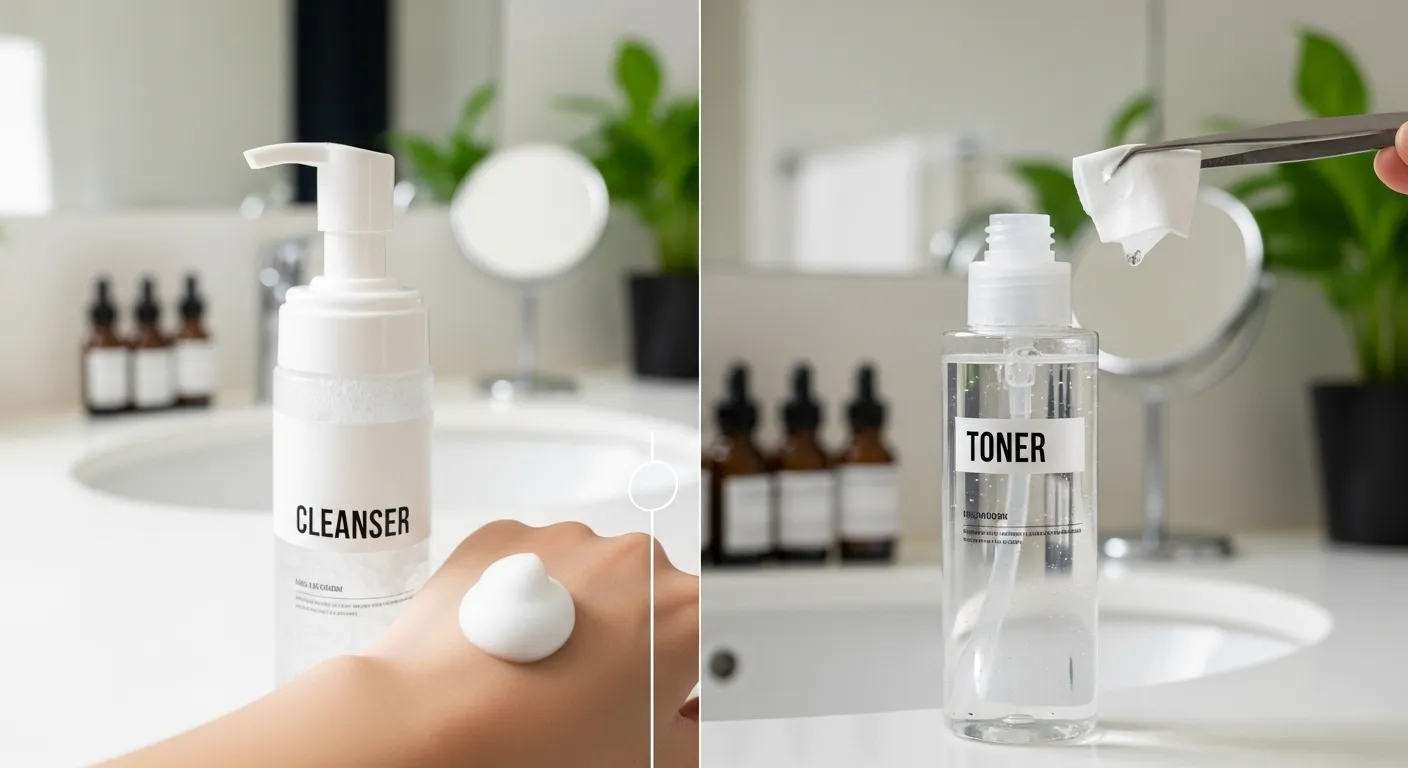
One morning, Sara looked at her bathroom shelf and saw two skincare bottles. One said cleanser, and the other said toner. She wondered why both were needed.
Many people ask the same question when starting a skincare routine.The difference between cleanser and toner often confuses beginners.A cleanser is a product that washes the face. It removes dirt, oil, sweat, and makeup.
A toner is a liquid used after washing the face. It helps refresh the skin and prepare it for other skincare products.Understanding the difference between cleanser and toner helps people care for their skin better.
In daily skincare routines, both products have different jobs. The difference between cleanser and toner also shows how each step supports healthy skin. When people learn the difference between cleanser and toner, they can build a simple and effective skincare routine.
Key Difference Between the Both
The main difference is simple. A cleanser cleans the skin, while a toner refreshes and balances it after cleansing.
Why Is Their Difference Important for Learners and Experts?
Knowing the difference helps people choose the right skincare steps. Students of dermatology, beauty experts, and everyday users benefit from this knowledge.
For society, healthy skin improves confidence and hygiene. Beauty professionals also use both products in salons and skincare treatments. When people understand these roles, they avoid using products in the wrong way.
Pronunciation of Both Words
Cleanser
- US: /ˈklen-zər/
- UK: /ˈklen-zə/
Toner
- US: /ˈtoʊ-nər/
- UK: /ˈtəʊ-nə/
Linking Hook
Now that we understand their basic meaning, let us explore the difference between cleanser and toner in detail.
Difference Between Cleanser and Toner
1. Main Purpose
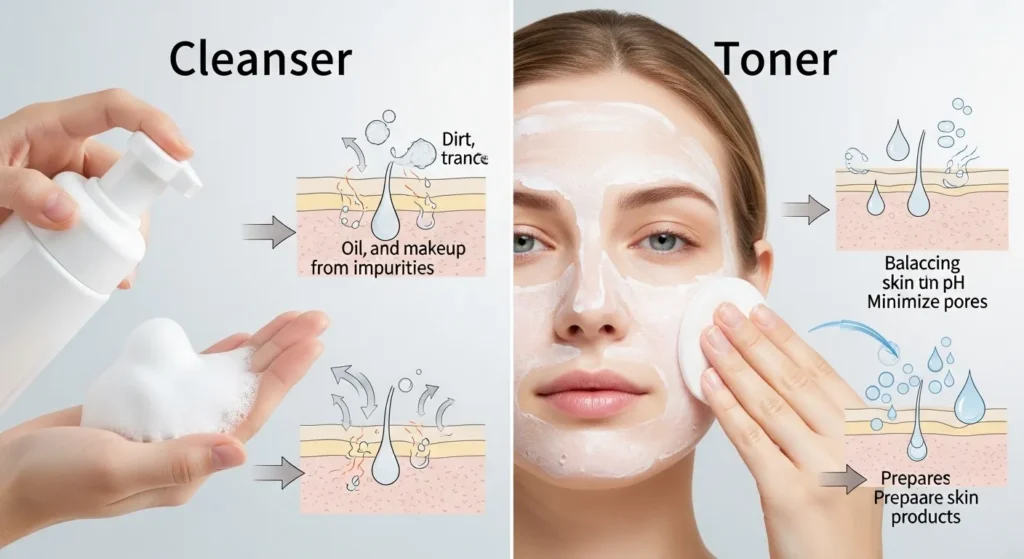
A cleanser removes dirt and oil from the skin. A toner refreshes the skin after washing.
Examples:
- A gel cleanser removes sweat after exercise.
- A creamy cleanser removes makeup.
- A toner refreshes skin after washing.
- A toner prepares skin for moisturizer.
2. Time of Use
Cleanser is used first in a skincare routine. Toner is used after cleansing.
Examples:
- People wash their face with cleanser in the morning.
- Cleanser is also used before sleeping.
- Toner is applied after washing the face.
- Toner is used before applying serum or cream.
3. Texture
Cleanser can be gel, cream, or foam. Toner is usually a thin liquid.
Examples:
- Foaming cleanser creates bubbles.
- Cream cleanser feels soft and thick.
- Toner looks like water.
- Toner spreads easily on cotton pads.
4. Cleaning Power
Cleanser removes dirt and makeup. Toner removes small leftover particles.
Examples:
- Cleanser removes sunscreen.
- Cleanser washes away oil.
- Toner removes leftover dirt.
- Toner cleans pores lightly.
5. Skin Feel
Cleanser makes the skin clean. Toner makes the skin fresh and smooth.
Examples:
- Skin feels fresh after washing.
- Cleanser removes sticky oil.
- Toner gives a cool feeling.
- Toner tightens pores slightly.
6. Ingredients
Cleanser contains cleaning agents. Toner contains soothing and balancing ingredients.
Examples:
- Cleanser may contain mild soap.
- Cleanser may contain aloe.
- Toner may contain rose water.
- Toner may contain witch hazel.
7. Method of Use
Cleanser is applied with hands and washed with water. Toner is usually applied with cotton.
Examples:
- People rub cleanser on wet skin.
- Cleanser is rinsed off.
- Toner is applied with a cotton pad.
- Some people gently pat toner with their hands.
8. Role in Skincare Routine
Cleanser starts the routine. Toner continues the routine.
Examples:
- Cleanser begins facial care.
- Cleanser prepares the skin for the next step.
- Toner prepares skin for serums.
- Toner supports moisturizer use.
9. Frequency of Use
Cleanser is used at least twice a day. Toner may be used once or twice daily.
Examples:
- Morning face wash uses cleanser.
- Night routine also uses cleanser.
- Toner is used after morning wash.
- Toner is used after night wash.
10. Skin Type Support
Different cleansers suit different skin types. Different toners also suit different skin types.
Examples:
- Oil-free cleanser for oily skin.
- Cream cleanser for dry skin.
- Hydrating toner for dry skin.
- Pore-tightening toner for oily skin.
Nature and Behaviour of Both
Cleanser:
Cleanser works as a cleaning agent. It removes dirt and impurities from the skin surface.
Toner:
Toner works as a refreshing and balancing liquid. It prepares the skin for further skincare products.
Why People Are Confused About Their Use
Many people think both products do the same job because they are part of skincare routines. Also, both come in bottles and are applied to the face. Marketing and lack of skincare knowledge often create confusion.
Table Showing Difference and Similarity
| Feature | Cleanser | Toner | Similarity |
| Purpose | Cleans dirt and oil | Refreshes and balances skin | Both support skincare |
| Texture | Gel, cream, foam | Liquid | Applied to face |
| Step | First step | Second step | Part of routine |
| Use | Wash with water | Apply with cotton | Used daily |
| Goal | Clean skin | Prepare skin | Improve skin health |
Which Is Better in What Situation?
Cleanser
Cleanser is better when the skin is dirty, oily, or covered with makeup. It removes sweat, dust, and sunscreen. After outdoor activities or long days, cleanser is very useful.
Toner
Toner is better after washing the face. It refreshes the skin and prepares it for moisturizer or serum. It also helps calm the skin after cleansing.
Use in Metaphors and Similes
Cleanser metaphor example:
- “Kind words acted like a cleanser for the mind.”
Toner metaphor example:
- “His advice worked like a toner, balancing the situation.”
Simile examples:
- “Her smile was as fresh as a skin toner.”
- “The rain cleaned the city like a gentle cleanser.”
Connotative Meaning
Cleanser
- Mostly positive (cleanliness and purity)
Example: “Education can be a cleanser for ignorance.”
Toner
- Neutral to positive (balance and refreshment)
Example: “Music worked like a toner for his tired mind.”
Idioms or Proverbs Related
Although these words rarely appear in idioms, related ideas exist.
Examples:
- “Cleanliness is next to godliness.”
- “A fresh start washes away old mistakes.”
Works in Literature
Cleanser
- The Skin Cleanser Guide Health Guide, Dr. Laura Bennett, 2015
Toner
- Skin Balance and Toners Beauty Guide, Emily Carter, 2018
Movies Related to the Theme of Beauty and Skincare
- The Beauty Inside 2015, South Korea
- Dumplin’ 2018, USA
- I Feel Pretty 2018, USA
Frequently Asked Questions
1. What is the main difference between cleanser and toner?
A cleanser washes the face. A toner refreshes and balances the skin after washing.
2. Can toner replace cleanser?
No. Toner cannot remove dirt and oil like a cleanser.
3. Should toner be used every day?
Yes, many people use toner once or twice daily.
4. Which product should be used first?
Cleanser should always be used first.
5. Do all skin types need both products?
Most skin types benefit from both cleanser and toner.
How Both Are Useful for Surroundings
Clean skin improves hygiene and health. When people care for their skin, they feel confident and comfortable. Skincare products also support industries such as cosmetics, beauty services, and dermatology.
Final Words for Both
Cleanser and toner play different roles but work together. One cleans the skin, while the other refreshes and balances it.
Conclusion
The difference between cleanser and toner is simple but important. A cleanser removes dirt, oil, and makeup from the skin.
A toner refreshes the skin and prepares it for the next skincare step. Both products support a healthy skincare routine.
Understanding the difference between cleanser and toner helps people choose the right products and use them in the correct order.
When used together, they improve skin cleanliness and comfort. For beginners and experts alike, knowing these differences helps create a better skincare routine and healthier skin.

I am David, a passionate blog writer who loves creating informative and easy-to-understand content. I write articles that explain the difference between common topics, language concepts, and everyday knowledge. My goal is to help readers learn new things in a simple and clear way. Through research and practical examples, I try to provide useful and reliable information for students, learners, and curious readers around the world.