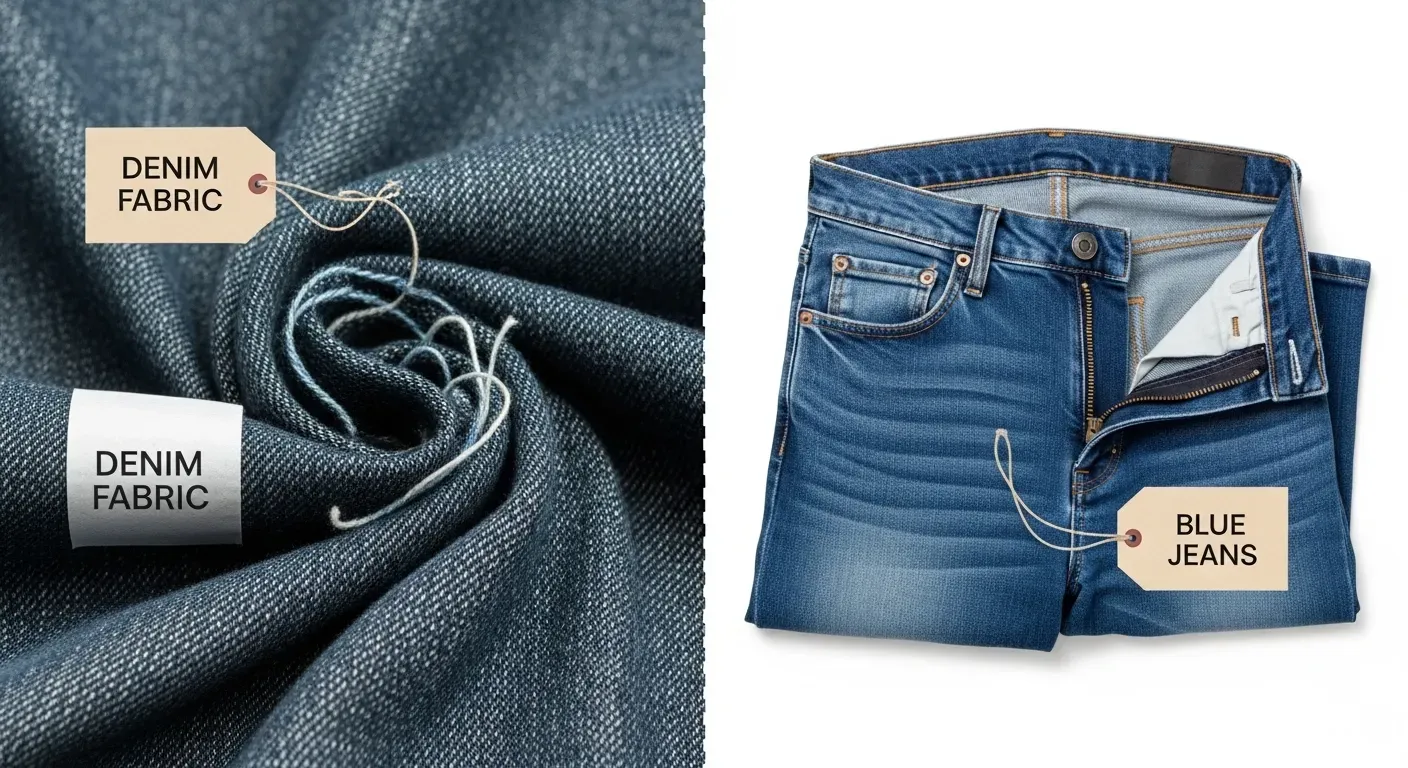
Imagine walking into a clothing store to buy a new pair of pants. You see a sign that says “Denim Sale,” but the shelves are filled with jeans. This common situation explains why many people get confused about the difference between denim and jeans. In simple terms, denim is a type of fabric, while jeans are garments made from that fabric.
Understanding the difference between denim and jeans becomes important when discussing fashion, textile production, and clothing styles. Denim is a durable cotton twill fabric known for its diagonal ribbing, while jeans are pants typically stitched using denim cloth. Because both terms are often used interchangeably, people rarely think about the difference between denim and jeans in daily conversation.
However, knowing the difference between denim and jeans helps learners, designers, and consumers talk about clothing more accurately. From factories producing fabric to brands designing stylish pants, both words play different roles in the fashion world.
Pronunciation
- Denim
- US: /ˈdɛnɪm/
- UK: /ˈdenɪm/
- US: /ˈdɛnɪm/
- Jeans
- US: /dʒiːnz/
- UK: /dʒiːnz/
- US: /dʒiːnz/
Before exploring fashion and textile details, let’s look closely at the difference between denim and jeans in a clear and structured way.
Key Difference Between Denim and Jeans
The fundamental difference is simple:
- Denim is the fabric or material.
- Jeans are pants or clothing items made from denim.
Why Is Their Difference Necessary to Know for Learners and Experts?
Understanding the difference between denim and jeans is important in many areas of society. For fashion designers, knowing the fabric type helps in creating durable and stylish clothing. Textile manufacturers must clearly distinguish between the material they produce (denim) and the final product (jeans).
For students and learners studying fashion, textiles, or retail, this distinction improves their vocabulary and professional communication. Retailers also benefit because accurate product descriptions help customers make better buying decisions.
In modern society, where fashion trends influence culture and identity, understanding such differences helps people appreciate how clothing is made and marketed.
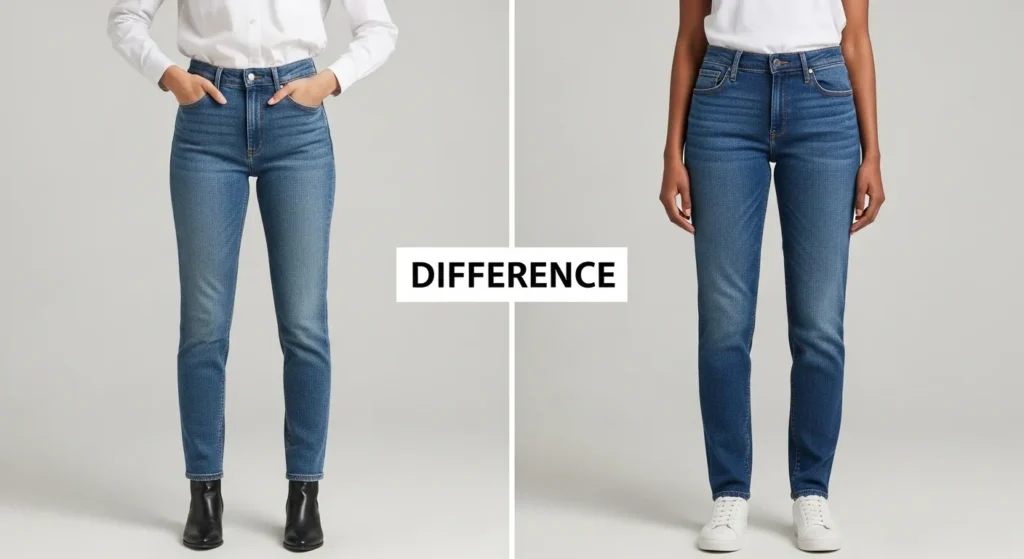
Difference Between Denim and Jeans
1. Definition
Denim:
Denim is a strong cotton twill fabric with a diagonal weave pattern.
Examples:
- A designer selects denim fabric to create jackets.
- Factories produce rolls of denim cloth for clothing brands.
Jeans:
Jeans are trousers or pants made mainly from denim fabric.
Examples:
- She bought a pair of blue jeans for everyday wear.
- Many people wear jeans while traveling.
2. Nature
Denim: A textile material.
Examples:
- Denim is sold in textile markets.
- Tailors buy denim to make different garments.
Jeans: A finished clothing product.
Examples:
- Jeans are displayed in clothing stores.
- Jeans come in different sizes and fits.
3. Purpose
Denim: Used to make many clothing items.
Examples:
- Denim jackets are popular.
- Denim skirts are fashionable.
Jeans: Specifically designed as pants.
Examples:
- Workers often wear jeans for durability.
- Teenagers prefer skinny jeans.
4. Variety
Denim: Comes in many forms such as raw, stretch, and selvedge.
Examples:
- Raw denim is stiff and dark.
- Stretch denim contains elastic fibers.
Jeans: Come in styles like slim, straight, or bootcut.
Examples:
- Slim jeans fit closely to the legs.
- Bootcut jeans widen near the ankle.
5. Manufacturing Stage
Denim: Produced in textile mills.
Examples:
- Mills weave cotton threads into denim.
- Large machines dye denim with indigo.
Jeans: Produced in clothing factories.
Examples:
- Workers cut denim fabric into shapes.
- Jeans are stitched with strong thread.
6. Color
Denim: Usually indigo-dyed but available in many colors.
Examples:
- Traditional denim is blue.
- Some brands produce black denim.
Jeans: Can appear in many colors and washes.
Examples:
- Distressed blue jeans.
- White jeans for summer fashion.
7. Form
Denim: Sold in rolls or yards of fabric.
Examples:
- Designers order meters of denim.
- Tailors store denim fabric for sewing.
Jeans: Sold as ready-made clothing.
Examples:
- Stores sell jeans in different waist sizes.
- Online shops list hundreds of jeans styles.
8. Usage
Denim: Used for jackets, bags, skirts, and shirts.
Examples:
- A denim backpack is trendy.
- Denim shirts are common in casual fashion.
Jeans: Used mainly as casual trousers.
Examples:
- People wear jeans at informal gatherings.
- Students wear jeans to college.
9. Historical Role
Denim: Originated as a strong fabric for workers.
Examples:
- Miners wore clothing made of denim.
- Farmers used denim garments for durability.
Jeans: Developed as work pants.
Examples:
- Jeans became popular among cowboys.
- Later they became everyday fashion.
10. Market Category
Denim: Part of the textile industry.
Examples:
- Denim exports are part of fabric trade.
- Textile companies focus on denim production.
Jeans: Part of the fashion apparel industry.
Examples:
- Clothing brands launch new jeans collections.
- Fashion shows display designer jeans.
Nature and Behaviour of Both
Denim:
Denim is durable, thick, and long-lasting. Its twill weave creates a strong structure that resists wear and tear.
Jeans:
Jeans are practical, comfortable pants designed for casual use. They often become softer with repeated washing and wear.
Why People Are Confused About Their Use
People often use “denim” and “jeans” interchangeably because jeans are the most famous product made from denim.
Advertising and everyday language blur the distinction, leading many people to believe they mean the same thing.
Difference and Similarity Table
| Aspect | Denim | Jeans |
| Meaning | Fabric | Pants |
| Category | Textile material | Clothing item |
| Production | Made in textile mills | Made in garment factories |
| Usage | Used to make many garments | Used as trousers |
| Form | Sold in fabric rolls | Sold as ready-to-wear clothing |
| Similarity | Both related to fashion and clothing | Both associated with casual wear |
Which Is Better in What Situation?
Denim:
Denim is better when discussing fabric, textile design, or clothing production. Fashion designers and tailors need to focus on denim quality, weight, and weave to create durable garments.
Jeans:
Jeans are better when referring to clothing for daily use. They are comfortable, stylish, and suitable for casual settings such as travel, work, and social gatherings.
Metaphors and Similes
Denim
- “His work ethic was as tough as denim.”
- “Their friendship was woven like strong denim threads.”
Jeans
- “She felt comfortable in life like an old pair of jeans.”
- “His style fit him like perfectly tailored jeans.”
Connotative Meaning
Denim
- Positive: Strength and durability
- Example: “Her determination was denim-strong.”
- Example: “Her determination was denim-strong.”
- Neutral: Simply fabric used for clothing
Jeans
- Positive: Casual comfort
- Example: “He lives life in a relaxed jeans-and-t-shirt style.”
- Example: “He lives life in a relaxed jeans-and-t-shirt style.”
- Neutral: Everyday trousers
Idioms or Proverbs
“In someone’s jeans”
Meaning: Something inherited.
Example:
- “Music is in her jeans; her whole family loves singing.”
“Comfortable as old jeans”
Example:
- “Their friendship felt as comfortable as old jeans.”
Works in Literature
- The Sisterhood of the Traveling Pants – Novel, Ann Brashares, 2001
- Jeans: A Cultural History of an American Icon – Nonfiction, James Sullivan, 2006
Movies Related to the Keywords
- The Sisterhood of the Traveling Pants – 2005, USA
- The Sisterhood of the Traveling Pants 2 – 2008, USA
Frequently Asked Questions
1. Are denim and jeans the same?
No. Denim is a fabric, while jeans are pants made from denim.
2. Can denim be used for other clothing?
Yes, denim can be used for jackets, skirts, shirts, and bags.
3. Why are jeans usually blue?
Traditional denim is dyed with indigo, giving jeans their blue color.
4. Are all jeans made from denim?
Most jeans are made from denim, although some modern versions use blended fabrics.
5. Which term refers to fabric?
Denim refers to the fabric.
How Both Are Useful for Surroundings
Denim and jeans contribute to the global clothing industry. Denim production supports textile manufacturing, while jeans provide practical and comfortable clothing for millions of people worldwide.
Final Words for Both
Denim represents strength and textile craftsmanship, while jeans symbolize casual fashion and everyday comfort.
Conclusion
The difference between denim and jeans is simple yet important. Denim is the fabric, and jeans are the pants made from that fabric. Although people often use these terms interchangeably, they represent different stages of clothing production.
Denim belongs to the textile world, while jeans belong to fashion and apparel.Understanding this distinction helps learners, designers, retailers, and consumers communicate more accurately about clothing.
In modern society, where fashion is both cultural expression and industry, knowing the difference between denim and jeans improves our appreciation of how everyday garments are created and used.

I am D. H. Lawrence (David Herbert Lawrence) an influential English novelist, poet, essayist, and literary critic born on September 11, 1885, in Eastwood, Nottinghamshire, England. He is widely regarded as one of the most important writers of the 20th century.
I work often explored human relationships, emotional intimacy, industrialization, and the conflict between modern society and natural instincts.