One winter morning, Ali woke up with a dry throat and stuffy nose. The air in his room felt dry and uncomfortable. His friend told him to try a diffuser, while another friend suggested a humidifier.
Ali quickly realized he did not know the difference between diffuser and humidifier.Many people hear these two words in home care, wellness, and aromatherapy. Still, they often wonder about the difference between diffuser and humidifier.
Both devices release moisture into the air, but they work in different ways.Understanding the difference between diffuser and humidifier helps people choose the right device for their home. Some people use them for health, while others use them for comfort or fragrance. In this article, we will clearly explain the difference between diffuser and humidifier using simple language and examples.
Key Difference Between Both
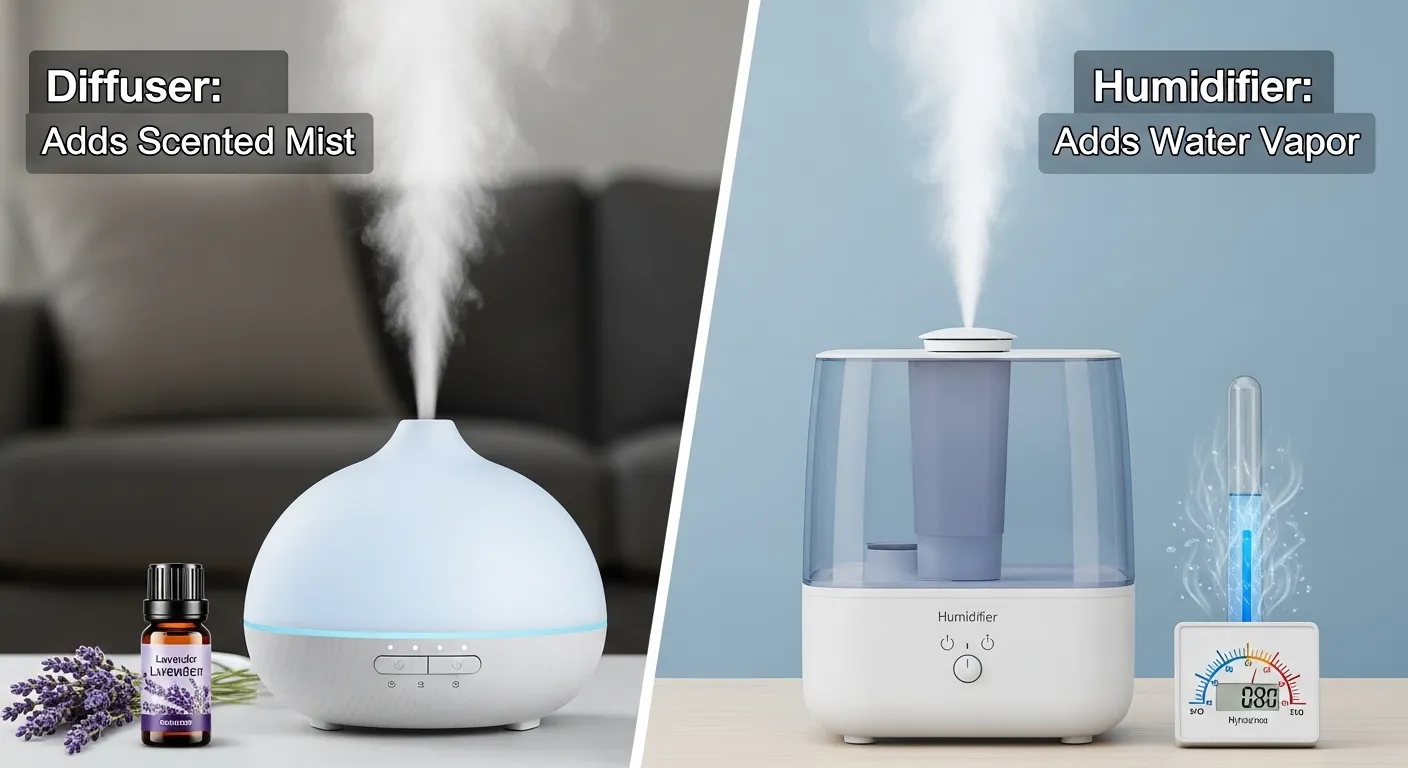
The main difference between diffuser and humidifier is their purpose.
A diffuser spreads essential oils into the air to create fragrance and relaxation.
A humidifier adds moisture to the air to reduce dryness.
Why Their Difference Is Important
Understanding the difference is helpful for both learners and experts.
Students learning English need to know how words are used correctly. Health experts, therapists, and home care specialists must also know which device helps in different situations.
In society, many people use these devices to improve comfort at home. A humidifier helps people breathe better in dry weather. A diffuser helps people relax with pleasant scents. When people know the correct difference, they can choose the right tool for their needs.
Pronunciation
Diffuser
US: dih-FYOO-zer
UK: dih-FYOO-zuh
Humidifier
US: hyoo-MID-uh-fy-er
UK: hyoo-MID-ih-fy-uh
Linking Hook
Now that we understand the basic idea, let us explore the full difference between diffuser and humidifier in detail.
Difference Between Diffuser and Humidifier
1. Purpose
A diffuser spreads fragrance into the air.
A humidifier adds moisture to the air.
Examples
- A diffuser makes a room smell like lavender.
- A humidifier helps reduce dry air in winter.
2. Use of Essential Oils
Diffusers are made for essential oils.
Humidifiers usually do not use oils.
Examples
- People add peppermint oil to a diffuser.
- A humidifier normally uses only water.
3. Water Capacity
Humidifiers hold more water than diffusers.
Examples
- A diffuser may hold 200 ml of water.
- A humidifier can hold several liters.
4. Main Function
Diffusers improve mood and scent.
Humidifiers improve air moisture.
Examples
- A diffuser creates a calm spa-like smell.
- A humidifier prevents dry skin.
5. Size
Humidifiers are usually bigger than diffusers.
Examples
- A diffuser often sits on a desk.
- A humidifier may stand on the floor.
6. Health Use
Humidifiers help breathing problems.
Diffusers help relaxation.
Examples
- A humidifier can help during a cold.
- A diffuser may reduce stress.
7. Design
Diffusers often look decorative.
Humidifiers focus more on function.
Examples
- A diffuser may have LED lights.
- A humidifier may look simple.
8. Mist Output
Humidifiers produce stronger mist.
Examples
- A humidifier can fill a whole room with moisture.
- A diffuser creates light mist.
9. Noise Level
Diffusers are usually quieter.
Examples
- A diffuser may make soft bubbling sounds.
- A humidifier may produce stronger machine noise.
10. Typical Location
Diffusers are common in spas and bedrooms.
Humidifiers are common in living rooms or nurseries.
Examples
- A diffuser may sit beside a bed.
- A humidifier may run in a baby’s room.
Nature and Behaviour
A diffuser spreads fragrance slowly into the air. It focuses on smell, mood, and relaxation.
A humidifier increases the moisture level in the air. It helps make dry air comfortable and healthy.
Why People Are Confused About Their Use
Many people confuse them because both produce mist. They also look similar and use water.
Another reason is marketing. Some small humidifiers are sold as diffusers. This makes people think they are the same device.
Comparison Table
| Feature | Diffuser | Humidifier |
| Main purpose | Spread fragrance | Add moisture |
| Water capacity | Small | Large |
| Essential oils | Commonly used | Usually not used |
| Size | Small | Medium to large |
| Mist level | Light mist | Strong mist |
| Design | Decorative | Practical |
| Health benefit | Relaxation | Breathing comfort |
| Location | Bedrooms, spas | Living rooms, nurseries |
Which Is Better in Different Situations?
A diffuser is better when you want fragrance and relaxation. People often use it for aromatherapy. It is perfect for meditation, sleep, or creating a pleasant smell in a room. Small rooms and bedrooms are good places for diffusers.
A humidifier is better when the air is dry. During winter, indoor air can become very dry. A humidifier adds moisture to the air and helps with dry skin, coughing, and breathing problems. Families with children often use humidifiers to make sleeping more comfortable.
Metaphors and Similes
A diffuser is like a tiny perfume fountain for your room.
Example:
The lavender diffuser filled the room like a gentle cloud of perfume.
A humidifier is like a rain cloud inside your home.
Example:
The humidifier worked like a small cloud bringing moisture to the dry air.
Connotative Meaning
Diffuser often has a positive meaning. It is connected with relaxation, spa care, and calm environments.
Example
The diffuser created a peaceful mood in the room.
Humidifiers usually have a neutral or helpful meaning. It relates to health and comfort.
Example
The humidifier helped the baby sleep better at night.
Idioms or Proverbs
These words rarely appear in traditional idioms, but similar expressions exist.
“Clear the air”
Example
They talked calmly to clear the air between them.
“Breathe easy”
Example
After using the humidifier, he could breathe easily again.
Works in Literature
Although these devices are modern, themes related to scent and air appear in literature.
- Perfume: The Story of a Murderer Novel, Patrick Süskind, 1985
- The Air We Breathe Fiction novel, Andrea Barrett, 2007
- Aromatherapy for Healing the Spirit Wellness book, Gabriel Mojay, 1999
Movies
- Perfume: The Story of a Murderer 2006, Germany
- The Happening 2008, United States
- The Secret Garden 1993, United Kingdom
FAQ Section
1. What is the main difference between diffuser and humidifier?
A diffuser spreads scent using essential oils. A humidifier adds moisture to the air.
2. Can I put essential oils in a humidifier?
Most humidifiers are not designed for oils. Oils can damage the device.
3. Which device is better for dry air?
A humidifier is better because it increases moisture in the air.
4. Is a diffuser good for sleep?
Yes. Many people use lavender oil in diffusers to help relax and sleep.
5. Can both devices run at the same time?
Yes. Some people use a humidifier for moisture and a diffuser for fragrance.
Usefulness in Our Surroundings
Both devices are useful in modern homes. Diffusers create pleasant smells and improve mood. Humidifiers protect people from dry air and help breathing.
In hospitals, homes, offices, and spas, these devices help create healthier environments.
Final Words About Both
A diffuser and a humidifier may look similar, but they serve different purposes. One improves scent and mood, while the other improves air moisture and comfort.
Conclusion
The difference between diffuser and humidifier becomes clear when we understand their purpose. A diffuser spreads fragrance and supports relaxation through essential oils.
A humidifier adds moisture to dry air and improves breathing comfort.Both devices play helpful roles in daily life. Diffusers are popular in aromatherapy, spas, and bedrooms.
Humidifiers are useful in homes during cold or dry seasons.Choosing the right device depends on your needs. If you want fragrance and calmness, a diffuser is the best choice.
If you want healthier air and relief from dryness, a humidifier is the better option.When people understand their difference, they can use each device more effectively and enjoy a healthier indoor environment.

I am David, a passionate blog writer who loves creating informative and easy-to-understand content. I write articles that explain the difference between common topics, language concepts, and everyday knowledge. My goal is to help readers learn new things in a simple and clear way. Through research and practical examples, I try to provide useful and reliable information for students, learners, and curious readers around the world.