Last year, a homeowner in New York City decided to repaint his kitchen cabinets. At the paint store, he was asked a simple question: “Do you want enamel or acrylic?” He paused.
He had heard these terms before but never understood the real difference between enamel and acrylic. Like many people, he assumed all paints work the same. In reality, the difference between enamel and acrylic can change durability, finish, drying time, and even cost.
Whether you are painting walls, furniture, or metal surfaces, knowing the difference between enamel and acrylic helps you choose wisely. This guide explains the difference between enamel and acrylic in simple terms so learners and experts can both benefit.
Pronunciation (US & UK)
Enamel
- US: /ɪˈnæməl/ (ih-NAM-uhl)
- UK: /ɪˈnæməl/
Acrylic
- US: /əˈkrɪlɪk/ (uh-KRIL-ik)
- UK: /əˈkrɪlɪk/
Before we dive deep, let’s explore how these two materials differ in structure, use, and impact.
Key Difference Between the Both
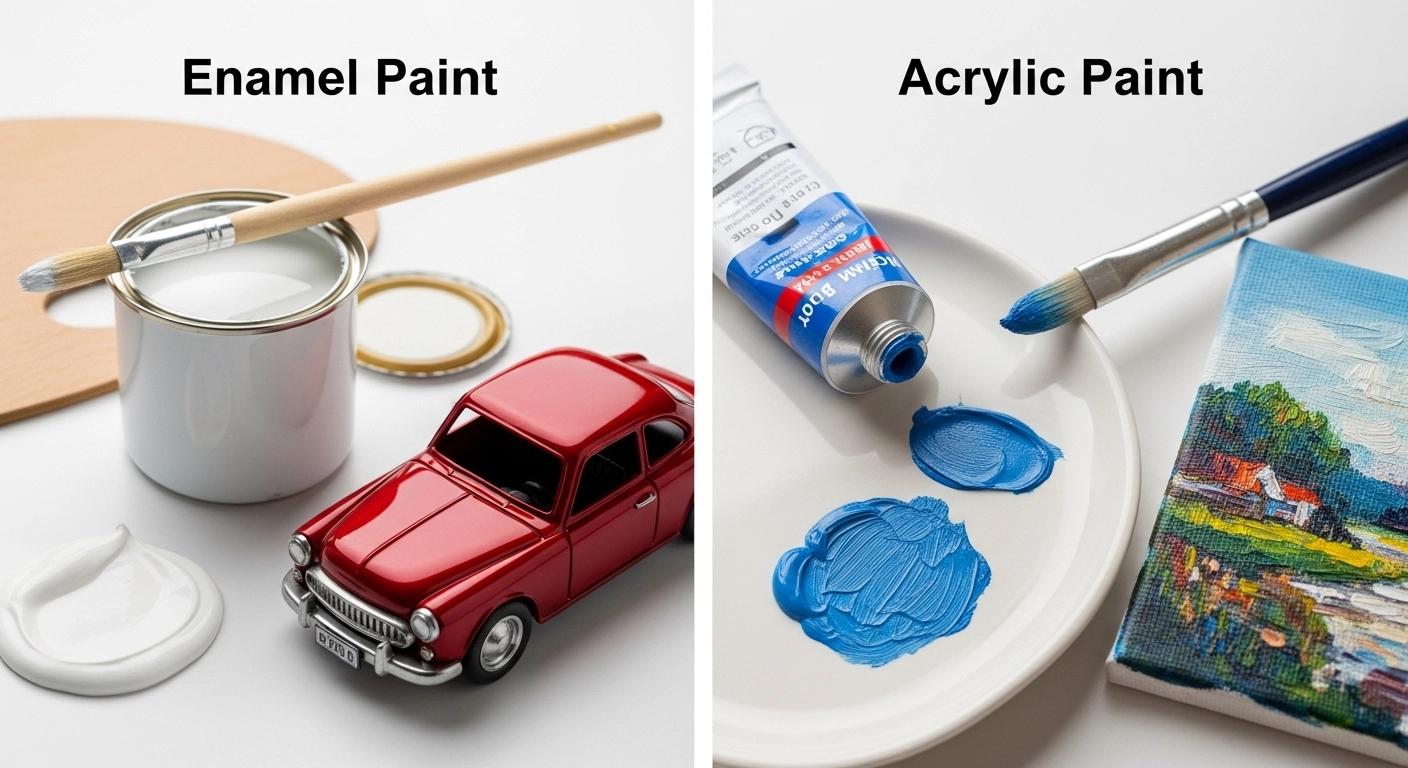
The main difference is that enamel paint usually forms a hard, glossy, and durable surface, often oil-based, while acrylic paint is typically water-based, fast-drying, and flexible. Enamel is stronger and shinier; acrylic is lighter and easier to handle.
Why Is Their Difference Necessary to Know for Learners and Experts?
Understanding enamel and acrylic is important in society because they are used in homes, industries, art, automobiles, and construction.
- For learners: It prevents costly mistakes in DIY projects.
- For professionals: It ensures quality, durability, and safety.
- For industries: Proper selection improves product lifespan.
- For artists: It influences texture and finish.
Choosing the wrong type can lead to peeling, cracking, or wasted money. That is why their differences matter in everyday life.
H2: Difference Between Enamel and Acrylic
1. Base Composition
Enamel: Usually oil-based or solvent-based.
Examples:
- Used on metal gates.
- Used on machinery parts.
Acrylic: Water-based.
Examples:
- Used on interior walls.
- Used in school art projects.
2. Drying Time
Enamel: Dries slowly.
Examples:
- Car paint may take hours to dry.
- Furniture paint needs overnight drying.
Acrylic: Dries quickly.
Examples:
- Wall paint dries in 12 hours.
- Art canvas dries within minutes.
3. Finish
Enamel: Glossy and shiny finish.
Examples:
- Kitchen cabinets.
- Metal railings.
Acrylic: Matte or semi-gloss finish.
Examples:
- Bedroom walls.
- Decorative crafts.
4. Durability
Enamel: Highly durable and resistant.
Examples:
- Outdoor furniture.
- Industrial tools.
Acrylic: Moderate durability.
Examples:
- Indoor walls.
- Temporary decorations.
5. Flexibility
Enamel: Hard and rigid after drying.
Examples:
- Doors.
- Window frames.
Acrylic: Flexible and less likely to crack.
Examples:
- Canvas paintings.
- Plaster walls.
6. Odor
Enamel: Strong smell due to solvents.
Examples:
- Garage painting.
- Metal coating workshops.
Acrylic: Mild smell.
Examples:
- School classrooms.
- Living rooms.
7. Cleaning Tools
Enamel: Needs thinner or solvent.
Examples:
- Paint brushes cleaned with turpentine.
- Rollers cleaned with chemicals.
Acrylic: Cleaned with water.
Examples:
- Brushes washed in the sink.
- Spills wiped with water.
8. Environmental Impact
Enamel: Higher VOC (volatile organic compounds).
Examples:
- Industrial paint factories.
- Car workshops.
Acrylic: Lower VOC, eco-friendlier.
Examples:
- Eco-friendly home projects.
- Schools and hospitals.
9. Cost
Enamel: Usually more expensive.
Examples:
- Automotive painting.
- Industrial metal coating.
Acrylic: Generally affordable.
Examples:
- House interior painting.
- DIY art kits.
10. Best Surface
Enamel: Best for metal and wood.
Examples:
- Iron gates.
- Wooden doors.
Acrylic: Best for walls and crafts.
Examples:
- Cement walls.
- Decorative items.
Nature and Behaviour
Enamel Nature:
Thick, strong, glossy, long-lasting, resistant to weather.
Acrylic Nature:
Lightweight, flexible, fast-drying, easy to apply, eco-friendly.
Why Are People Confused About Their Use?
People confuse them because both are paints and can look similar after application. Packaging and marketing terms also overlap. Beginners often think gloss means acrylic, while it may be enamel. Lack of technical knowledge increases confusion.
Table: Difference and Similarity
| Feature | Enamel | Acrylic | Similarity |
| Base | Oil/Solvent | Water | Both are paints |
| Drying | Slow | Fast | Both dry after application |
| Finish | Glossy | Matte/Semi-gloss | Both can be decorative |
| Durability | High | Medium | Both protect surfaces |
| Cleaning | Solvent | Water | Need proper cleaning tools |
Which Is Better in What Situation?
Enamel is better for outdoor surfaces, metal objects, and areas needing high durability. It protects against rain, rust, and scratches. For industrial and automotive work, enamel is preferred because of its strong coating and glossy finish.
Acrylic is better for indoor walls, art projects, and quick jobs. It dries fast, has less smell, and is easier to clean. Schools and homes prefer acrylic for safety and convenience.
Metaphors and Similes
- “Her smile was like enamel, bright and shining.”
- “His ideas spread like acrylic paint on canvas, smooth and colorful.”
Connotative Meaning
Enamel
- Positive: Strength, durability (“He has an enamel-like will.”)
- Negative: Hardness, rigidity (“Her attitude is enamel hard.”)
Acrylic
- Positive: Creativity, flexibility (“She has an acrylic imagination.”)
- Neutral: Artificial material (“Acrylic glass table.”)
Idioms or Proverbs
There are no direct idioms, but related expressions:
- “Hard as nails” (similar to enamel strength).
Example: “He is hard as nails in business.” - “Paint a bright future.” (related to acrylic creativity).
Example: “Education helps paint a bright future.”
Works in Literature
- “The Enamelled Animal” Poem by Wallace Stevens (Poetry, 1918)
- “Acrylic Tips” Contemporary art essays (Art criticism, 2000s)
Movies
- “Blue Enamel” (1991, USA)
- “Acrylic Dreams” (2005, UK)
FAQs
1. Is enamel stronger than acrylic?
Yes, enamel is generally more durable and harder.
2. Which paint dries faster?
Acrylic dries much faster than enamel.
3. Is acrylic safer indoors?
Yes, because it has a lower odor and fewer chemicals.
4. Can enamel be used on walls?
Yes, but it may be too glossy and strong-smelling.
5. Which is cheaper?
Acrylic is usually more affordable.
How Both Are Useful for Surroundings
Enamel protects outdoor metals from rust and damage. Acrylic beautifies indoor walls and promotes creativity in art. Both improve living spaces and support industries.
Final Words for the Both
Enamel stands for strength and protection. Acrylic represents flexibility and creativity. Each has its own role in modern life.
Conclusion
The difference between enamel and acrylic lies in their composition, durability, drying time, and usage.
Enamel is strong, glossy, and long-lasting, making it ideal for outdoor and industrial surfaces.Acrylic is flexible, fast-drying, and eco-friendly, perfect for indoor walls and artistic work.
Understanding their differences helps homeowners, artists, and professionals make smart decisions. Instead of guessing at the paint store, you can now confidently choose the right type for your project. Both materials have value; the key is knowing when and where to use them wisely.

I am Stephen King is a spiritual writer and digital creator dedicated to exploring the deeper meaning behind numbers, synchronicity, and divine guidance. Through his platform, spiritualdigits.com he shares insights on angel numbers, spiritual symbolism, and personal awakening to help readers align with their higher purpose. His work blends intuition, research, and practical wisdom to make spiritual concepts clear, accessible, and transformative.