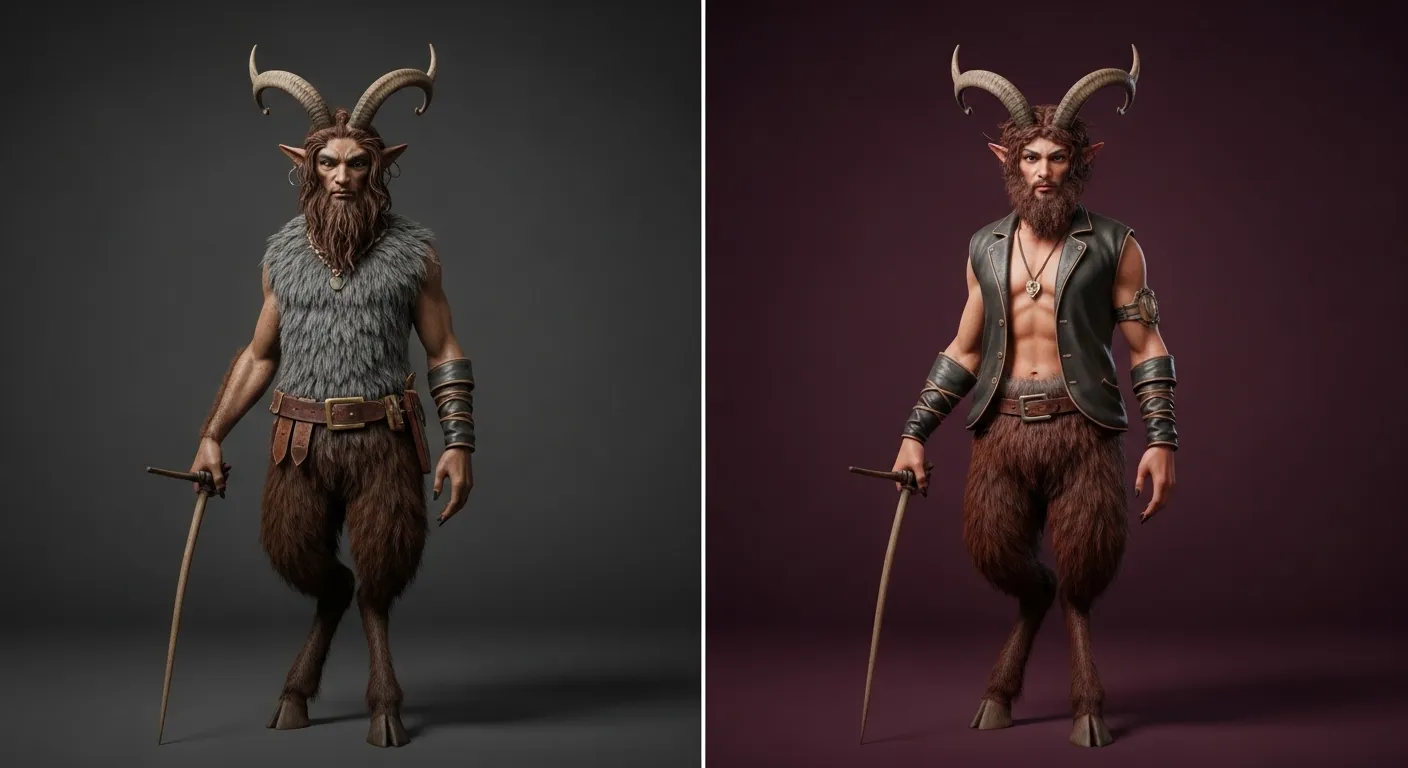
In the enchanting world of mythology, the terms faun and satyr often appear in stories of forests, music, and merriment. Imagine walking through a serene woodland and encountering a playful creature with the legs of a goat, dancing under moonlight.
You might ask, is this a fan or a satyr? While both share similar features and origins in myth, understanding the difference between faun and satyr is essential for mythology enthusiasts, writers, and art lovers.
Pronounced as /fɔːn/ (UK), /fɑːn/ (US) for faun and /ˈsæt.ər/ (UK & US) for satyr, these terms appear in literature, art, and modern media. Knowing the difference between faun and satyr helps avoid confusion and enriches storytelling.
Let’s dive deeper into the captivating world of these mythical creatures.
Difference Between the Keywords
1. Origin and Mythology
- Faun: Originates from Roman mythology, nature spirits associated with forests and pastoral life.
- Example: Fauns appear in Roman tales guiding travelers in woodlands.
- Example: A fan playing a flute in a Roman garden sculpture.
- Example: Fauns appear in Roman tales guiding travelers in woodlands.
- Satyr: Rooted in Greek mythology, followers of Dionysus, often linked to revelry and mischief.
- Example: Greek satyrs dance at Bacchus festivals.
- Example: Satyrs pursuing nymphs in Greek vase paintings.
- Example: Greek satyrs dance at Bacchus festivals.
2. Appearance
- Faun: Usually gentle, with goat legs, human upper body, and small horns.
- Example: The faun in The Chronicles of Narnia shows delicate features.
- Example: Roman mosaics depict fauns in serene poses.
- Example: The faun in The Chronicles of Narnia shows delicate features.
- Satyr: More rugged, muscular, exaggerated features, larger horns, sometimes with animal-like faces.
- Example: Greek pottery often shows satyrs with wild expressions.
- Example: Satyrs in Dionysian friezes appear aggressive or playful.
- Example: Greek pottery often shows satyrs with wild expressions.
3. Nature and Behaviour
- Faun: Peaceful, shy, and shyly playful, enjoys music and forest tranquility.
- Example: A fan listening to birds in the forest.
- Example: Dancing fauns in pastoral art scenes.
- Example: A fan listening to birds in the forest.
- Satyr: Mischievous, lustful, rowdy, indulges in drinking and pranks.
- Example: Satyrs chasing nymphs in Greek myths.
- Example: Satyrs celebrating with wine at festivals.
- Example: Satyrs chasing nymphs in Greek myths.
4. Cultural Symbolism
- Faun: Represents innocence, nature, and harmony with the forest.
- Example: Fauns symbolize peaceful woodland life in Roman art.
- Example: In modern storytelling, fauns guide children gently.
- Example: Fauns symbolize peaceful woodland life in Roman art.
- Satyr: Symbolizes lust, indulgence, and wild nature.
- Example: Satyrs often warn of excess and temptation.
- Example: Greek myths use satyrs to depict human vices.
- Example: Satyrs often warn of excess and temptation.
5. Role in Literature
- Faun: Gentle guide or magical helper in stories.
- Example: The Lion, the Witch and the Wardrobe (C.S. Lewis, 1950, Fantasy) features Mr. Tumnus the faun.
- Example: Fauns in pastoral poetry symbolize calm and innocence.
- Example: The Lion, the Witch and the Wardrobe (C.S. Lewis, 1950, Fantasy) features Mr. Tumnus the faun.
- Satyr: Comic relief, troublemaker, or seducer in tales.
- Example: Satyrs in Euripides’ plays (Greek Tragedy, 400 BC) create mischief.
- Example: Satyrs in The Bacchae (Euripides, 405 BC) represent wild instincts.
- Example: Satyrs in Euripides’ plays (Greek Tragedy, 400 BC) create mischief.
6. Interaction with Humans
- Faun: Generally friendly, avoids harming humans.
- Example: Faun guides travelers safely through woods.
- Example: Offers gifts of fruit or music in Roman myths.
- Example: Faun guides travelers safely through woods.
- Satyr: More aggressive or teasing, pursues humans for fun or seduction.
- Example: Satyrs play tricks on hunters.
- Example: Attempt to abduct or flirt with nymphs in Greek myths.
- Example: Satyrs play tricks on hunters.
7. Musical Association
- Faun: Plays soft, melodic tunes with flutes or panpipes.
- Example: Faun serenades in a quiet forest scene.
- Example: Roman mosaics show fans playing gentle music.
- Example: Faun serenades in a quiet forest scene.
- Satyr: Uses music for revelry or dance, often loud and chaotic.
- Example: Satyrs dance to Dionysian flutes in Greek festivals.
- Example: Satyrs create noisy, energetic musical gatherings.
- Example: Satyrs dance to Dionysian flutes in Greek festivals.
8. Environment
- Faun: Prefers forests, glades, and peaceful pastoral areas.
- Example: Fauns inhabit shady groves in Roman art.
- Example: Represent forest guardians in fantasy novels.
- Example: Fauns inhabit shady groves in Roman art.
- Satyr: Found near wild woods, caves, and places of festivity.
- Example: Satyrs join Bacchic processions in rural Greece.
- Example: Depicted in wild, untamed landscapes in Greek pottery.
- Example: Satyrs join Bacchic processions in rural Greece.
9. Emotional Connotation
- Faun: Positive, gentle, calming influence.
- Example: Faun comforts a lost traveler.
- Example: Fauns in literature symbolize innocence.
- Example: Faun comforts a lost traveler.
- Satyr: Often negative or mischievous, representing temptation.
- Example: Satyr disrupts a nymph’s peace.
- Example: Satyrs represent lust in Greek storytelling.
- Example: Satyr disrupts a nymph’s peace.
10. Modern Adaptation
- Faun: Used in fantasy movies and books as magical, wise, or guiding beings.
- Example: Faun in Pan’s Labyrinth (2006, Mexico/Spain, Fantasy).
- Example: Fauns in animated forest tales.
- Example: Faun in Pan’s Labyrinth (2006, Mexico/Spain, Fantasy).
- Satyr: Appears in modern media as wild, comic, or troublemaking characters.
- Example: Satyrs in Percy Jackson & the Olympians (2010, US, Fantasy).
- Example: Satyrs in comic books as chaotic mythical beings.
- Example: Satyrs in Percy Jackson & the Olympians (2010, US, Fantasy).
Nature and Behaviour
- Faun: Gentle, musical, shy, avoids confrontation, embodies innocence.
- Satyr: Mischievous, lustful, energetic, indulgent, embodies human vices.
Why People Are Confused
Both share goat-like features, horns, and mythological forest settings. The similarity in appearance and overlapping stories often leads to confusion.
Faun vs Satyr: Comparison Table
| Feature | Faun | Satyr | Similarity |
| Origin | Roman | Greek | Mythical creatures |
| Nature | Gentle, shy | Mischievous, lustful | Forest dwelling |
| Appearance | Small horns, soft features | Large horns, rugged | Goat legs, human torso |
| Music | Soft, melodic | Loud, chaotic | Musical beings |
| Behaviour | Calm, friendly | Playful, aggressive | Playful |
| Symbolism | Innocence, harmony | Indulgence, lust | Nature spirits |
| Interaction | Helps humans | Teases humans | Social interactions |
| Environment | Pastoral forests | Wild woods | Natural habitats |
| Literature | Guide or helper | Comic or seducer | Storytelling role |
| Modern Media | Gentle fantasy characters | Wild, comic characters | Myth adaptation |
Which Is Better in What Situation?
For storytelling requiring innocence and guidance, fauns are preferable. They bring a sense of calm and wisdom, perfect for children’s literature or fantasy adventures.
Satyrs suit tales of mischief, revelry, or satire, offering humor, conflict, or symbolic warning about indulgence. In literature or art, the choice depends on the emotional tone and moral of the story.
Use in Metaphors and Similes
- Faun: “As gentle as a faun in the moonlit forest.” (positive, innocence)
- Satyr: “He was a satyr at the party, chasing every pleasure.” (negative, indulgent)
Connotative Meaning
- Faun: Positive (innocence, wisdom)
- Satyr: Negative (lust, mischief)
Idioms or Proverbs
- “Wild as a satyr” meaning uncontrollable or mischievous behavior.
- “Gentle as a faun” means innocent and harmless.
Works in Literature
- The Lion, the Witch and the Wardrobe (C.S. Lewis, Fantasy, 1950) Faun
- The Bacchae (Euripides, Greek Tragedy, 405 BC) Satyr
- Pan’s Labyrinth (Guillermo del Toro, Fantasy, 2006) Faun
Movies
- Pan’s Labyrinth (2006, Mexico/Spain) Faun
- Percy Jackson & the Olympians (2010, US) Satyr
- The Chronicles of Narnia (2005, UK/US) Faun
Frequently Asked Questions
- Are fauns and satyrs the same?
- No, fauns are Roman and gentle, satyrs are Greek and mischievous.
- No, fauns are Roman and gentle, satyrs are Greek and mischievous.
- Which mythology features fauns?
- Roman mythology.
- Roman mythology.
- Which mythology features satyrs?
- Greek mythology.
- Greek mythology.
- Do both have goat legs?
- Yes, both share goat-like features.
- Yes, both share goat-like features.
- Which is friendlier to humans?
- Fauns are generally friendly; satyrs are playful but sometimes troublesome.
- Fauns are generally friendly; satyrs are playful but sometimes troublesome.
How Both Are Useful for Surroundings
Fauns symbolize harmony with nature, teaching respect for forests and wildlife.
Satyrs remind humans of indulgence and the balance between enjoyment and excess, serving as cautionary tales. Both enrich cultural narratives and moral lessons in society.
Final Words
Understanding the difference between faun and satyr enhances appreciation of mythology, literature, and art.
Fauns bring gentle guidance and innocence, while satyrs add excitement, mischief, and cautionary lessons. Both remain essential symbols in human culture.
Conclusion
While fauns and satyrs share goat-like features and forest origins, their characteristics, behaviors, and symbolism differ significantly.
Fauns embody innocence, gentleness, and harmony with nature, appearing as guides or magical beings in literature and films.
Satyrs, however, represent lust, mischief, and indulgence, often acting as comic relief or warnings of excess. Knowing the difference between faun and satyr enriches storytelling, aids writers, and helps mythology enthusiasts accurately interpret art and literature.
By understanding these subtle distinctions, one can appreciate the depth of ancient myths and their modern adaptations. Both fauns and satyrs continue to inspire imagination, highlighting the timeless appeal of mythological creatures.

I am Stephen King is a spiritual writer and digital creator dedicated to exploring the deeper meaning behind numbers, synchronicity, and divine guidance. Through his platform, spiritualdigits.com he shares insights on angel numbers, spiritual symbolism, and personal awakening to help readers align with their higher purpose. His work blends intuition, research, and practical wisdom to make spiritual concepts clear, accessible, and transformative.