When it comes to mourning the loss of a loved one, people often hear the terms funeral and wake, sometimes using them interchangeably.
But do they really mean the same thing? Imagine Sarah, whose grandfather recently passed away.
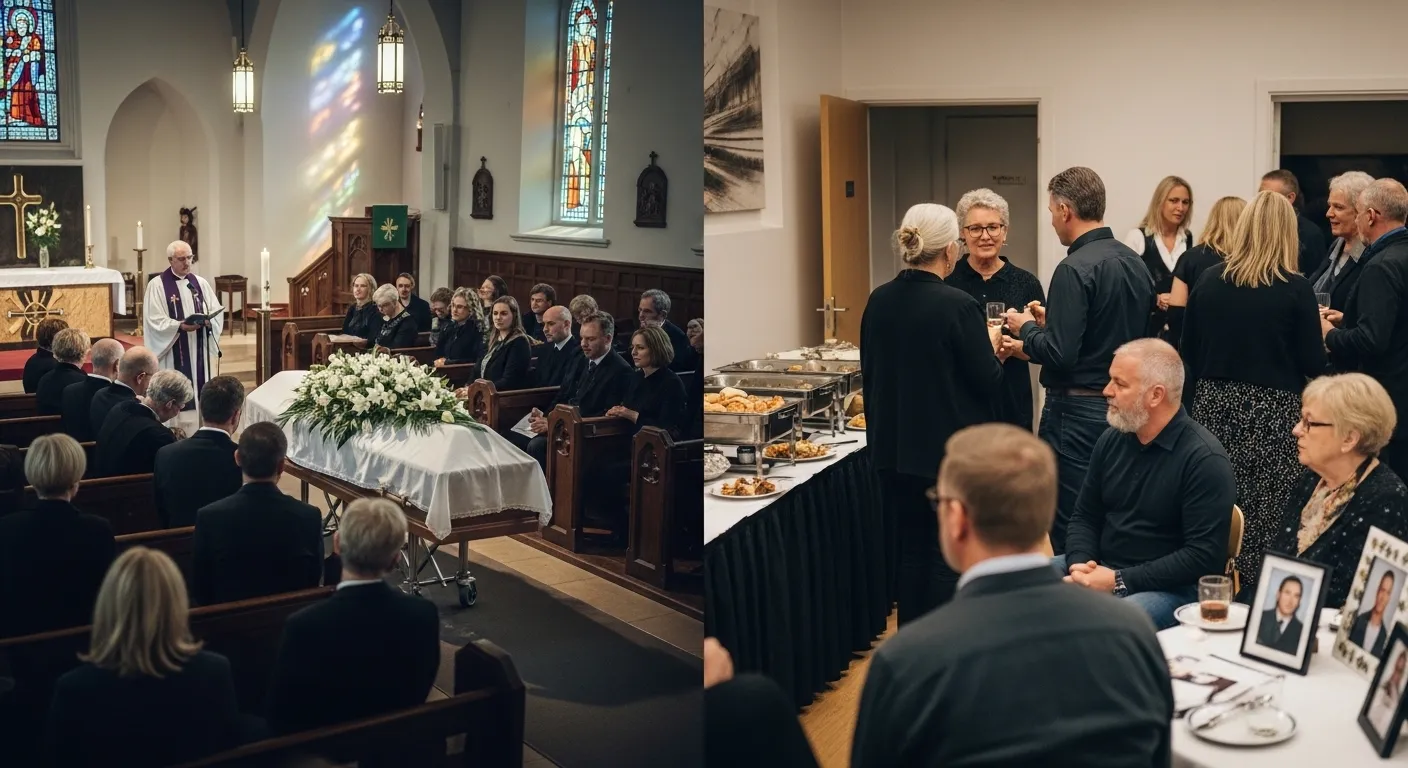
She was invited to the funeral to pay her final respects and later attended the wake, which was more informal and social.
Many people confuse these events, yet knowing the difference between funeral and wake helps families, friends, and even cultural learners navigate traditions appropriately.
In this blog, we will explore the meanings, differences, and social significance of both funeral and wake. By the end, you’ll have a clear understanding of when and why each event occurs.
Pronunciation:
- Funeral US: /ˈfjuː.nər.əl/ | UK: /ˈfjuː.nər.əl/
- Wake US: /weɪk/ | UK: /weɪk/
Let’s dive deeper to understand the unique characteristics of these two significant ceremonies.
Difference Between the Keywords
1. Purpose
- Funeral: A funeral is a formal ceremony to honor and remember the deceased.
Example 1: Families gather at a church for a funeral service.
Example 2: Funerals often include eulogies, prayers, and rituals. - Wake: A wake is an informal gathering that may happen before or after the funeral.
Example 1: Friends meet at a home for a wake, sharing memories.
Example 2: Wakes often involve light food and casual conversation.
2. Timing
- Funeral: Usually held a day or two after death.
Example 1: The funeral is scheduled on Monday after a Saturday death.
Example 2: Funeral services often follow local religious customs. - Wake: Can happen before or after the funeral, sometimes lasting several hours.
Example 1: The wake took place on Sunday evening at the family home.
Example 2: Some wakes continue for multiple days in certain cultures.
3. Formality
- Funeral: Highly formal, following strict traditions.
Example 1: Wearing black attire is expected at a funeral.
Example 2: Funeral programs guide attendees through rituals. - Wake: Informal, relaxed atmosphere.
Example 1: Guests may dress casually at a wake.
Example 2: Conversations and storytelling are encouraged at wakes.
4. Location
- Funeral: Usually in a religious building, funeral home, or cemetery.
Example 1: The funeral took place in St. Mary’s Church.
Example 2: Funerals may also be held outdoors in specific cultures. - Wake: Often held at a family home or funeral home lounge.
Example 1: A wake was organized in the deceased’s living room.
Example 2: Community centers sometimes host wakes for large groups.
5. Participants
- Funeral: Immediate family, close friends, and community members.
Example 1: Only invited guests attended the funeral.
Example 2: Clergy and officiants are part of the funeral ceremony. - Wake: Extended family, friends, and acquaintances.
Example 1: Neighbors dropped by for the wake.
Example 2: Casual friends often attend wakes to show support.
6. Rituals
- Funeral: Structured rituals like prayers, eulogies, and hymns.
Example 1: A minister conducted the funeral service.
Example 2: Funeral rituals often reflect religious beliefs. - Wake: Light rituals, storytelling, and memory sharing.
Example 1: Guests shared fond memories at the wake.
Example 2: Photos of the deceased are often displayed at wakes.
7. Emotional Tone
- Funeral: Somber, reflective, and respectful.
Example 1: Tears were shed during the funeral.
Example 2: Speeches at funerals are serious and thoughtful. - Wake: Mixed emotions—can include laughter while recalling memories.
Example 1: Stories at the wake brought smiles.
Example 2: Music at wakes often uplifts rather than mourns.
8. Duration
- Funeral: Usually 12 hours long.
Example 1: The funeral lasted an hour and a half.
Example 2: Timed ceremonies are common to manage attendees. - Wake: Can last several hours or even days.
Example 1: The wake lasted from afternoon to evening.
Example 2: Extended wakes are common in Irish traditions.
9. Cultural Significance
- Funeral: Respects religious, legal, and social norms.
Example 1: Funerals often follow Catholic rites.
Example 2: Funerals provide closure for communities. - Wake: Builds social support and strengthens bonds.
Example 1: Wakes help families share grief collectively.
Example 2: Wakes are cultural in Irish and Scottish communities.
10. Attire
- Funeral: Formal, often black or dark colors.
Example 1: Everyone wore formal black clothing at the funeral.
Example 2: Certain religious funerals require specific attire. - Wake: Casual or semi-formal clothing.
Example 1: Guests wore casual clothes to the wake.
Example 2: Informal dressing is common at wakes held at home.
Nature and Behaviour
- Funeral: Structured, solemn, ceremonial, reflective, and formal.
- Wake: Relaxed, interactive, supportive, storytelling-focused, and social.
Why People Are Confused About Their Use
Many confuse funeral and wake because both involve gathering after death. Misunderstandings arise due to cultural differences, overlapping timing, or casual use in conversations.
Comparison Table: Funeral vs Wake
| Feature | Funeral | Wake | Similarity |
| Purpose | Formal ceremony to honor deceased | Informal gathering to remember deceased | Both honor and remember the dead |
| Timing | Usually soon after death | Before or after funeral | Both happen around time of death |
| Formality | Highly formal | Informal | Both involve social gathering |
| Location | Church, cemetery, funeral home | Home, funeral lounge | Can be held in funeral home |
| Participants | Family, close friends, clergy | Family, friends, neighbors | Family and friends attend both |
| Rituals | Structured rituals | Storytelling and memory sharing | Both include homage to deceased |
| Emotional Tone | Somber, reflective | Mixed emotions | Both involve mourning |
| Duration | 12 hours | Several hours or days | Time may vary |
| Cultural Significance | Religious and social norms | Social support and bonding | Both are culturally significant |
| Attire | Formal, often dark | Casual or semi-formal | Dress may reflect respect |
Which Is Better in What Situation?
Funeral: For formal religious or legal acknowledgment, funerals provide closure and a structured way to honor the deceased. Families seeking solemnity and tradition will prefer a funeral.
Wake: For informal bonding, storytelling, and social support, wakes allow friends and community members to share memories, celebrate life, and comfort grieving relatives. Wakes are better for casual, social remembrance.
Metaphors, Similes, and Connotative Meanings
- Funeral: Often used metaphorically for endings.
Example: “The funeral of our childhood dreams.” (Negative/serious) - Wake: Can symbolize alertness or a vigil.
Example: “He kept a wake of hope through the long night.” (Positive/reflective)
Idioms / Proverbs
- “Ashes to ashes, dust to dust” funeral related.
- “Make waves in someone’s wake” figurative use of wake.
Works in Literature
- Funeral Rites Novel, Jean Genet, 1947
- Wakes and Celebrations Short Story, Irish Folklore, 1935
Movies
- Funeral in Berlin 1966, UK/Germany
- Wake of the Dead 2010, USA
Frequently Asked Questions
- What is the main difference between funeral and wake?
Funeral is formal; wake is informal. - Can a wake happen without a funeral?
Yes, wakes can occur independently in some cultures. - Which is more emotional?
Funerals are somber; wakes often mix laughter and grief. - Where do they usually take place?
Funerals: churches/cemeteries. Wakes: homes or lounges. - Do both require formal attire?
Funerals usually do; wakes can be casual.
How Both Are Useful for Surroundings
Funerals bring structure, respect, and closure to society.
Wakes strengthen social bonds, community support, and collective remembrance. Together, they maintain cultural traditions and emotional health.
Final Words
Understanding the difference between funeral and wake helps navigate mourning appropriately.
Funerals honor with solemnity, while waking comfort socially. Both play vital roles in society.
Conclusion
While funerals and wakes are related to death, their purposes, forms, and traditions differ significantly.
Funerals are formal, reflective ceremonies, whereas wakes provide informal social support. Both, however, complement each other in helping individuals cope with loss.
By knowing the difference between funeral and wake, one can attend, organize, or participate in these ceremonies respectfully.
Their cultural, emotional, and social relevance makes them indispensable aspects of human life, allowing communities to mourn, celebrate, and remember collectively.
I am D. H. Lawrence (David Herbert Lawrence) an influential English novelist, poet, essayist, and literary critic born on September 11, 1885, in Eastwood, Nottinghamshire, England. He is widely regarded as one of the most important writers of the 20th century.
I work often explored human relationships, emotional intimacy, industrialization, and the conflict between modern society and natural instincts.