A few years ago, a shop owner felt pain and saw a little blood after using the toilet. He quickly became scared and thought he had cancer. After visiting a doctor, he learned it was only hemorrhoids.
This story shows why people often worry when they notice similar symptoms. Understanding the difference between hemorrhoids and cancer helps people stay calm and take the right steps.
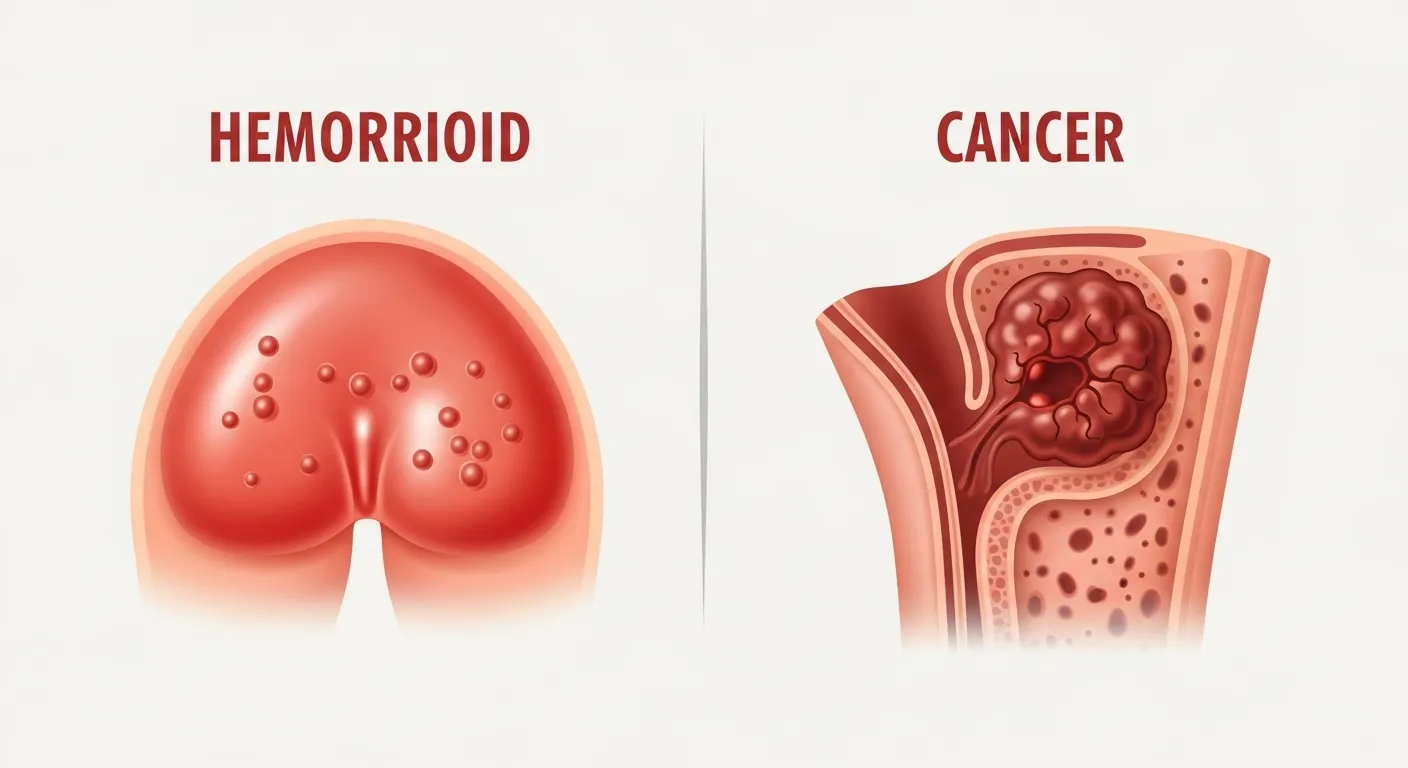
The difference between hemorrhoids and cancer is important because both may cause pain, swelling, or bleeding near the rectum. But they are very different health problems. Hemorrhoids are swollen veins in the lower rectum or anus.
They are common and usually not dangerous. In contrast, cancer, especially colorectal cancer, is a serious disease where harmful cells grow out of control.
Learning the difference between hemorrhoids and cancer helps people know when to see a doctor and when simple care may help. This knowledge protects health and reduces fear. Doctors, students, and common people all benefit from understanding the difference between hemorrhoids and cancer.
- Hemorrhoids pronunciation:
- US: /ˈhɛmərɔɪdz/
- UK: /ˈhɛmərɔɪdz/
- US: /ˈhɛmərɔɪdz/
- Cancer pronunciation:
- US: /ˈkænsər/
- UK: /ˈkænsə/
- US: /ˈkænsər/
Before we move deeper, let us clearly explore the difference between hemorrhoids and cancer step by step.
Difference Between the Keywords
1. Basic Meaning
Hemorrhoids
Hemorrhoids are swollen veins in the anus or rectum.
Examples:
- A person who sits for long hours may get hemorrhoids.
- Pregnancy may cause hemorrhoids because of pressure.
Cancer
Colorectal Cancer is a disease where cells grow in an abnormal and uncontrolled way.
Examples:
- A tumor may grow in the colon.
- Cancer cells may spread to other organs.
2. Level of Danger
Hemorrhoids are usually mild and not life-threatening.
Examples:
- A cream may reduce pain and swelling.
- A warm bath may help the condition.
Cancer can be very dangerous if untreated.
Examples:
- Cancer may spread to the liver.
- It may require surgery or chemotherapy.
3. Cause
Hemorrhoids happen because of pressure on veins.
Examples:
- Straining during bowel movement.
- Sitting too long on the toilet.
Cancer happens due to cell mutations.
Examples:
- Genetic changes in cells.
- Long-term unhealthy lifestyle.
4. Growth Pattern
Hemorrhoids are swollen veins but not tumors.
Examples:
- They may shrink after treatment.
- They often come and go.
Cancer forms abnormal tumors.
Examples:
- Tumors grow bigger over time.
- Cells multiply quickly.
5. Pain Type
Hemorrhoids cause itching or mild pain.
Examples:
- Burning feeling during sitting.
- Pain during bowel movement.
Cancer pain may start mild but become strong later.
Examples:
- Deep stomach pain.
- Long-lasting discomfort.
6. Bleeding
Hemorrhoids cause bright red blood.
Examples:
- Blood on toilet paper.
- Blood drops in toilet bowl.
Cancer bleeding may be darker.
Examples:
- Dark stool.
- Hidden blood in stool tests.
7. Treatment
Hemorrhoids treatment is usually simple.
Examples:
- Fiber-rich diet.
- Over-the-counter creams.
Cancer treatment is complex.
Examples:
- Surgery.
- Radiation therapy.
8. Spread
Hemorrhoids do not spread to other organs.
Examples:
- They stay near the anus.
- They do not affect lungs or liver.
Cancer may spread (metastasis).
Examples:
- Colon cancer spreading to liver.
- Cancer spreading to lymph nodes.
9. Recovery
Hemorrhoids often heal quickly.
Examples:
- Pain reduces in a few days.
- Lifestyle changes help recovery.
Cancer recovery takes longer.
Examples:
- Months of treatment.
- Long medical care.
10. Medical Check
Hemorrhoids may be diagnosed with a simple exam.
Examples:
- Physical inspection.
- Anoscopy.
Cancer requires detailed tests.
Examples:
- Colonoscopy.
- Biopsy.
Nature and Behaviour
Hemorrhoids are physical swelling of veins. They behave like a temporary body problem. They may appear and disappear depending on diet, lifestyle, and pressure in the rectal area.
Cancer behaves very differently. It grows, spreads, and damages nearby tissues. It often becomes worse without medical treatment.
Why People Are Confused
Many people confuse hemorrhoids and cancer because they share some symptoms.
Common reasons:
- Both may cause rectal bleeding.
- Both may cause discomfort in the same area.
- People fear the worst when they see blood.
- Lack of health knowledge.
Because of this confusion, doctors advise medical checkups when symptoms last long.
Table: Difference and Similarity
| Feature | Hemorrhoids | Cancer | Similarity |
| Type | Swollen veins | Abnormal cell growth | Both affect rectal area |
| Danger level | Usually mild | Often serious | Both need medical attention |
| Spread | Does not spread | Can spread | Both may worsen without care |
| Treatment | Creams, diet | Surgery, therapy | Doctors treat both |
| Bleeding | Bright red | Dark or hidden | Both may show bleeding |
Which Is Better in What Situation?
Hemorrhoids are the better condition when compared with cancer because they are usually mild and treatable.
Many people recover with simple lifestyle changes such as eating fiber, drinking water, and avoiding long sitting. In most cases, hemorrhoids do not threaten life and may disappear after treatment. Because of this, they are far less dangerous than cancer.
Cancer, however, requires serious medical care. It is not “better,” but early detection can make treatment successful.
When cancer is found early, doctors can remove tumors and stop the spread of harmful cells. Early screening tests like colonoscopy help doctors treat cancer before it becomes severe.
Metaphors and Similes
Sometimes these words appear in figurative speech.
Hemorrhoids (metaphor)
- “The problem was like hemorrhoids, painful but not deadly.”
Cancer (metaphor)
- “Corruption is a cancer in society.”
- “Hate spreads like cancer.”
Connotative Meaning
Hemorrhoids:
- Mostly negative but mild.
Examples:
- “Too much sitting at work gave him hemorrhoids.”
- “The long trip felt like a hemorrhoid problem.”
Cancer:
- Strong negative meaning.
Examples:
- “Violence is a cancer in the community.”
- “Rumors spread like cancer.”
Idioms or Proverbs
These words rarely appear in classic idioms, but they appear in modern expressions.
Cancer expression:
- “Corruption is a cancer.”
Example: “Leaders said corruption is a cancer that harms the country.”
Humorous expression:
- “A pain like hemorrhoids.”
Example: “Paperwork became a pain like hemorrhoids.”
Works in Literature
Hemorrhoids
- The Good Gut Health nonfiction, Justin Sonnenburg, 2015
- The Digestive System Guide Medical guide, various authors
Cancer
- The Emperor of All Maladies Medical history, Siddhartha Mukherjee, 2010
- The Fault in Our Stars Novel, John Green, 2012
Movies Related to Cancer
- The Fault in Our Stars ; 2014, USA
- 50/50 ; 2011, USA
- My Sister’s Keeper ; 2009, USA
(Few films focus directly on hemorrhoids because it is a minor medical condition.)
Frequently Asked Questions
1. Can hemorrhoids turn into cancer?
No. Hemorrhoids do not become cancer.
2. Do both cause bleeding?
Yes. Both may cause bleeding, but the type of blood may differ.
3. Should I see a doctor for rectal bleeding?
Yes. A doctor should check any unusual bleeding.
4. Are hemorrhoids common?
Yes. Many adults experience them at some time.
5. Can cancer be cured?
Sometimes yes, especially when detected early.
How Both Are Useful for Surroundings
Learning about hemorrhoids helps people improve lifestyle habits like eating fiber and staying active. This knowledge supports digestive health in communities.
Learning about cancer helps society focus on early screening, medical research, and awareness programs. It encourages healthy living and supports medical science.
Final Words for Both
Hemorrhoids remind people to take care of daily habits and digestive health. Cancer reminds people about the importance of early medical testing and healthy lifestyles.
Both topics help improve public health awareness.
Conclusion
Understanding the difference between hemorrhoids and cancer is important for everyone. Hemorrhoids are swollen veins that usually cause mild discomfort and can be treated easily.
Cancer, on the other hand, is a serious disease where abnormal cells grow and may spread in the body. Because both conditions may show similar symptoms like bleeding, people sometimes confuse them.
This confusion can cause fear or delay proper treatment. Learning the difference between hemorrhoids and cancer helps people react wisely and seek medical advice at the right time. With better awareness, individuals can protect their health and support a healthier society.

I am Stephen King is a spiritual writer and digital creator dedicated to exploring the deeper meaning behind numbers, synchronicity, and divine guidance. Through his platform, spiritualdigits.com he shares insights on angel numbers, spiritual symbolism, and personal awakening to help readers align with their higher purpose. His work blends intuition, research, and practical wisdom to make spiritual concepts clear, accessible, and transformative.