One evening at a busy street food market, a customer asked the vendor for a sausage. The vendor quickly handed him a hotdog. The customer smiled but then asked, “Is this really a sausage or a hotdog?” This small moment shows how easily people confuse these two popular foods.
To understand the difference between hotdog and sausage, we first need to know their meanings. A sausage is a broad category of ground meat mixed with spices and packed into a casing. A hotdog, however, is a specific type of sausage that is usually served in a soft bun with sauces like ketchup or mustard.
Many people often mix up these foods because they look similar. That is why learning the difference between hotdog and sausage is helpful. When you clearly understand the difference between hotdog and sausage, you can order food correctly, cook better meals, and understand culinary terms more easily. This guide will clearly explain the difference between hotdog and sausage in simple language.
Key Difference Between the Two
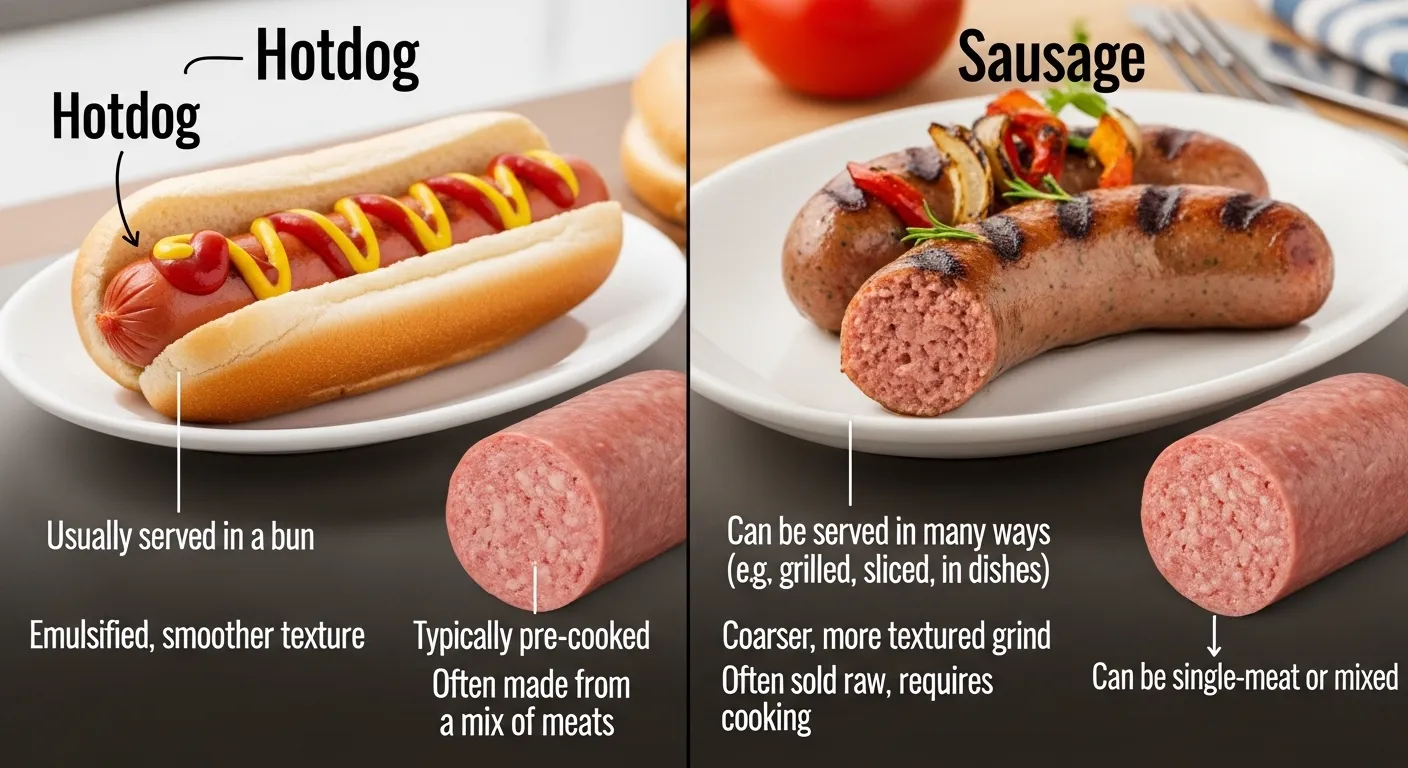
The main difference is that sausage is a category of meat products, while hotdog is a specific type of sausage that is usually pre-cooked and served in a bun.
Why Is Their Difference Important for Learners and Experts?
Understanding the difference between hotdog and sausage is useful for many reasons. For learners, it improves food vocabulary and cultural knowledge. Many English learners encounter these words in menus, recipes, and media. Knowing the difference prevents confusion.
For food experts and chefs, the difference is even more important. Sausages come in many types, such as Italian sausage, bratwurst, and chorizo, each with unique flavors and cooking methods. A hotdog, however, has a specific preparation style and presentation.
In society, these foods are also part of social events like sports games, barbecues, and street food culture. Understanding the difference helps people communicate clearly about food, cooking, and culture.
Pronunciation
Hotdog
- US: /ˈhɑːt.dɔːɡ/
- UK: /ˈhɒt.dɒɡ/
Sausage
- US: /ˈsɔː.sɪdʒ/
- UK: /ˈsɒs.ɪdʒ/
Linking Hook
Now that we understand the basic meaning, let’s explore the difference between hotdog and sausage in detail through clear points and examples.
Difference Between Hotdog and Sausage
1. Definition
A sausage is a general meat product made from ground meat mixed with spices.
A hotdog is a specific type of sausage.
Examples:
Sausage: Italian sausage used in pasta.
Sausage: Breakfast sausage served with eggs.
Hotdog: Classic hotdog in a bun with mustard.
Hotdog: Street-style hotdog with onions.
2. Variety
Sausages come in many varieties worldwide.
Hotdogs usually have a standard style.
Examples:
Sausage: Bratwurst from Germany.
Sausage: Chorizo from Spain.
Hotdog: New York style hotdog.
Hotdog: Chicago style hotdog.
3. Serving Style
Sausages can be served alone or in dishes.
Hotdogs are typically served in a bun.
Examples:
Sausage: Sausage in pasta.
Sausage: Grilled sausage with vegetables.
Hotdog: Hotdog with ketchup and mustard.
Hotdog: Hotdog with cheese and chili.
4. Preparation
Sausages may be raw, smoked, or cured.
Hotdogs are usually pre-cooked.
Examples:
Sausage: Raw sausage cooked in a pan.
Sausage: Smoked sausage grilled.
Hotdog: Boiled hotdog.
Hotdog: Grilled hotdog.
5. Ingredients
Sausages may contain different meats and spices.
Hotdogs usually contain finely ground meat and mild seasoning.
Examples:
Sausage: Pork sausage with herbs.
Sausage: Beef sausage with garlic.
Hotdog: Beef hotdog.
Hotdog: Chicken hotdog.
6. Shape and Texture
Sausages can be thick or thin.
Hotdogs usually have a smooth and uniform shape.
Examples:
Sausage: Thick bratwurst.
Sausage: Thin breakfast sausage.
Hotdog: Smooth long hotdog.
Hotdog: Skinless hotdog.
7. Cultural Use
Sausages are common in many traditional cuisines.
Hotdogs are strongly connected with American fast food.
Examples:
Sausage: German sausage dishes.
Sausage: British breakfast sausage.
Hotdog: Baseball stadium hotdog.
Hotdog: Street vendor hotdog.
8. Cooking Methods
Sausages can be fried, grilled, or baked.
Hotdogs are commonly boiled or grilled.
Examples:
Sausage: Baked sausage.
Sausage: Pan-fried sausage.
Hotdog: Steamed hotdog.
Hotdog: Grilled hotdog.
9. Presentation
Sausages are often part of meals.
Hotdogs are often served as fast food.
Examples:
Sausage: Sausage with mashed potatoes.
Sausage: Sausage pizza topping.
Hotdog: Hotdog with fries.
Hotdog: Hotdog at a food cart.
10. Popular Occasions
Sausages appear in breakfast or dinner dishes.
Hotdogs are common at sports events and picnics.
Examples:
Sausage: Family breakfast sausage.
Sausage: Dinner sausage platter.
Hotdog: Picnic hotdog.
Hotdog: Stadium hotdog.
Nature and Behaviour of Both
Sausage
Sausage is flexible in cooking and culture. It adapts to different recipes, spices, and cuisines around the world.
Hotdog
Hotdog is simple and standardized. It is designed for quick serving and convenience in fast-food settings.
Why People Are Confused
People confuse them because hotdogs look like sausages and are technically a type of sausage. Also, restaurants sometimes use the terms interchangeably, which creates misunderstanding.
Table Showing Differences and Similarities
| Feature | Hotdog | Sausage | Similarity |
| Category | Specific type | General category | Both meat products |
| Serving | Usually in a bun | Served in many dishes | Both grilled or cooked |
| Variety | Limited styles | Many global varieties | Both seasoned meat |
| Texture | Smooth | Can vary | Both cylindrical |
| Cultural use | Fast food | Traditional cuisine | Both popular worldwide |
Which Is Better in What Situation?
A hotdog is better when you need quick and convenient food. It is perfect for sports events, picnics, or fast meals. The bun and simple toppings make it easy to eat while standing or walking.
A sausage is better when cooking full meals. It works well in pasta, stews, breakfasts, and grilled dishes. Because sausages come in many flavors and styles, chefs can use them creatively in different cuisines.
Use in Metaphors and Similes
Sometimes these words appear in humorous comparisons.
Examples:
- “The hotdog stand was the heart of the stadium.”
- “The sausages sizzled like fireworks on the grill.”
Connotative Meaning
Hotdog
Neutral or fun meaning. Often connected with casual food culture.
Example: “We enjoyed hotdogs at the baseball game.”
Sausage
Neutral but sometimes humorous in slang.
Example: “The grill was full of sausages at the barbecue.”
Idioms or Expressions
“Hotdogging” – showing off or doing something in a flashy way.
Example: The skateboarder was hotdogging during the competition.
Sausage rarely appears in idioms but can appear humorously:
Example: “Too many sausages on the grill” meaning too many similar things.
Works in Literature
- The Jungle — Upton Sinclair — 1906 — Novel (mentions sausage industry)
- Sausage and Other Stories — Various authors — Short story collections
Movies Related to the Keywords
- Sausage Party — 2016 — USA
- Hot Dog… The Movie — 1984 — USA
Frequently Asked Questions
1. Is a hotdog a sausage?
Yes, a hotdog is a type of sausage.
2. Are all sausages hotdogs?
No, sausages include many other varieties.
3. Which is older historically?
Sausages are much older and appear in ancient cuisines.
4. Why do hotdogs come in buns?
The bun makes them easy to eat as street food.
5. Are hotdogs always made from beef?
No, they can also be made from chicken or pork.
How Both Are Useful for Surroundings
Both foods play an important role in social gatherings and street food culture. They support small food businesses and bring people together at events, festivals, and family meals.
Final Words for Both
Hotdogs and sausages may look similar, but they represent different culinary ideas. One is a fast-food favorite, while the other is a versatile ingredient used around the world.
Conclusion
Understanding the difference between hotdog and sausage helps people communicate more clearly about food and cooking. While a sausage is a broad category of seasoned ground meat products, a hotdog is a specific variety designed mainly for quick serving in a bun.
Their preparation, presentation, and cultural roles make them unique. Sausages appear in many traditional dishes across different countries, while hotdogs are strongly linked to street food and sporting events. Both foods remain popular because they are flavorful, convenient, and adaptable. By learning the difference between hotdog and sausage, readers can better understand menus, recipes, and global food traditions.

I am James Anderson an English author known for his insightful and engaging writing in contemporary literature. With a focus on [insert genre, e.g., fiction, non-fiction, or specific themes], he explores complex human emotions and social dynamics, blending thought-provoking ideas with accessible storytelling. His work has earned recognition for its clarity, depth, and ability to connect with a wide audience, establishing him as a respected voice in modern English literature.