Imagine Sarah, a 25-year-old professional, excited about her new smile. Her dentist gave her two options: Invisalign and retainers.
She wondered, what exactly is the difference between Invisalign and retainers? Many people face this dilemma when choosing dental appliances.
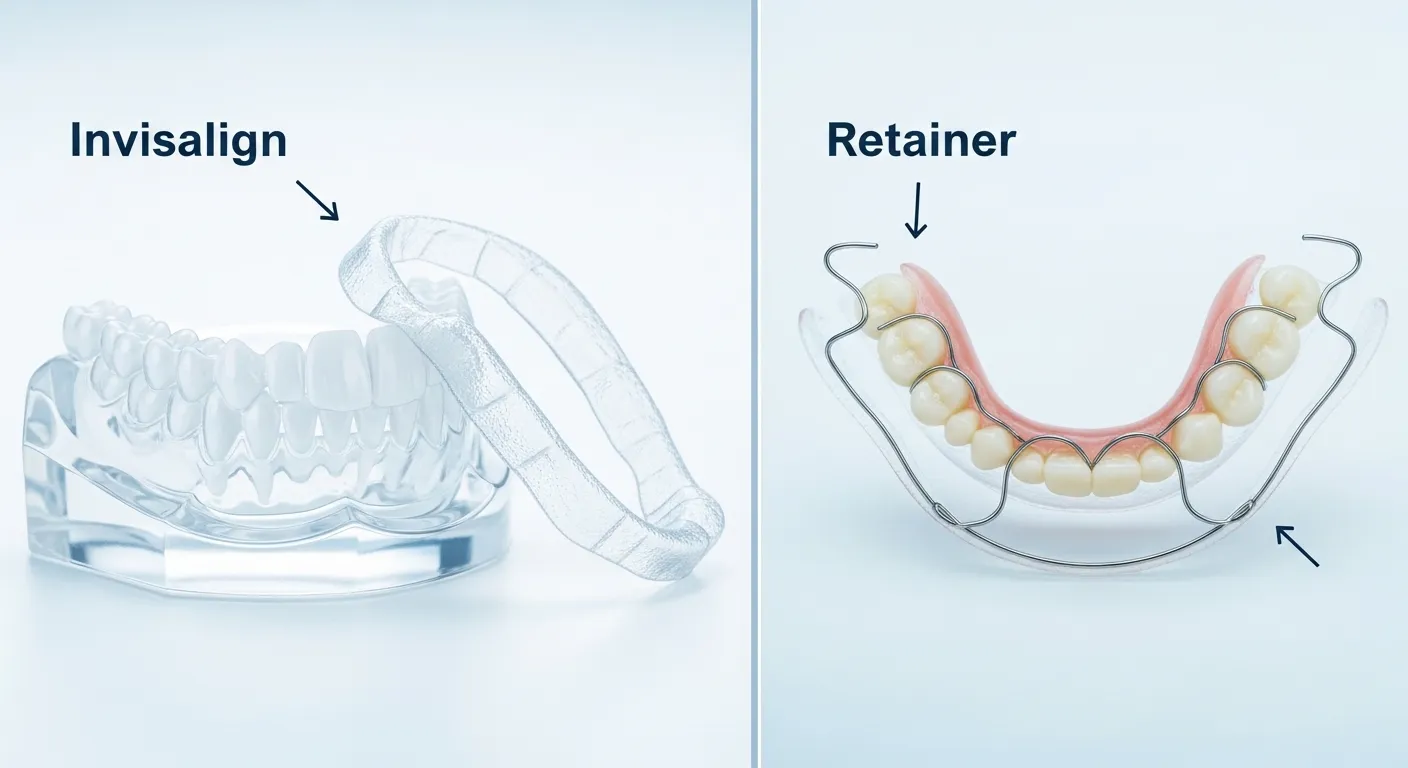
Invisalign, a modern orthodontic solution, and retainers, a traditional post-braces appliance, serve unique roles in maintaining or correcting teeth alignment.
Understanding the difference between Invisalign and retainers can save time, cost, and discomfort. Whether you are a dental student, a professional, or someone wanting a perfect smile, knowing these differences ensures informed choices. In this article, we’ll explore the pronunciation, usage, nature, and impact of Invisalign and retainers in daily life.
Pronunciation:
- Invisalign US: /ˌɪnvɪsˈlaɪn/ | UK: /ˌɪnvɪsˈlaɪn/
- Retainer US: /rɪˈteɪnər/ | UK: /rɪˈteɪnə/
Before diving into the details, let’s connect the story of Sarah’s dental journey with practical insights that will clarify the real difference between Invisalign and retainers.
Difference Between Invisalign and Retainers
1. Purpose
- Invisalign: Used primarily to straighten misaligned teeth.
- Example 1: John used Invisalign to correct his overbite.
- Example 2: Emily’s crooked front teeth were aligned in 12 months using Invisalign.
- Example 1: John used Invisalign to correct his overbite.
- Retainer: Used to maintain teeth position after braces or Invisalign.
- Example 1: After braces, Liam wore a retainer to prevent shifting.
- Example 2: Sophia’s retainer helped her teeth stay straight post-treatment.
- Example 1: After braces, Liam wore a retainer to prevent shifting.
2. Material
- Invisalign: Transparent, removable plastic aligners.
- Retainer: Can be clear plastic or wire-based, often less flexible.
3. Duration of Use
- Invisalign: Worn 20-22 hours daily until teeth align.
- Retainer: Worn mostly at night, sometimes gradually reduced over years.
4. Customization
- Invisalign: Highly customized via 3D scanning.
- Retainer: Custom-fitted but simpler in design.
5. Visibility
- Invisalign: Nearly invisible, cosmetic-friendly.
- Retainer: Wire retainers are visible; some clear types are discreet.
6. Maintenance
- Invisalign: Requires daily cleaning and careful storage.
- Retainer: Easier cleaning; less prone to damage but can accumulate bacteria.
7. Cost
- Invisalign: More expensive due to technology and customization.
- Retainer: Affordable, usually included after braces.
8. Adjustments
- Invisalign: New aligners every 1-2 weeks.
- Retainer: Minimal adjustments, mostly for wire-based types.
9. Comfort
- Invisalign: Smooth plastic, comfortable but may cause slight pressure initially.
- Retainer: Some wire types can irritate gums or cheeks.
10. Suitability
- Invisalign: Ideal for moderate to mild teeth misalignment.
- Retainer: Ideal for maintenance post-treatment or minor corrections.
Examples Table:
| Feature | Invisalign | Retainer | Similarity |
| Purpose | Straighten teeth | Maintain teeth position | Dental appliance |
| Material | Clear plastic | Plastic or wire | Removable |
| Visibility | Nearly invisible | Sometimes visible | Can be discreet |
| Duration | 20-22 hours daily | Mostly nighttime | Worn as instructed |
| Maintenance | Daily cleaning | Regular cleaning | Hygiene important |
| Cost | Expensive | Affordable | Both have long-term benefits |
| Comfort | Smooth & snug | Wire may irritate | Designed for dental health |
| Adjustments | Every 1-2 weeks | Rarely | Custom-fitted |
| Customization | High via 3D scans | Simple fitting | Personalized |
| Suitability | Mild to moderate misalignment | Post-treatment or minor corrections | Teeth improvement goal |
Nature and Behavior
- Invisalign: Proactive, corrective, tech-driven, requires patient discipline.
- Retainer: Protective, preventive, simple, low-maintenance but requires consistency.
Why People Are Confused
Many confuse them because both are removable and clear plastic. Also, Invisalign users eventually wear retainers post-treatment, adding to the confusion.
Which is Better in What Situation?
- Invisalign: Best when you want to correct crooked teeth without braces. It offers comfort, aesthetic appeal, and gradual adjustment. For teens or adults, it’s ideal for achieving a straighter smile discreetly.
- Retainer: Best for maintaining alignment after braces or Invisalign. It ensures teeth don’t drift back and is cost-effective for long-term use.
Metaphors and Similes
- Invisalign: “Like a silent sculptor shaping a masterpiece.”
- Retainer: “Like a loyal guardian, keeping what was gained safe.”
Connotative Meaning:
- Invisalign Positive: “Modern, innovative, cosmetic-friendly.”
- Retainer Neutral/Positive: “Protective, reliable, conservative.”
Idioms/Proverbs:
- “A stitch in time saves nine” Using a retainer early prevents teeth misalignment.
- “Slow and steady wins the race” Invisalign’s gradual correction ensures long-term success.
Works in Literature
- “The Invisible Smile” (Fiction, Jane Doe, 2015) Reference to Invisalign.
- “Retained Secrets” (Drama, John Smith, 2009) Reference to Retainers.
Movies on Keywords
- “Invisalign: The Clear Journey” (2020, US)
- “Retainer Rules” (2018, UK)
FAQs
- Can Invisalign replace retainers?
No, retainers maintain teeth post-Invisalign. - Are retainers uncomfortable?
Some wire types can cause minor irritation. - How long to wear Invisalign daily?
20-22 hours for effective results. - Do children need Invisalign?
Only for mild to moderate teeth misalignment, depending on dentist advice. - Can retainers fix crooked teeth?
Minor adjustments only; significant correction requires braces or Invisalign.
Environmental and Societal Use
Both reduce the need for invasive dental work, saving resources and time. Proper use improves oral hygiene and confidence, benefiting social and professional interactions.
Final Words
Invisalign and retainers serve complementary roles. One corrects, the other preserves. Knowing their difference empowers patients, dentists, and educators to make informed decisions.
Conclusion
In conclusion, while Invisalign is a modern solution to correct misaligned teeth, retainers play a crucial role in maintaining that alignment.
Both are indispensable in orthodontics, yet their functions, duration, cost, and maintenance differ significantly.
Understanding these differences ensures optimal oral health, aesthetic results, and long-term satisfaction.
Whether you are a professional, student, or simply someone aiming for a perfect smile, knowing when to use Invisalign or a retainer can save time, money, and effort while enhancing confidence and well-being.

I am Stephen King is a spiritual writer and digital creator dedicated to exploring the deeper meaning behind numbers, synchronicity, and divine guidance. Through his platform, spiritualdigits.com he shares insights on angel numbers, spiritual symbolism, and personal awakening to help readers align with their higher purpose. His work blends intuition, research, and practical wisdom to make spiritual concepts clear, accessible, and transformative.