A farmer once noticed that his cattle were losing weight despite proper feeding. The veterinarian suggested two medicines: ivermectin and fenbendazole.
At first glance, both seemed similar because they treat parasites. However, understanding the difference between ivermectin and fenbendazole was essential before choosing the right one. The difference between ivermectin and fenbendazole lies mainly in their drug class, mechanism, and spectrum of parasites they treat.
Many pet owners and livestock keepers often search for the difference between ivermectin and fenbendazole to ensure safe and effective treatment. Knowing the difference between ivermectin and fenbendazole helps prevent misuse, overdose, and ineffective parasite control.
Though both are antiparasitic medicines, they are chemically and functionally distinct.Before we explore deeper, let’s clearly define both terms.Ivermectin is an antiparasitic drug commonly used in animals and sometimes in humans to treat infections caused by roundworms, mites, and lice.
Fenbendazole is a broad-spectrum benzimidazole anthelmintic mainly used in animals to treat gastrointestinal parasites.
Pronunciation (US & UK)
- Ivermectin
- US: /ˌaɪ.vərˈmek.tɪn/
- UK: /ˌaɪ.vəˈmek.tɪn/
- Fenbendazole
- US: /ˌfenˈben.dəˌzoʊl/
- UK: /ˌfenˈben.də.zəʊl/
Key Difference Between the Both
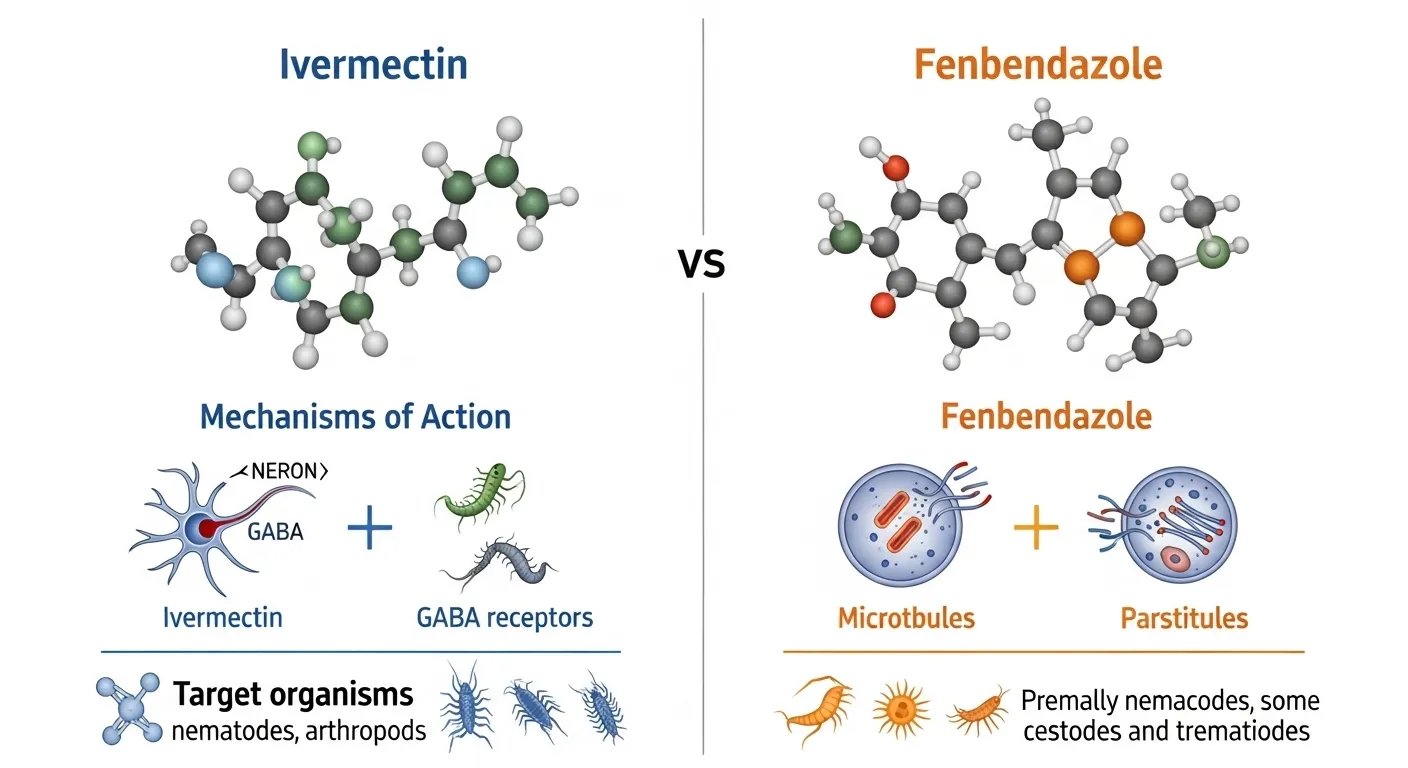
The primary difference is their drug class and mechanism of action. Ivermectin belongs to the macrocyclic lactone group and affects the nervous system of parasites, causing paralysis.
Fenbendazole belongs to the benzimidazole group and works by disrupting the parasite’s energy metabolism.
Understanding this basic contrast forms the foundation of the entire comparison.
Why Is Their Difference Necessary to Know for Learners and Experts?
Knowing the difference between ivermectin and fenbendazole is important for veterinary students, medical professionals, farmers, and researchers.
Misuse of antiparasitic drugs can cause drug resistance, treatment failure, and harm to animals or humans.
In society, proper parasite control improves livestock productivity, protects pets, and supports public health. Accurate knowledge ensures responsible use and prevents misinformation.
Now, let’s explore their differences in detail.
Difference Between Ivermectin and Fenbendazole
1. Drug Class
Ivermectin belongs to macrocyclic lactones.
- Example 1: Used in cattle injection for worms.
- Example 2: Used in humans for certain parasitic infections.
Fenbendazole belongs to benzimidazoles.
- Example 1: Commonly given to dogs for roundworms.
- Example 2: Used in horses for intestinal parasites.
2. Mechanism of Action
Ivermectin paralyzes parasites by affecting nerve and muscle cells.
- Example 1: Kills mites causing mange.
- Example 2: Stops movement of roundworms.
Fenbendazole blocks glucose uptake in parasites.
- Example 1: Starves intestinal worms.
- Example 2: Stops parasite growth in pets.
3. Target Parasites
Ivermectin: Effective against mites, lice, and some worms.
- Example 1: Treats scabies in humans.
- Example 2: Controls heartworm larvae in dogs.
Fenbendazole: Mainly targets intestinal worms.
- Example 1: Treats hookworms in dogs.
- Example 2: Removes whipworms in cats.
4. Use in Humans
Ivermectin: Approved for certain human infections.
- Example 1: Used for river blindness.
- Example 2: Prescribed for strongyloidiasis.
Fenbendazole: Not commonly approved for human use.
- Example 1: Mostly veterinary medicine.
- Example 2: Research discussions exist but no mainstream approval.
5. Formulation
Ivermectin: Tablets, creams, injections.
- Example 1: Oral tablets for humans.
- Example 2: Injectable form for livestock.
Fenbendazole: Powders, pastes, granules.
- Example 1: Dog deworming granules.
- Example 2: Horse oral paste.
6. Safety Margin
Ivermectin: Toxic in overdose, especially in some dog breeds.
- Example 1: Collies sensitive to high doses.
- Example 2: Neurological signs in overdose.
Fenbendazole: Generally wide safety margin.
- Example 1: Puppies tolerate well.
- Example 2: Used in repeated treatments safely.
7. Spectrum of Activity
Ivermectin: Broad but focused on nervous-system susceptible parasites.
- Example 1: Effective against external parasites.
- Example 2: Limited against tapeworms.
Fenbendazole: Broad for gastrointestinal parasites.
- Example 1: Effective for roundworms.
- Example 2: Some effect on certain tapeworm species.
8. Resistance Issues
Ivermectin: Resistance reported in livestock parasites.
- Example 1: Sheep worm resistance.
- Example 2: Cattle nematode resistance.
Fenbendazole: Resistance also observed in some species.
- Example 1: Horse strongyles resistant cases.
- Example 2: Goat parasites less responsive.
9. Duration of Action
Ivermectin: Often longer acting in some forms.
- Example 1: Monthly heartworm prevention.
- Example 2: Single-dose therapy in some infections.
Fenbendazole: Often requires multiple days dosing.
- Example 1: 3-day deworming course.
- Example 2: 5-day parasite treatment.
10. Primary Field of Use
Ivermectin: Veterinary and limited human medicine.
- Example 1: Public health programs.
- Example 2: Farm parasite control.
Fenbendazole: Mainly veterinary practice.
- Example 1: Pet clinics.
- Example 2: Livestock deworming.
Nature and Behaviour of Both
Ivermectin acts quickly by attacking the nervous system of parasites, leading to paralysis and death. It is potent and must be dosed carefully.
Fenbendazole acts slowly by stopping the parasite’s energy supply. It is gentler and commonly used in routine deworming programs.
Why Are People Confused About Their Use?
People are confused because both are antiparasitic medicines used in animals. They are sometimes discussed together in online forums. Similar-sounding medical names and overlapping worm treatment uses also create misunderstanding.
Table Showing Difference and Similarity
| Feature | Ivermectin | Fenbendazole | Similarity |
| Drug Class | Macrocyclic lactone | Benzimidazole | Both antiparasitic |
| Main Use | External & internal parasites | Mainly intestinal worms | Used in animals |
| Human Use | Yes (approved cases) | Rare/Not standard | Parasite treatment |
| Mechanism | Nerve paralysis | Energy metabolism block | Kill parasites |
| Safety | Dose-sensitive | Safer margin | Require proper dosing |
Which Is Better in What Situation?
Ivermectin is better when treating mites, lice, or specific human parasitic infections. It is useful for conditions involving nervous-system-sensitive parasites. In livestock, it is effective for controlling external parasites and preventing heartworm in dogs. However, correct dosage is very important.
Fenbendazole is better for routine intestinal worm control in pets and farm animals. It is safer for repeated deworming programs and often preferred for puppies and young animals. It works well for gastrointestinal parasites and is widely used in veterinary clinics.
Metaphors and Similes
- Ivermectin works like a switch turning off the parasite’s nervous system.
- Fenbendazole acts like cutting off the parasite’s food supply.
Connotative Meaning
Ivermectin
- Positive: Powerful, effective.
- Example: “It is a strong defender against parasites.”
- Negative: Risky if misused.
- Example: “Incorrect dosage can be dangerous.”
- Neutral: Medical treatment term.
Fenbendazole
- Positive: Gentle and reliable.
- Example: “Safe routine dewormer.”
- Negative: Limited human use.
- Neutral: Veterinary medicine name.
Idioms or Proverbs
No common idioms directly include these scientific names. However:
- “Prevention is better than cure.” (Relates to parasite control programs.)
- “A stitch in time saves nine.” (Early deworming prevents bigger problems.)
Works in Literature
These are scientific drugs, not common literary themes. However, they appear in:
- Veterinary pharmacology textbooks (Medical genre, various authors, 20th–21st century).
- Research journals in parasitology.
Movies
There are no mainstream movies specifically made about ivermectin or fenbendazole. They may be mentioned in documentaries about medicine or farming.
Five Frequently Asked Questions
1. Are ivermectin and fenbendazole the same?
No. They belong to different drug classes and work differently.
2. Can both treat worms?
Yes, but they target different types and act differently.
3. Is ivermectin used in humans?
Yes, for certain approved infections.
4. Is fenbendazole safe for pets?
Generally yes, under veterinary guidance.
5. Why should dosage be controlled?
To prevent toxicity and resistance.
How Both Are Useful for Surroundings
Both medicines help control parasites in animals. This improves livestock productivity, reduces disease spread, and supports food safety. Healthy animals also reduce environmental contamination from parasite eggs.
Final Words for Both
Ivermectin is a strong, targeted antiparasitic medicine used in both humans and animals. Fenbendazole is a reliable veterinary dewormer mainly for intestinal parasites. Both play vital roles in animal health.
Conclusion
Understanding the difference between ivermectin and fenbendazole is essential for safe and effective parasite treatment.
Although both are antiparasitic drugs, they belong to different chemical classes and work in different ways. Ivermectin primarily affects the parasite’s nervous system, while fenbendazole blocks its energy metabolism.
Their uses, safety levels, and applications also vary. Choosing the correct medicine depends on the type of parasite, species being treated, and professional guidance. Proper knowledge prevents misuse, resistance, and health risks. Therefore, always consult a qualified veterinarian or healthcare provider before using either medication.

I am James Anderson an English author known for his insightful and engaging writing in contemporary literature. With a focus on [insert genre, e.g., fiction, non-fiction, or specific themes], he explores complex human emotions and social dynamics, blending thought-provoking ideas with accessible storytelling. His work has earned recognition for its clarity, depth, and ability to connect with a wide audience, establishing him as a respected voice in modern English literature.