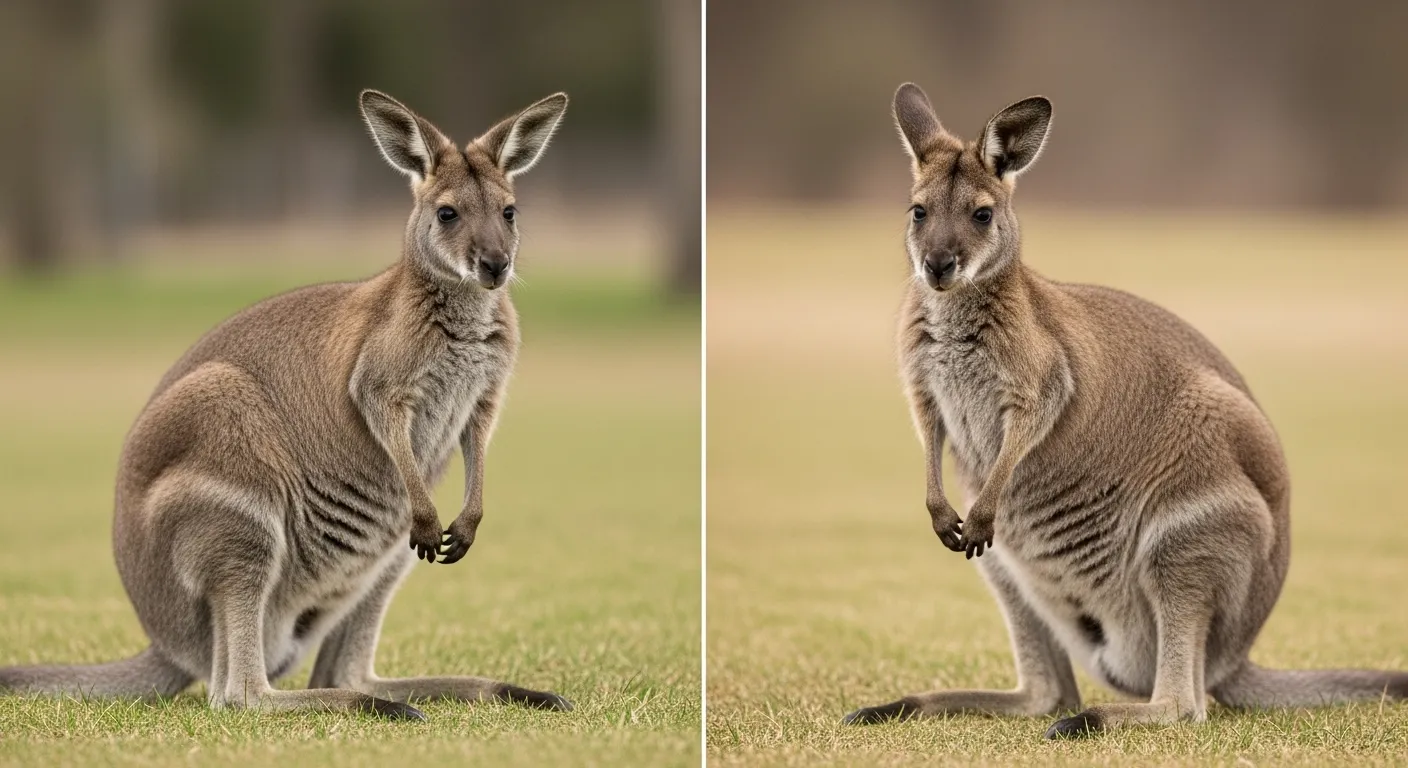
When people visit Australia for the first time, they often see a hopping animal and quickly say, “Look, a kangaroo!” But sometimes the animal they see is actually a wallaby.
This simple mistake shows why learning the difference between kangaroo and wallaby is important.Both animals look very similar.
They have strong back legs, long tails, and they carry their babies in a pouch. Because of this, many people mix them up. However, there are clear differences in their size, habitat, and behavior.
Understanding the difference between kangaroos and wallabies helps students, travelers, and wildlife lovers identify them correctly.In nature books, documentaries, and zoos, people often study the difference between kangaroos and wallabies to learn more about Australian wildlife. Once you know these differences, it becomes much easier to tell them apart in real life.
Key Difference Between Both
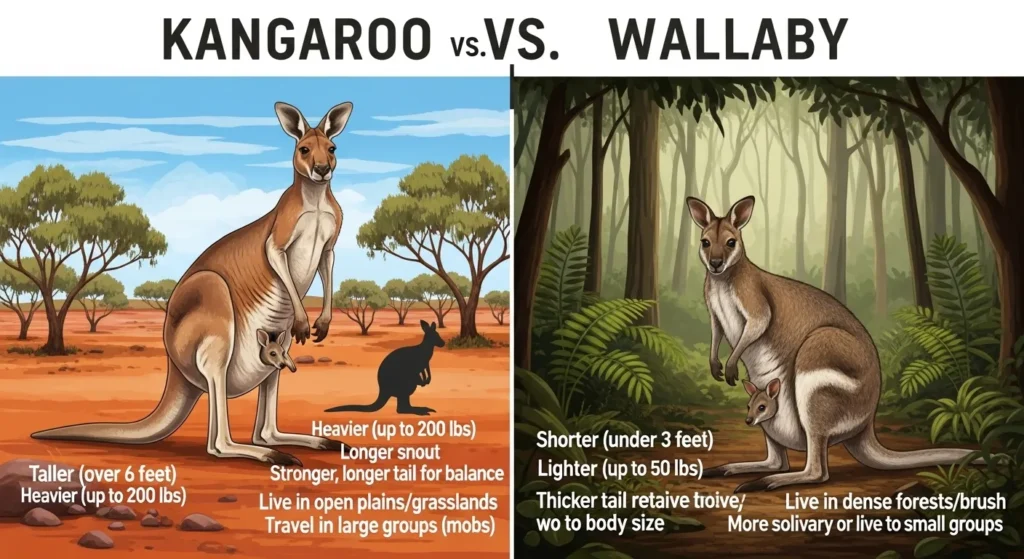
The main difference between kangaroos and wallabies is their size and body shape. Kangaroos are larger and taller, while wallabies are smaller and more compact.
Why Their Difference Is Important
Understanding the difference is useful for both learners and experts. Students studying animals can identify species correctly. Wildlife experts use these differences to protect animals and study their habitats.
In society, these animals are symbols of Australia. Knowing the difference helps tourists, photographers, and nature lovers appreciate wildlife better. It also helps people understand how different animals adapt to forests, grasslands, and rocky areas.
Pronunciation
- Kangaroo (US): kang-guh-ROO
- Kangaroo (UK): kang-guh-ROO
- Wallaby (US): WOL-uh-bee
- Wallaby (UK): WOL-uh-bee
Linking Hook
Now that we understand why these animals are often confused, let’s explore the difference between kangaroo and wallaby in detail.
Difference Between the Main Keywords
1. Size
Kangaroos are much larger than wallabies. Wallabies are smaller animals.
Example 1:
A red kangaroo can grow taller than a human.
A wallaby is usually the size of a medium dog.
Example 2:
Farmers may see large kangaroos jumping across open fields.
Wallabies are usually seen in smaller groups in forests.
2. Body Shape
Kangaroos have long legs and narrow bodies. Wallabies have shorter legs and compact bodies.
Example 1:
A kangaroo looks tall and slim when standing.
A wallaby looks shorter and rounder.
Example 2:
Kangaroos are built for long jumps.
Wallabies are built for quick movement in bushes.
3. Habitat
Kangaroos live mostly in open grasslands. Wallabies live in forests or rocky areas.
Example 1:
Many kangaroos live in open plains in Australia.
Wallabies often hide in thick forests.
Example 2:
Tourists see kangaroos in wide national parks.
Wallabies are often found near rocks and hills.
4. Jumping Style
Kangaroos make long and powerful jumps. Wallabies make shorter jumps.
Example 1:
A kangaroo can jump very far across land.
A wallaby jumps shorter distances.
Example 2:
Kangaroos travel quickly across open fields.
Wallabies move carefully in forests.
5. Speed
Kangaroos are faster runners. Wallabies are slower but more flexible.
Example 1:
A kangaroo can run very fast to escape danger.
A wallaby runs slower but hides easily.
Example 2:
Kangaroos cross large areas quickly.
Wallabies stay near safe places.
6. Tail Use
Kangaroos use their tails for balance when jumping. Wallabies also use tails but for smaller movements.
Example 1:
A kangaroo’s long tail helps it stay stable.
A wallaby’s tail helps it turn quickly.
Example 2:
Kangaroos lean on their tails when resting.
Wallabies use their tails for balance.
7. Ears
Kangaroos have longer ears. Wallabies usually have smaller ears.
Example 1:
A kangaroo can hear sounds from far away.
A wallaby has shorter ears for forest living.
Example 2:
Long ears help kangaroos detect danger.
Shorter ears help wallabies move in bushes.
8. Diet
Both animals eat plants, but their feeding habits differ.
Example 1:
Kangaroos eat grass in large open areas.
Wallabies eat leaves and plants in forests.
Example 2:
Kangaroos graze like deer.
Wallabies browse like goats.
9. Social Groups
Kangaroos often live in larger groups called mobs. Wallabies usually live alone or in small groups.
Example 1:
A group of kangaroos may gather in open land.
A wallaby may stay alone in a forest.
Example 2:
Kangaroos travel together for safety.
Wallabies prefer quiet places.
10. Adaptation
Kangaroos adapt to open environments. Wallabies adapt to thick forests and rocky land.
Example 1:
Kangaroos move easily in wide grasslands.
Wallabies climb rocky hills easily.
Example 2:
Kangaroos survive in dry areas.
Wallabies prefer green forests.
Nature and Behaviour
Kangaroo
Kangaroos are social animals. They often live in groups called mobs. They travel long distances to find food and water.
Wallaby
Wallabies are usually shy animals. They prefer quiet places like forests or rocky hills. They hide quickly when they feel danger.
Why People Are Confused About Their Use
Many people confuse these animals because they look similar. Both belong to the same animal family and move by hopping. They also carry their babies in a pouch. Pictures in books sometimes show them in similar poses, which adds to the confusion.
Comparison Table
| Feature | Kangaroo | Wallaby |
| Size | Large | Small |
| Body | Tall and narrow | Short and compact |
| Habitat | Open grasslands | Forests and rocks |
| Jump | Long jumps | Short jumps |
| Speed | Faster | Slower |
| Ears | Long | Short |
| Social Life | Large groups | Small groups |
| Diet | Mostly grass | Leaves and plants |
| Tail | Very strong | Strong but smaller |
| Adaptation | Open land | Forest areas |
Which Is Better in Different Situations?
Kangaroos are better suited for wide open lands. Their long legs help them travel fast across large distances. This makes them strong survivors in dry grasslands where food can be far away.
Wallabies are better for forest or rocky environments. Their smaller bodies help them move easily through bushes and stones. They can hide quickly from predators and stay safe in small spaces.
Both animals are perfectly adapted to their own environments.
Metaphors and Similes
Sometimes people use these animals in comparisons.
Example similes:
- “He jumped like a kangaroo across the field.”
- “She moved quietly like a wallaby in the forest.”
These comparisons describe movement or behavior.
Connotative Meaning
Kangaroo (Positive / Neutral)
Often linked with strength, speed, and Australian identity.
Example: Australia’s sports teams often use kangaroo symbols.
Wallaby (Neutral / Positive)
Often linked with agility and quiet movement.
Example: A person moving carefully might be compared to a wallaby.
Idioms or Proverbs
There are few idioms, but some expressions exist.
“Kangaroo court”
Meaning: an unfair or fake trial.
Example: The meeting felt like a kangaroo court because no one listened.
“Jump like a kangaroo”
Meaning: jump very high or far.
Example: The athlete could jump like a kangaroo.
Works in Literature
- Dot and the Kangaroo Children’s fantasy, written by Ethel Pedley, 1899
- The Kangaroo Who Couldn’t Hop Children’s story by Barbara Campbell, 1975
- Wallaby Creek Children’s adventure by Joy Cowley, 2002
Movies
- Kangaroo Jack 2003, USA
- Dot and the Kangaroo 1977, Australia
- Skippy the Bush Kangaroo 1968 film adaptation, Australia
FAQ Section
1. Are kangaroos and wallabies the same animal?
No. They are different animals but belong to the same family.
2. Which is bigger, kangaroo or wallaby?
Kangaroos are much bigger.
3. Do both animals have pouches?
Yes. Both females carry babies in a pouch.
4. Where do kangaroos live?
They mostly live in open grasslands in Australia.
5. Why do wallabies live in forests?
Their small bodies help them move easily in dense areas.
Usefulness in Our Surroundings
These animals help scientists study ecosystems. They also attract tourists who visit wildlife parks and nature reserves. Their presence shows the health of natural environments in Australia.
Final Words About Both
Kangaroos and wallabies are fascinating animals. Even though they look alike, their size, habitat, and behavior make them unique. Learning about them helps us respect wildlife and understand nature better.
Conclusion
The difference between kangaroo and wallaby may seem small at first, but it becomes clear when we study them closely. Kangaroos are larger animals that live in open lands and travel long distances.
Wallabies are smaller animals that prefer forests and rocky places. Both belong to the same animal family and share features like strong legs and pouches for their babies.
Understanding their differences helps students, travelers, and wildlife lovers identify them correctly. It also teaches us how animals adapt to different environments. By learning about kangaroos and wallabies, we gain a deeper respect for nature and the amazing wildlife of Australia.

I am David, a passionate blog writer who loves creating informative and easy-to-understand content. I write articles that explain the difference between common topics, language concepts, and everyday knowledge. My goal is to help readers learn new things in a simple and clear way. Through research and practical examples, I try to provide useful and reliable information for students, learners, and curious readers around the world.