Imagine a person trying to lose weight who checks the nutrition label on a snack. The label shows 250 calories, while a fitness app displays 250 kcal for the same food.
This situation often creates confusion because many people believe these are two completely different measurements. In reality, understanding the difference between kcal and calories helps us better understand how energy in food works.
The difference between kcal and calories becomes important when reading nutrition labels, planning diets, or studying nutrition science. In everyday language, people use the word calories when talking about food energy, but scientists often use kilocalories (kcal).
Learning the difference between kcal and calories helps students, health experts, and ordinary people understand food energy more clearly. Once we understand the difference between kcal and calories, nutrition labels and diet plans become much easier to interpret.
Key Difference Between the Two
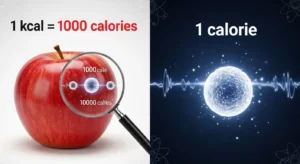
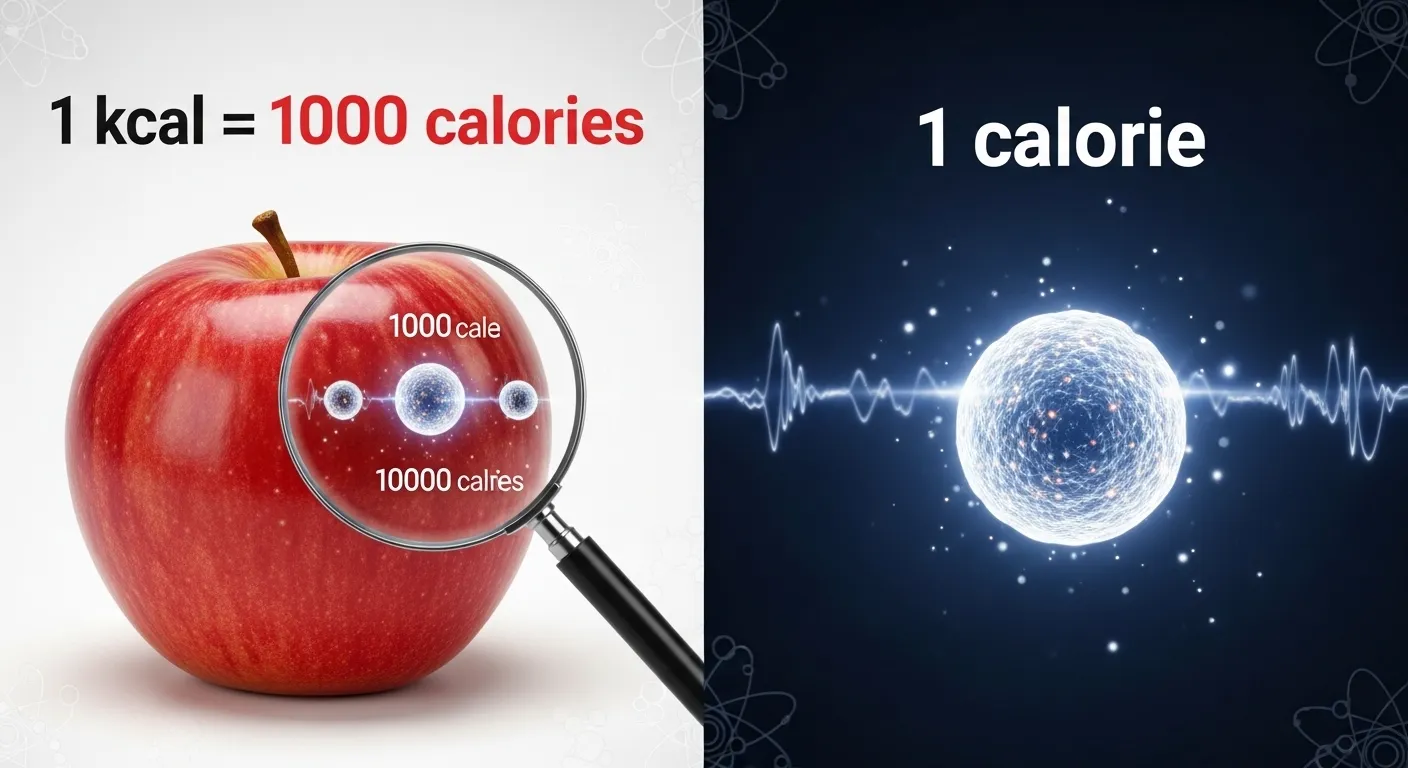
The main difference between kcal and calories is that 1 kilocalorie (kcal) equals 1000 small calories (cal). However, in nutrition, the word Calorie (with a capital C) usually means 1 kilocalorie. That is why food labels showing 100 Calories actually mean 100 kcal.
Why This Difference Is Important for Learners and Experts
Understanding the difference between kcal and calories is important for both learners and professionals. Students studying biology, chemistry, or nutrition need to understand energy units correctly. Dietitians and doctors use these measurements to design healthy meal plans.
For society, this knowledge helps people control their diet, maintain healthy weight, and prevent lifestyle diseases. Fitness trainers, nutritionists, and health researchers rely on accurate energy units to guide people toward healthier living.
Pronunciation of Both Terms
kcal (Kilocalorie)
- US: KIL-oh-KAL-uh-ree
- UK: KIL-oh-KAL-uh-ree
Calories (Calorie)
- US: KAL-uh-ree
- UK: KAL-uh-ree
Linking Hook to the Main Discussion
Now that we understand their basic meaning and importance, let us explore the difference between kcal and calories in detail through practical comparisons and examples.
Difference Between kcal and Calories
1. Basic Definition
kcal: A kilocalorie is a unit of energy equal to 1000 small calories.
Example 1: A nutrition label may list 200 kcal for a meal.
Example 2: Diet plans often measure daily energy in kcal.
Calories: A calorie (small cal) is the energy needed to raise the temperature of 1 gram of water by 1°C.
Example 1: Scientists use calories in physics experiments.
Example 2: Chemistry textbooks explain heat energy using calories.
2. Size of the Unit
kcal: A larger energy unit.
Example 1: 1 kcal = 1000 calories.
Example 2: Food energy is easier to express in kcal.
Calories: A much smaller unit.
Example 1: 1000 calories equal 1 kcal.
Example 2: Small experiments may measure energy in calories.
3. Use in Nutrition
kcal: Standard unit used in diet and nutrition science.
Example 1: A diet plan may recommend 2000 kcal daily.
Example 2: Fitness apps calculate calories as kcal.
Calories: Often used informally in everyday speech.
Example 1: People say “I burned 300 calories.”
Example 2: Gym trainers mention calories burned.
4. Labeling on Food Packages
kcal: Scientific representation on nutrition labels.
Example 1: European food labels may show kcal clearly.
Example 2: Scientific studies report energy in kcal.
Calories: Commonly printed as “Calories” in large letters.
Example 1: A chocolate bar may show 250 Calories.
Example 2: Snacks list calories per serving.
5. Scientific Use
kcal: Used in biology, nutrition, and metabolism studies.
Example 1: Research on metabolism uses kcal.
Example 2: Nutrition textbooks use kcal tables.
Calories: Used in thermodynamics and physics.
Example 1: Heat experiments use calories.
Example 2: Lab measurements may mention calories.
6. Symbol Representation
kcal: Written as kcal.
Example 1: 500 kcal meal.
Example 2: Exercise may burn 400 kcal.
Calories: Written as cal or Calories.
Example 1: 1 cal energy measurement.
Example 2: Heat calculations in science.
7. Common Context
kcal: Food energy calculations.
Example 1: Meal planning uses kcal.
Example 2: Nutrition research uses kcal.
Calories: Heat energy in science labs.
Example 1: Physics textbooks.
Example 2: Chemistry experiments.
8. Measurement Purpose
kcal: Measures energy humans obtain from food.
Example 1: Carbohydrates provide kcal.
Example 2: Fat provides more kcal per gram.
Calories: Measures small heat changes.
Example 1: Water heating experiments.
Example 2: Chemical reactions.
9. Everyday Understanding
kcal: Less commonly spoken in daily conversation.
Example 1: Dieticians mention kcal.
Example 2: Nutrition reports use kcal.
Calories: Widely used in everyday language.
Example 1: “Low-calorie foods.”
Example 2: “Calorie counting.”
10. Practical Application
kcal: Useful for nutrition calculations.
Example 1: Weight-loss programs.
Example 2: Food energy charts.
Calories: Useful for scientific calculations.
Example 1: Lab experiments.
Example 2: Thermodynamic studies.
Nature and Behaviour of Both
kcal:
Kilocalories measure the amount of energy our bodies receive from food. They represent the energy needed to fuel bodily functions such as breathing, walking, and digestion.
Calories:
Calories measure heat energy in scientific experiments. They describe small amounts of energy transferred through heat.
Why People Are Confused About Their Use
People are confused because food labels use the word “Calories” but actually mean kilocalories. This mix of scientific and everyday language causes misunderstanding among students and consumers.
Table Showing Difference and Similarity
| Feature | kcal | Calories |
| Meaning | Kilocalorie (1000 calories) | Small energy unit |
| Symbol | kcal | cal |
| Size | Larger unit | Smaller unit |
| Use | Nutrition and diet | Physics and chemistry |
| Food Labels | Often equivalent to Calories | Common term used |
| Relationship | 1 kcal = 1000 cal | 1000 cal = 1 kcal |
| Field | Nutrition science | Thermodynamics |
| Everyday Language | Less common | Very common |
| Measurement | Human food energy | Heat energy |
| Similarity | Both measure energy | Both measure energy |
Which Is Better in What Situation?
kcal:
Kilocalories are better when discussing nutrition, diet planning, and food energy. Nutritionists and dieticians prefer kcal because it represents larger energy amounts that are easier to calculate. For example, a balanced diet might require around 2000 kcal per day. Using kcal makes calculations simpler and avoids extremely large numbers.
Calories:
Small calories are better for scientific experiments and precise energy measurements. In laboratory settings, scientists often measure very small energy changes. Using calories helps them describe these small heat transfers accurately.
Metaphors and Similes
- “Her enthusiasm had the calories of pure energy.”
- “The athlete burned through the day like a machine consuming kcal of fuel.”
- “Ideas fueled his mind like calories powering the body.”
Connotative Meaning
Calories – Neutral
Example: “This meal contains 400 calories.”
kcal – Neutral/Scientific
Example: “The experiment measured 150 kcal of energy release.”
Idioms or Expressions
Though not traditional idioms, related expressions exist.
Example:
- “Burn calories” – meaning to exercise and use energy.
Example sentence: “She jogs every morning to burn calories.”
Works in Literature Mentioning the Terms
- On Food and Cooking – Harold McGee (Nonfiction, 1984)
- The Omnivore’s Dilemma – Michael Pollan (Nonfiction, 2006)
- Eat, Drink, and Be Healthy – Walter Willett (Health book, 2001)
Movies Related to Food, Diet, and Energy
- Super Size Me (2004, USA)
- Fed Up (2014, USA)
- That Sugar Film (2014, Australia)
Frequently Asked Questions
1. Are kcal and calories the same?
In nutrition, yes. 1 Calorie on food labels equals 1 kcal.
2. How many calories are in 1 kcal?
1 kcal equals 1000 small calories.
3. Why do food labels use Calories instead of kcal?
Because the term is easier for the public to understand.
4. Which unit is used in diet plans?
Diet plans usually use kcal.
5. Do exercise apps measure kcal or calories?
Most apps measure kcal but display them as calories.
How Both Are Useful for Surroundings
Both kcal and calories help society understand energy consumption and health. They guide people in choosing balanced diets, managing weight, and maintaining energy levels for daily activities.
Final Words for Both
kcal and calories represent energy measurement but are used in slightly different contexts. Understanding their relationship removes confusion and improves nutritional awareness.
Conclusion
The difference between kcal and calories mainly lies in their scale and usage. A kilocalorie equals one thousand small calories, but in nutrition, the word “Calorie” usually means a kilocalorie.
This dual usage often confuses people reading food labels or diet charts. By understanding the difference between kcal and calories, students, researchers, and everyday consumers can interpret nutritional information more accurately.
Both units measure energy and play important roles in science and health. Whether planning meals, studying nutrition, or conducting scientific experiments, knowing the correct meaning of these energy units helps us make better decisions about food, health, and energy consumption.

I am James Anderson an English author known for his insightful and engaging writing in contemporary literature. With a focus on [insert genre, e.g., fiction, non-fiction, or specific themes], he explores complex human emotions and social dynamics, blending thought-provoking ideas with accessible storytelling. His work has earned recognition for its clarity, depth, and ability to connect with a wide audience, establishing him as a respected voice in modern English literature.