Imagine you are choosing a countertop for your kitchen.
You visit a store and see two beautiful stones: marble and granite.
Both look strong and stylish. However, they are not the same.
Many homeowners ask about the difference between marble and granite before buying.
For example, a marble countertop can look elegant in a bathroom. Meanwhile, granite often works better in busy kitchens. Each stone has unique features.
Therefore, knowing the difference between marble and granite helps you choose the right material for your home. This guide explains everything in simple words.
Featured Snippet Answer
The difference between marble and granite lies mainly in their composition and durability. Marble is a softer metamorphic stone made from limestone, while granite is a harder igneous rock formed from cooled magma. As a result, granite resists scratches and heat better than marble.
What Is Marble
Marble is a natural stone. It forms when limestone changes under heat and pressure.
This process happens deep inside the Earth. Over time, the stone becomes dense and smooth.
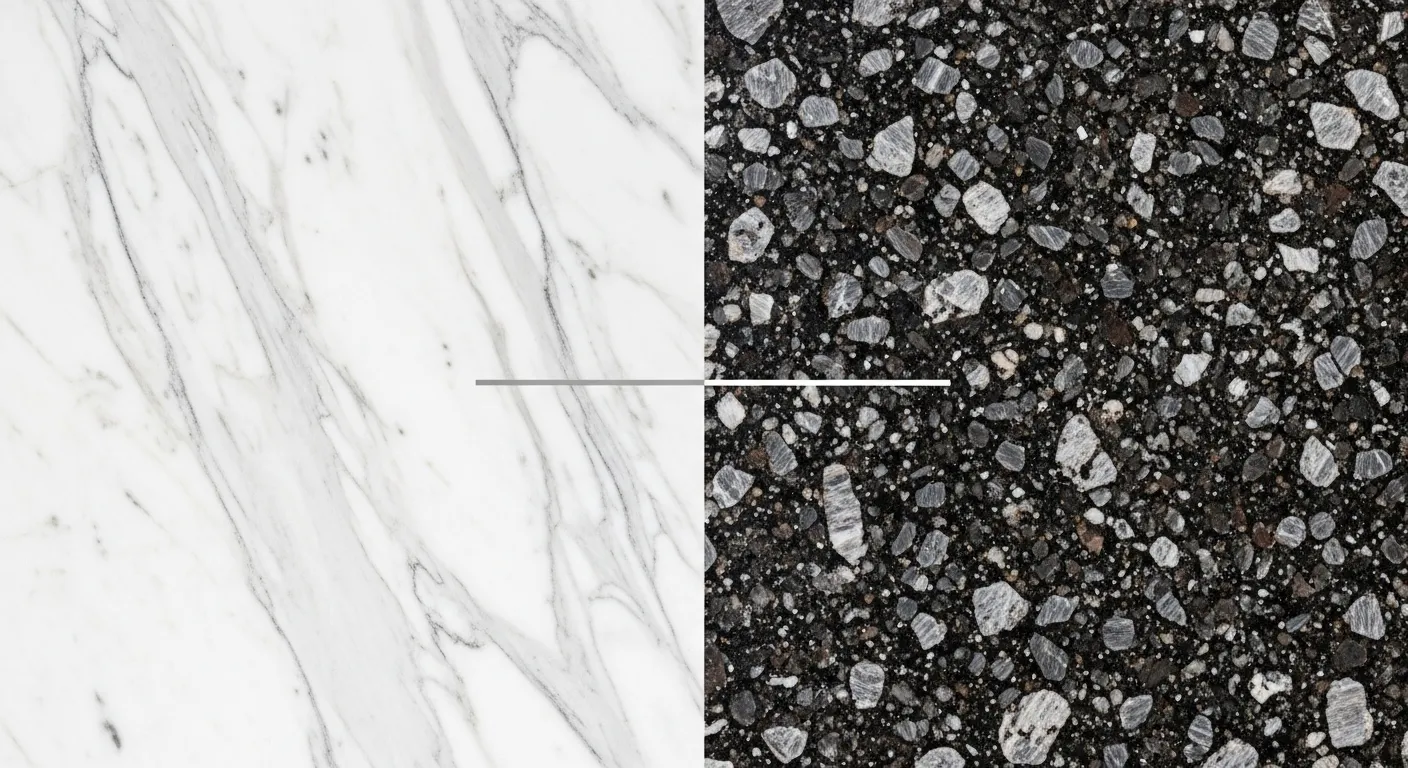
Marble often has soft veins and patterns. These patterns make each piece unique.
Key Features of Marble
- Smooth and elegant surface
- Light colors like white, cream, and gray
- Softer than many natural stones
- Often used in sculptures and bathrooms
For example, many famous statues use marble because it is easy to carve.
What Is Granite
Granite is another natural stone. However, it forms differently.
Granite comes from cooled magma inside the Earth. This makes it very strong.
Granite has visible mineral grains. These grains give it a speckled look.
Key Features of Granite
- Very hard and durable
- Resistant to scratches
- Heat resistant
- Common in kitchen countertops
Because of these qualities, many people compare marble vs granite when choosing home surfaces.
Key Difference Between Both
The main difference between marble and granite is how they form and how strong they are.
Marble forms from limestone under pressure. In contrast, granite forms from cooled magma.
Therefore, granite is usually harder and more durable.
Comparison Table
| Feature | Marble | Granite |
| Stone Type | Metamorphic rock | Igneous rock |
| Hardness | Softer | Harder |
| Appearance | Smooth with veins | Speckled grains |
| Durability | Less durable | Very durable |
| Heat Resistance | Moderate | High |
| Scratch Resistance | Lower | Higher |
| Common Uses | Bathrooms, sculptures | Kitchen countertops |
| Maintenance | Needs sealing | Needs less sealing |
Quick Summary
Marble looks elegant and smooth. However, it scratches more easily.
Granite is stronger and more durable. Therefore, many kitchens use granite.
Understanding this marble vs granite comparison helps homeowners choose wisely.
Why Their Difference Is Important
Knowing the difference between marble and granite matters when building or renovating a home.
For example, kitchens need strong surfaces. Granite works better there.
However, marble offers a luxurious look. Therefore, many people choose it for bathrooms or decorative spaces.
In short, each stone suits different situations.
Pronunciation (US and UK)
Correct pronunciation helps when discussing stone materials.
Marble
- US: /ˈmɑːr.bəl/
- UK: /ˈmɑː.bəl/
Granite
- US: /ˈɡræn.ɪt/
- UK: /ˈɡræn.ɪt/
Learning the marble vs granite meaning also includes knowing how to say the words.
Difference Between Marble and Granite
Here are 10 clear differences between marble and granite with examples.
1. Formation
Marble forms from limestone under heat and pressure.
Granite forms from cooled magma.
2. Hardness
Granite is harder than marble.
Therefore, it resists damage better.
3. Scratch Resistance
Marble scratches more easily.
Granite surfaces resist scratches well.
4. Heat Resistance
Granite handles heat better.
For example, hot pans rarely damage granite.
5. Appearance
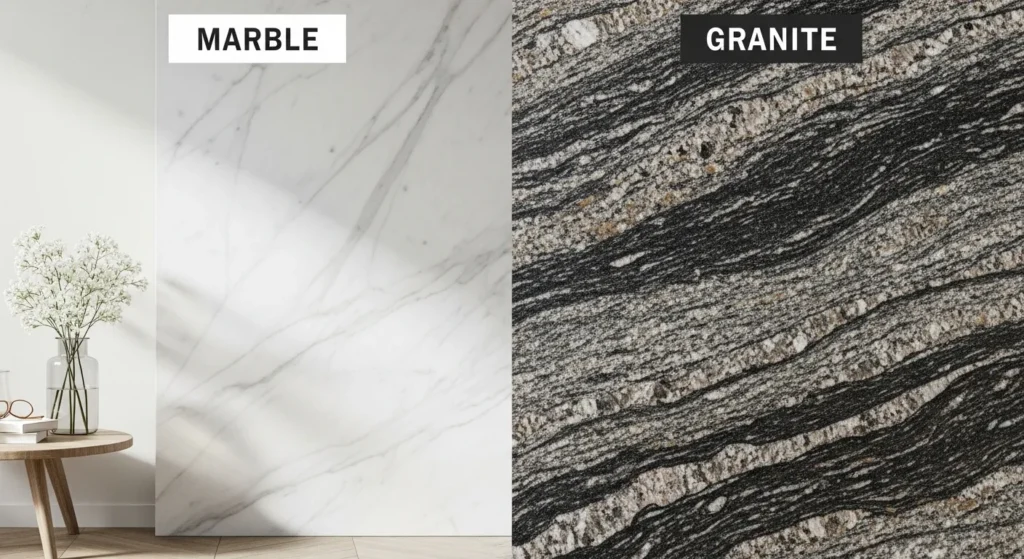
Marble shows flowing veins.
Granite has speckled patterns.
6. Maintenance
Marble needs frequent sealing.
Granite usually needs less maintenance.
7. Durability
Granite lasts longer in busy spaces.
Marble works better in low-traffic areas.
8. Cost
Marble can be expensive.
However, some granite options cost less.
9. Usage
Marble appears in sculptures and bathrooms.
Granite appears in kitchens and outdoor areas.
10. Stain Resistance
Marble absorbs liquids easily.
Granite resists stains better.
These examples clearly show the difference between marble and granite.
Similarities Between Marble and Granite
Even though they differ, they also share similarities.
- Both are natural stones.
- Both are used in home design.
- Both add beauty and value to houses.
- Both require sealing to prevent damage.
Therefore, many people still compare granite vs marble before deciding.
Nature and Behaviour
Marble behaves like a soft decorative stone. It reacts to acids like lemon juice.
Granite behaves differently. It stays stable under heat and pressure.
Because of this, the difference between marble and granite affects how people use them in homes.
Why People Are Confused About Their Use
Many people think marble and granite are the same.
First, both look polished and shiny.
Second, both appear in kitchens and bathrooms.
However, a marble vs granite comparison shows major differences in strength and durability.
Which Is Better in Different Situations
The answer depends on your needs.
Best Uses for Marble
- Bathroom countertops
- Decorative tables
- Sculptures
- Fireplace surrounds
Best Uses for Granite
- Kitchen countertops
- Outdoor kitchens
- Flooring in busy areas
- Staircases
Therefore, when you compare marble and granite, granite often wins for durability.
Metaphors and Similes
People sometimes describe these stones creatively.
Marble is often compared to silk because it looks smooth and elegant.
Granite, however, is like armor because it is strong and protective.
These metaphors explain the marble and granite differences in a simple way.
Connotative Meaning
Marble often represents luxury and beauty.
Granite symbolizes strength and reliability.
Therefore, the difference between marble and granite also appears in symbolic meanings.
Idioms or Proverbs
While there are no direct idioms about these stones, similar ideas exist.
For example:
“Solid as a rock.”
This phrase often describes strong materials like granite.
Meanwhile, marble often appears in artistic sayings related to sculpture and beauty.
Works in Literature
Marble and granite often appear in writing about architecture and art.
One example is John Ruskin, an English writer.
His book The Stones of Venice (1851) discusses marble in architecture.
Granite also appears in historical writing about monuments and buildings.
These works show how people admire both stones.
Movies
Natural stone appears in many films about architecture and history.
For example:
- The Fountainhead (1949, USA) focuses on architecture and building design.
- National Treasure (2004, USA) shows famous monuments built from stone.
Although the films do not focus only on stone, they highlight materials like marble and granite.
FAQ Section
What is the main difference between marble and granite?
The main difference between marble and granite is hardness. Granite is harder and more durable, while marble is softer and more decorative.
Are marble and granite the same?
No. They form differently. Marble is metamorphic rock, while granite is igneous rock.
Which is better for kitchen countertops?
Granite is usually better. It resists heat, scratches, and stains.
Is marble more expensive than granite?
Sometimes marble costs more. However, prices vary depending on quality and design.
Can marble and granite be used together?
Yes. Many homes use both stones. For example, granite in kitchens and marble in bathrooms.
Usefulness in Our Surroundings
Both stones appear in many places around us.
Marble appears in statues, monuments, and luxury floors.
Granite appears in bridges, buildings, and countertops.
Therefore, the difference between marble and granite influences architecture and interior design.
Final Words About Both
Marble and granite are beautiful natural stones. Each has its own strengths.
Marble offers elegance and artistic beauty. Granite offers strength and durability.
Understanding the difference between marble and granite helps homeowners, designers, and builders choose the best material.
Key Takeaways
- Marble is softer and more decorative.
- Granite is harder and more durable.
- Marble shows flowing veins.
- Granite shows speckled grains.
- Granite resists scratches and heat better.
- Marble works well for art and decoration.
- Granite suits busy kitchens and floors.
Conclusion
Choosing between marble and granite can feel confusing at first. Both stones are natural, beautiful, and widely used in homes. However, their properties differ.
The difference between marble and granite mainly relates to hardness, durability, and maintenance. Marble offers elegance and timeless beauty. In contrast, granite provides strength and long-lasting performance.
Therefore, the best choice depends on how you plan to use the stone. If you want luxury and artistic appeal, marble may suit you. However, if you need durability and resistance, granite is often the better option.
Understanding the difference between marble and granite helps you make a smart and lasting decision for your home.

I am E.M. Forster (1879–1970), a renowned English novelist and essayist, famous for A Room with a View, Howards End, and A Passage to India. I explore human relationships, social class, and personal freedom, making my work a key part of 20th-century English literature.