Have you ever stood in front of a skincare aisle, confused between products labeled moisturizing and hydrating?
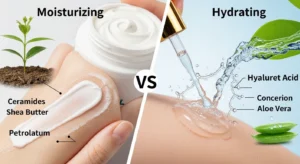
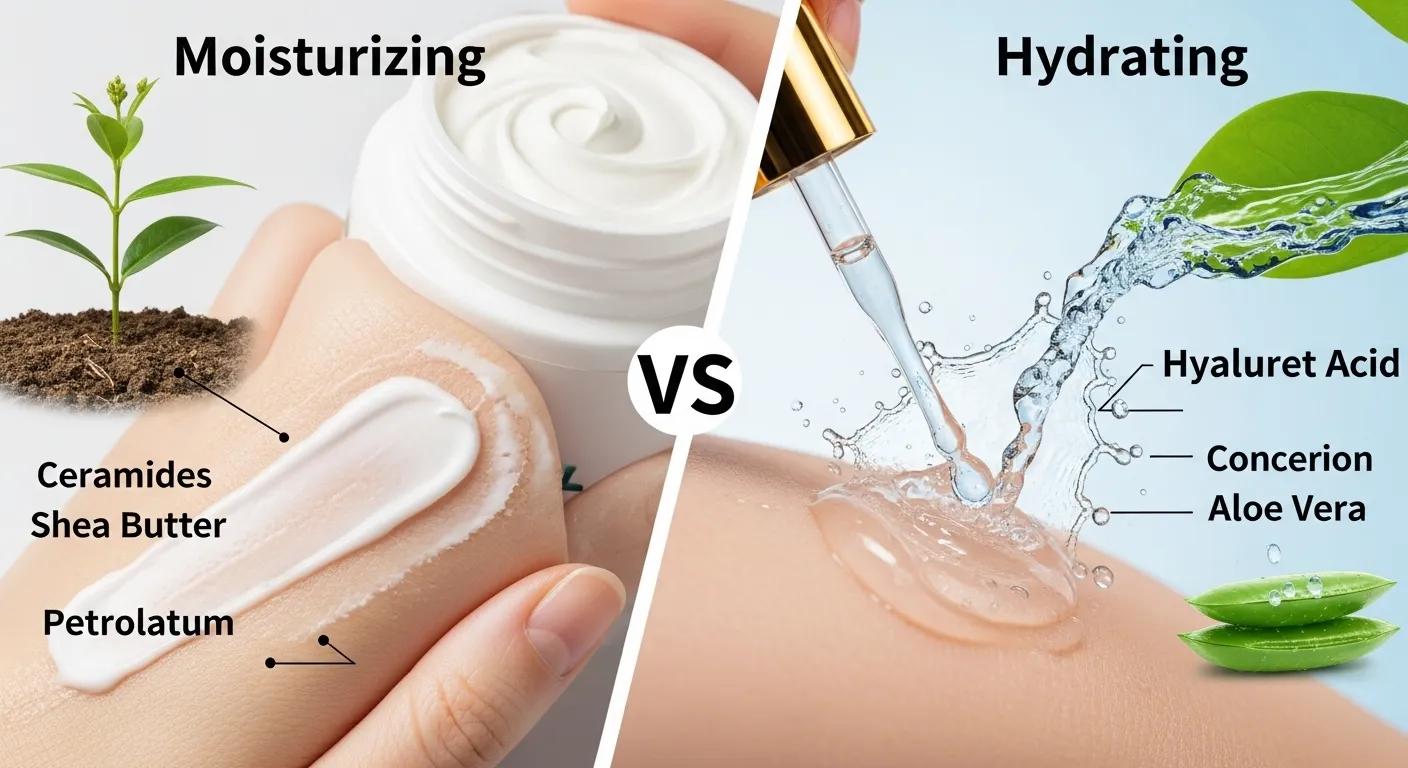
This is a common dilemma for many. Understanding the difference between moisturizing and hydrating can transform your skincare routine. While both aim to improve skin health, moisturizing focuses on locking in existing water, whereas hydrating emphasizes adding water to the skin.
Imagine your skin as a sponge: hydration fills it with water, while moisture prevents that water from escaping. Knowing the difference helps you choose the right products for your skin type, ensuring a healthy, glowing complexion. For anyone serious about skincare, the difference between moisturizing and hydrating is not just cosmetic it’s essential.
Pronunciation:
- Moisturizing – US: /ˈmɔɪstʃəˌraɪzɪŋ/ | UK: /ˈmɔɪstʃəraɪzɪŋ/
- Hydrating – US: /ˈhaɪˌdreɪtɪŋ/ | UK: /ˈhaɪˌdreɪtɪŋ/
Let’s dive deeper into the difference between moisturizing and hydrating and why it truly matters.
Difference Between Moisturizing and Hydrating
1. Definition
- Moisturizing: Locks in existing water in the skin to prevent dryness.
- Example 1: Applying a cream after showering keeps your skin soft.
- Example 2: Ointments seal moisture during winter.
- Example 1: Applying a cream after showering keeps your skin soft.
- Hydrating: Adds water to the skin’s layers for plumpness.
- Example 1: Aloe vera gel refreshes dehydrated skin.
- Example 2: Hyaluronic acid serums restore lost hydration.
- Example 1: Aloe vera gel refreshes dehydrated skin.
2. Primary Goal
- Moisturizing: To prevent water loss and create a protective barrier.
- Hydrating: To increase water content in the skin for a fresh look.
3. Skin Type Suitability
- Moisturizers are ideal for dry to normal skin.
- Hydrating products are suitable for all skin types, especially dehydrated skin.
4. Composition
- Moisturizers often contain oils, lipids, and emollients.
- Hydrators usually have humectants like glycerin or hyaluronic acid.
5. Texture
- Moisturizers: thicker, creamier, sometimes heavy.
- Hydrators: lighter, gel-like, easily absorbed.
6. Duration of Effect
- Moisturizing provides long-lasting protection.
- Hydrating gives an immediate, temporary water boost.
7. Sensation on Skin
- Moisturizing feels smooth and protective.
- Hydrating feels refreshing and light.
8. Application Time
- Moisturizers: Best at night or cold weather.
- Hydrators: Can be used anytime, especially before makeup.
9. Result
- Moisturizers: Soft, protected skin barrier.
- Hydrators: Plump, refreshed, glowing skin.
10. Example Scenarios
- Moisturizing: Applying shea butter in dry winter.
- Hydrating: Using a water-based serum after sun exposure.
Nature and Behaviour
- Moisturizing: Protective, sealing, soothing.
- Hydrating: Refreshing, replenishing, energizing.
Why People Are Confused
The confusion arises because some products combine both properties. Marketing often uses “moisturizing” as a catch-all term, blurring the line between adding water and sealing it.
Moisturizing vs Hydrating Table
| Feature | Moisturizing | Hydrating | Similarity |
| Purpose | Lock in water | Add water to skin | Both improve skin health |
| Composition | Oils, emollients | Humectants, water-based | Both can be in creams or serums |
| Skin Feel | Smooth, protective | Fresh, plump | Both feel beneficial |
| Duration | Long-lasting | Temporary | Both require regular use |
| Suitable For | Dry/normal skin | All skin types | Both prevent skin damage |
Which is Better in What Situation?
- For dry winter skin or cold climates, moisturizing is better because it prevents water loss.
- For dehydrated skin due to sun, pollution, or lack of water intake, hydrating is better to replenish water content.
Keywords in Metaphors & Similes
- Moisturizing: “Like a protective blanket over delicate skin.”
- Hydrating: “Like pouring water into a thirsty desert.”
Connotative Meaning
- Moisturizing: Positive (comfort, protection).
- Hydrating: Positive (refreshing, revitalizing).
Idioms/Proverbs
- “Quench your thirst” – relates to hydrating.
- “An ounce of prevention is worth a pound of cure” – relates to moisturizing.
Literature References
- The Skincare Bible – Dr. Anjali Mahto (2018, Non-fiction) – discusses moisturizing and hydrating strategies.
- Dermatology Essentials – Jean L. Bolognia (2017, Medical) – mentions hydration vs. moisture.
Movie References
- No mainstream movies are specifically titled “Moisturizing” or “Hydrating,” but many beauty documentaries (USA, 2020s) focus on skincare routines.
FAQs
- Can I hydrate without moisturizing?
Yes, hydration adds water but doesn’t prevent water loss. - Is moisturizing enough for dry skin?
Alone, sometimes not. Hydration may be needed first. - Which comes first: hydrating or moisturizing?
Hydrate first, then moisturize to lock it in. - Can oily skin use moisturizers?
Yes, light moisturizers work even for oily skin. - Do hydrating products cause greasiness?
No, they are usually water-based and lightweight.
Environmental Usefulness
Both help the surroundings indirectly: hydrated and moisturized skin resists damage from sun and pollution, reducing healthcare needs and promoting sustainable skincare practices.
Final Words
Understanding the difference between moisturizing and hydrating empowers better skincare choices. Hydrate to refill water, moisturize to seal it in both are essential for healthy, radiant skin.
Conclusion
The difference between moisturizing and hydrating lies in function: hydration replenishes water, while moisturization seals it. People often confuse them due to combined product marketing.
Knowing the difference ensures proper skincare tailored to individual needs, promoting healthy, resilient skin. From daily routines to professional dermatology advice, both play complementary roles.
Incorporating hydrating and moisturizing products thoughtfully not only improves skin texture and glow but also protects against environmental damage. Recognizing these differences helps learners, skincare enthusiasts, and professionals achieve optimal results with minimal confusion.

I am Stephen King is a spiritual writer and digital creator dedicated to exploring the deeper meaning behind numbers, synchronicity, and divine guidance. Through his platform, spiritualdigits.com he shares insights on angel numbers, spiritual symbolism, and personal awakening to help readers align with their higher purpose. His work blends intuition, research, and practical wisdom to make spiritual concepts clear, accessible, and transformative.