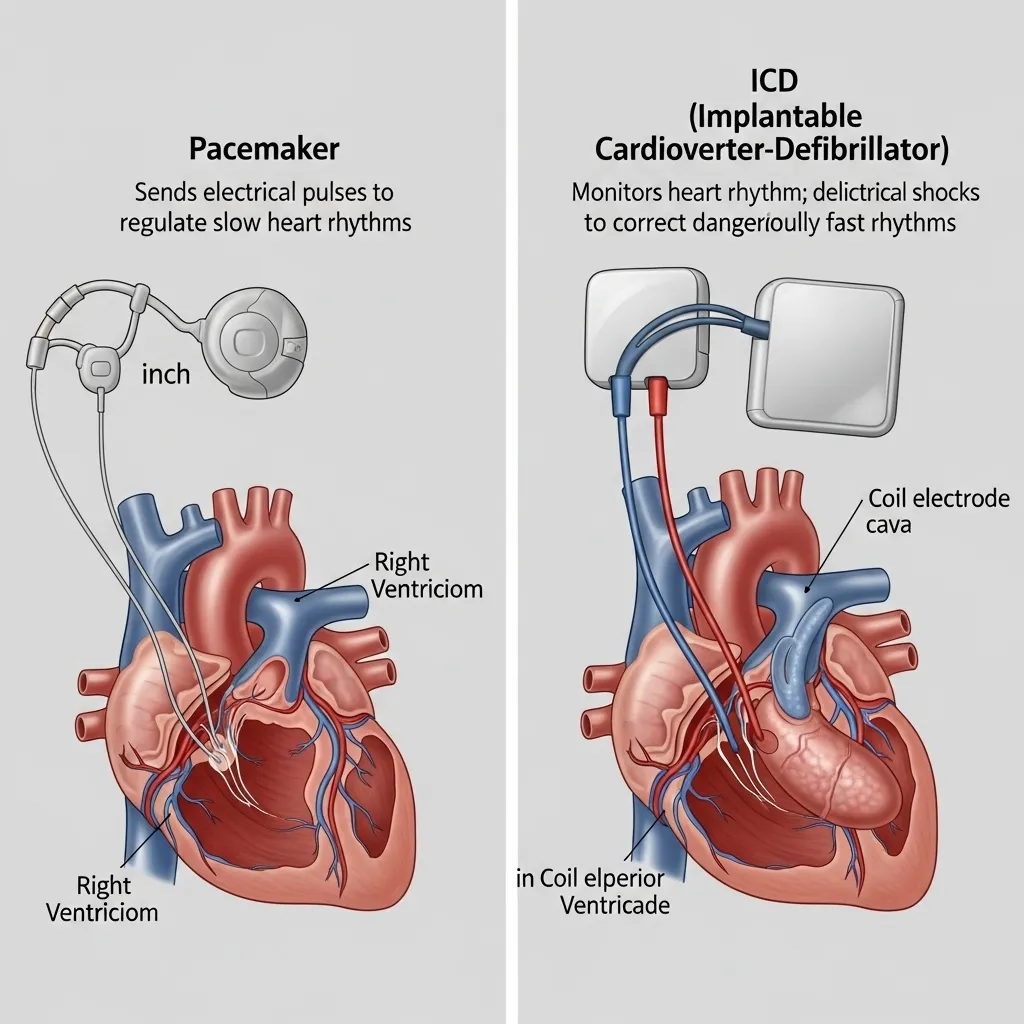
Imagine an older man who suddenly feels dizzy while walking in the park. His heart is beating too slowly. Doctors decide to implant a small device to control his heartbeat.
In another case, a young athlete collapses because his heart rhythm becomes dangerously fast and chaotic. He receives a different device that can deliver a life-saving shock. These two situations explain the difference between pacemaker and ICD in real life.
Understanding the difference between pacemaker and ICD is important because both devices help the heart, but in different ways. Many people search for the difference between pacemaker and ICD when a family member is diagnosed with a heart rhythm problem. The difference between pacemaker and ICD lies mainly in how they control abnormal heartbeats and protect patients from sudden cardiac death.
Pronunciation
- Pacemaker
- US: /ˈpeɪsˌmeɪkər/
- UK: /ˈpeɪsˌmeɪkə/
- US: /ˈpeɪsˌmeɪkər/
- ICD (Implantable Cardioverter Defibrillator)
- US: /ˌaɪ siː ˈdiː/
- UK: /ˌaɪ siː ˈdiː/
- US: /ˌaɪ siː ˈdiː/
Before we explore the technical details, let us connect this understanding to the medical reality behind these life-saving devices.
Key Difference Between the Both
A pacemaker controls slow heartbeats by sending small electrical signals.
An ICD (Implantable Cardioverter Defibrillator) monitors dangerous fast rhythms and can give a strong shock to reset the heart.
Why Is Their Difference Necessary to Know for Learners and Experts?
Knowing the difference is important because:
- It helps patients make informed medical decisions.
- It reduces fear and confusion about heart devices.
- Medical students and professionals must clearly understand both.
- Families can better support loved ones.
- Society benefits from awareness of life-saving technology.
In public health, understanding these devices improves emergency response and heart disease management.
Difference Between Pacemaker and ICD
1. Purpose
Pacemaker:
It treats slow heart rhythms (bradycardia).
Example 1: An eolder person with slow pulse gets a stable heartbeat.
Example 2: A patient after heart surgery needs rhythm support.
ICD:
It treats dangerous fast rhythms (ventricular tachycardia or fibrillation).
Example 1: A person at risk of sudden cardiac arrest.
Example 2: A heart attack survivor with weak heart muscles.
2. Electrical Output
Pacemaker: Sends small electrical impulses.
Example 1: Gentle signal corrects slow rhythm.
Example 2: It cannot deliver a large shock.
ICD: Can deliver strong shock.
Example 1: Stops life-threatening arrhythmia.
Example 2: Resets heart during cardiac arrest.
3. Emergency Role
Pacemaker: Not for emergency shock.
Example 1: Maintains steady rhythm daily.
Example 2: Prevents fainting.
ICD: Acts during emergency.
Example 1: Saves life instantly.
Example 2: Stops sudden cardiac death.
4. Size
Pacemaker: Usually smaller.
Example 1: Thin device under chest skin.
Example 2: Comfortable for older patients.
ICD: Slightly larger due to battery and shock system.
Example 1: Thicker device implanted in chest.
Example 2: Requires stronger battery.
5. Battery Life
Pacemaker: 515 years.
Example 1: Long-term stable patients.
Example 2: Regular replacement surgery.
ICD: 510 years (depends on shocks).
Example 1: Frequent shocks reduce battery life.
Example 2: High-risk patients monitored closely.
6. Cost
Pacemaker: Generally less expensive.
Example 1: Affordable in many countries.
Example 2: Covered by insurance plans.
ICD: More expensive.
Example 1: Advanced technology increases cost.
Example 2: Higher hospital charges.
7. Monitoring System
Pacemaker: Monitors slow rhythm only.
Example 1: Detects pause in heartbeat.
Example 2: Sends pacing signals.
ICD: Monitors both slow and fast rhythms.
Example 1: Detects irregular fast beats.
Example 2: Delivers therapy automatically.
8. Shock Experience
Pacemaker: Patient does not feel mild pacing.
Example 1: Comfortable daily life.
Example 2: No painful shock.
ICD: Shock may feel strong or sudden.
Example 1: Patient feels a quick jolt.
Example 2: Saves life despite discomfort.
9. Target Patients
Pacemaker: older with slow heart rate.
Example 1: Age-related rhythm problems.
Example 2: Heart block patients.
ICD: Patients at risk of sudden cardiac death.
Example 1: Severe heart failure.
Example 2: Genetic rhythm disorders.
10. Main Goal
Pacemaker: Maintain a steady heartbeat.
Example 1: Improve daily activity.
Example 2: Reduce dizziness.
ICD: Prevent sudden death.
Example 1: Emergency heart reset.
Example 2: Long-term survival support.
Nature and Behaviour
Pacemaker:
Calm, supportive, continuous regulator. Works quietly in the background.
ICD:
Protective, alert, reactive. Acts quickly in crisis.
Why Are People Confused?
- Both are implanted in the chest.
- Both use electrical signals.
- Both treat heart rhythm issues.
- Medical terms sound complex.
- The abbreviation “ICD” is technical.
Table: Difference and Similarity
| Feature | Pacemaker | ICD | Similarity |
| Purpose | Slow heart rate | Fast dangerous rhythm | Treat arrhythmia |
| Shock | No strong shock | Yes strong shock | Electrical device |
| Size | Smaller | Larger | Implanted in chest |
| Cost | Lower | Higher | Surgical procedure |
| Role | Daily regulation | Emergency protection | Battery operated |
Which Is Better in What Situation?
A pacemaker is better for patients who have slow heart rhythms. It helps older people or those with heart blocks live normal lives. It is simple and reliable. If a patient only needs rhythm support and not emergency shock, a pacemaker is the best option.
An ICD is better for patients who are at high risk of sudden cardiac arrest. It provides immediate shock during dangerous arrhythmia. For heart failure patients or those with previous cardiac arrest, ICD offers stronger protection and long-term safety.
Metaphors and Similes
- A pacemaker is like a “metronome” keeping rhythm steady.
- ICD is like a “fire extinguisher” for heart emergencies.
- Pacemaker works like a gentle teacher guiding rhythm.
- ICD acts like a security guard protecting life.
Connotative Meaning
Pacemaker:
Positive and neutral.
Example: “She is the pacemaker of the team,” meaning steady leader.
ICD:
Protective but serious tone.
Example: “He needed an ICD moment,” meaning emergency correction.
Idioms or Proverbs
No direct idioms exist, but related heart expressions:
- “Heart of gold” kind person.
- “Learn by heart” memorize fully.
- “Follow your heart” and trust feelings.
Example: The pacemaker helps the man live with a heart of gold.
Works in Literature
- The Heart Medical nonfiction, Sandeep Jauhar, 2018
- Heartbeat Poetry, Sharon Creech, 2004
Movies Related to Heart Devices
- Flatliners (1990, USA)
- Coma (1978, USA)
Frequently Asked Questions
1. Can a pacemaker act like an ICD?
No, it cannot deliver strong life-saving shocks.
2. Is ICD painful?
Shock can feel uncomfortable but saves life.
3. Can both be implanted together?
Yes, some devices combine features.
4. How long does surgery take?
Usually 13 hours.
5. Are they safe?
Yes, both are medically tested and safe.
How Both Are Useful for Surroundings
These life-saving initiatives reduce sudden death rates by promoting early prevention, timely response, and better public health strategies.
They provide emotional support to families, helping communities cope with medical emergencies and unexpected health crises.
These programs improve community health awareness through education, training, and preventive healthcare campaigns.
They reduce the burden on emergency hospitals, strengthening the overall healthcare system and improving service efficiency.
Final Words for Both
Pacemaker ensures steady living.
ICD ensures emergency protection.
Conclusion
The difference between pacemaker and ICD is clear when we understand their purpose and function.
A pacemaker gently regulates slow heartbeats, while an ICD protects against life-threatening fast rhythms. Both devices play essential roles in modern cardiology. They save lives, improve quality of life, and offer hope to patients with heart rhythm disorders.
Understanding their differences helps patients, learners, and professionals make informed medical decisions. In today’s world, awareness of such technologies strengthens society’s approach toward heart health and emergency care.

I am James Anderson an English author known for his insightful and engaging writing in contemporary literature. With a focus on [insert genre, e.g., fiction, non-fiction, or specific themes], he explores complex human emotions and social dynamics, blending thought-provoking ideas with accessible storytelling. His work has earned recognition for its clarity, depth, and ability to connect with a wide audience, establishing him as a respected voice in modern English literature.