A teacher once noticed that a young student had trouble sitting still and focusing on schoolwork. The child was smart but easily distracted. After talking with a doctor, the parents learned about medicines that can help people with attention problems.
Two common medicines are Ritalin and Concerta. Many people want to understand the difference between Ritalin and Concerta because both are used to help people focus better.The difference between Ritalin and Concerta mainly relates to how long they work and how they release medicine in the body.
Even though they treat the same condition, the difference between Ritalin and Concerta can affect how doctors choose the right option. Knowing the difference between Ritalin and Concerta helps parents, students, and doctors make better decisions about treatment.
Key Difference Between Both
The main difference is how long the medicine works in the body.
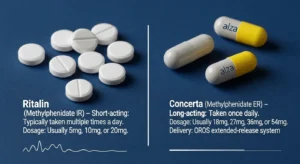
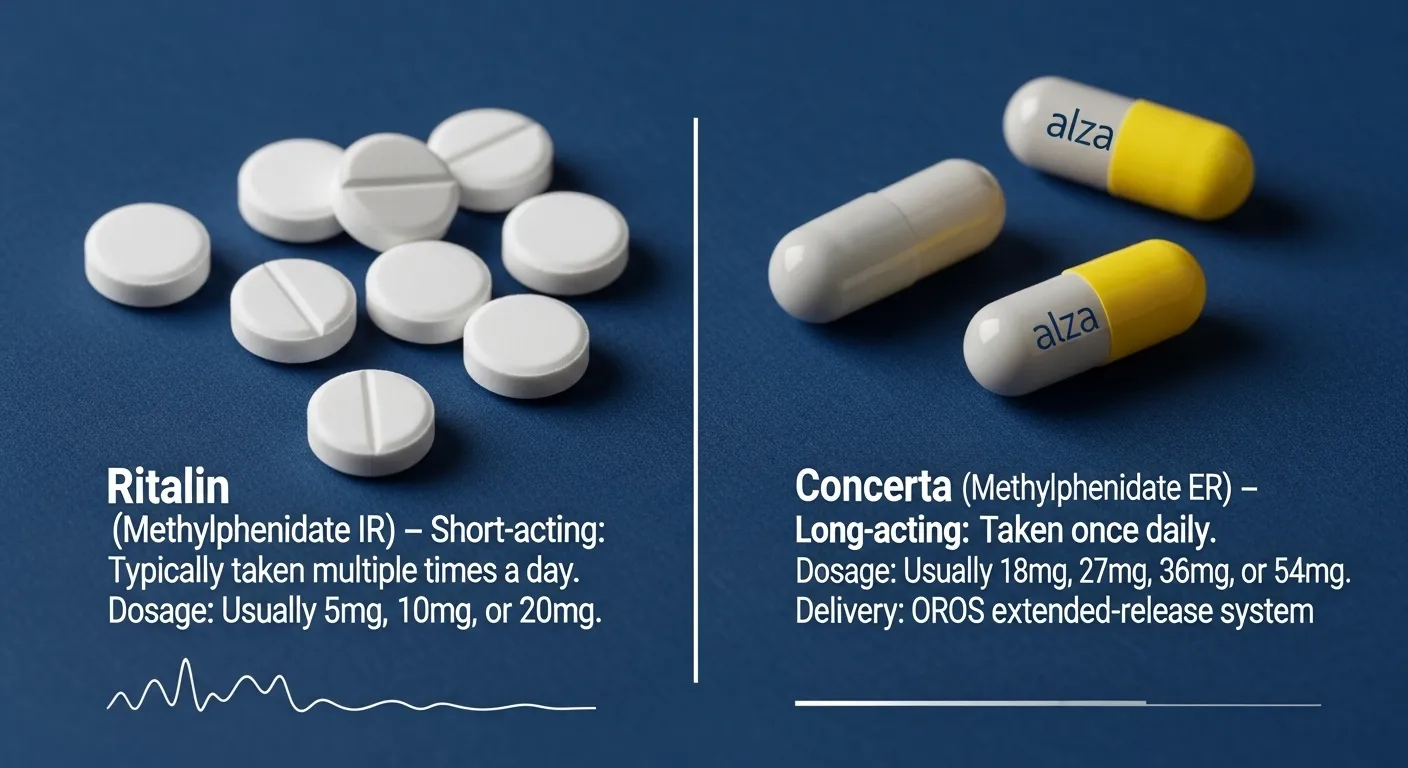
- Ritalin works for a shorter time and may need to be taken several times a day.
- Concerta works longer and is usually taken once daily.
Why Their Difference Is Important
Understanding these medicines is important for both learners and experts. Students with attention problems may perform better in school with the right treatment.
Doctors and health professionals must know the correct medicine to prescribe.
Knowing the difference also helps families manage daily routines. A short-acting medicine might be helpful when flexible timing is needed.
A long-acting medicine can help someone stay focused during the whole school or workday. In society, proper treatment helps people learn, work, and live more comfortably.
Pronunciation
- Ritalin
- US: RIT-uh-lin
- UK: RIT-uh-lin
- US: RIT-uh-lin
- Concerta
- US: kuhn-SUR-tuh
- UK: kon-SUR-tuh
- US: kuhn-SUR-tuh
Linking Hook
Now that we understand the basics, let us explore the difference between Ritalin and Concerta in more detail.
Difference Between the Keywords
1. Duration of Action
Ritalin works for a shorter time, while Concerta works longer.
Examples:
- Ritalin may work for about 3–4 hours.
- Concerta may work for up to 12 hours.
Examples in daily life:
- A student may take Ritalin before class and again later.
- Another student may take Concerta once in the morning.
2. Release of Medicine
Ritalin releases medicine quickly, while Concerta releases it slowly.
Examples:
- Ritalin starts working fast.
- Concerta releases the medicine throughout the day.
Examples in daily life:
- A child may feel focus quickly after taking Ritalin.
- Concerta keeps focus steady during school hours.
3. Dosage Schedule
Ritalin may require multiple doses daily, but Concerta is usually once daily.
Examples:
- Someone may take Ritalin morning and afternoon.
- Concerta is often taken only in the morning.
Examples:
- A worker may set reminders for Ritalin doses.
- Another worker may not need reminders with Concerta.
4. Convenience
Concerta is more convenient for long days.
Examples:
- A student may need to visit the nurse for another Ritalin dose.
- Concerta can last through the school day.
Examples:
- Busy workers may prefer once-daily medicine.
- Parents may find fewer doses easier.
5. Form of Tablet
Ritalin tablets are simple, while Concerta tablets use special technology.
Examples:
- Ritalin tablets dissolve quickly.
- Concerta tablets release medicine slowly.
Examples:
- A doctor may explain the extended release of Concerta.
- Ritalin works in a more direct way.
6. Timing of Effect
Ritalin acts faster but ends sooner.
Examples:
- Ritalin may help quickly before homework.
- Concerta supports focus throughout the day.
Examples:
- A short exam might only need Ritalin.
- A full school day may need Concerta.
7. Cost Differences
Sometimes the cost can vary.
Examples:
- Generic Ritalin may cost less.
- Concerta may be more expensive in some places.
Examples:
- Insurance plans may cover one medicine better.
- Doctors may consider cost when prescribing.
8. Flexibility
Ritalin offers flexible timing.
Examples:
- It can be taken when needed.
- Concerta must be taken at a regular time.
Examples:
- A child might skip Ritalin on weekends.
- Concerta is usually part of a daily routine.
9. School Use
Different school schedules may influence the choice.
Examples:
- Ritalin may help during specific lessons.
- Concerta helps during the entire school day.
Examples:
- Teachers may notice improved focus after Ritalin.
- Concerta may maintain steady attention.
10. Doctor’s Choice
Doctors choose based on patient needs.
Examples:
- A doctor may start with Ritalin for testing response.
- Another doctor may prescribe Concerta for long coverage.
Examples:
- Younger children may start with shorter medicines.
- Teenagers may prefer longer effects.
Nature and Behaviour
Ritalin
Ritalin is a short-acting stimulant medicine. It works quickly and helps people focus for a few hours. Because its effect is shorter, people may need multiple doses.
Concerta
Concerta is a long-acting stimulant medicine. It releases the medicine slowly and helps maintain focus throughout the day. It is designed for longer coverage.
Why People Are Confused About Their Use
People are often confused because both medicines contain the same active ingredient, methylphenidate. They treat similar conditions such as attention problems.
The names are different, but the base medicine is related. Another reason is that both are used by doctors for similar symptoms, so people think they work exactly the same.
Comparison Table
| Feature | Ritalin | Concerta | Similarity |
| Duration | Short acting | Long acting | Both help focus |
| Dose | Multiple daily | Once daily | Doctor prescribed |
| Release | Quick release | Slow release | Same active ingredient |
| Convenience | Less convenient | More convenient | Treat attention issues |
| Timing | Flexible | Fixed daily | Improve concentration |
Which Is Better in Different Situations?
Ritalin may be better for people who only need help focusing for short periods. For example, a student may need extra focus during homework time or a short exam.
Because it works quickly and does not last very long, it can be used more flexibly. Doctors sometimes start with Ritalin to see how a patient responds to the medicine.
Concerta may be better for people who need focus throughout the whole day. Students who attend school for many hours may benefit from its long effect.
Workers with long shifts may also find it helpful. Taking one pill in the morning can make the daily routine simpler.
Metaphors and Similes
These medicines are rarely used in figurative language, but they can be compared to helpful tools.
Examples:
- Ritalin works like a quick flashlight, giving short bursts of focus.
- Concerta works like a steady lamp, lighting the whole day.
Connotative Meaning
Both words usually carry neutral or positive connotations because they relate to medical treatment.
Examples:
- Positive: “The medicine helped the child focus better.”
- Neutral: “The doctor prescribed Ritalin for attention problems.”
- Neutral: “Concerta was recommended for daily treatment.”
Idioms or Proverbs
These medicines do not have specific idioms, but general focus-related sayings can apply.
Examples:
- “Keep your eye on the prize.”
- Example: The student used his medicine and kept his eye on the prize during exams.
- Example: The student used his medicine and kept his eye on the prize during exams.
- “Stay on track.”
- Example: Treatment helped her stay on track with her studies.
- Example: Treatment helped her stay on track with her studies.
Works in Literature
Medicines themselves are rarely the main topic in literature, but attention disorders appear in discussions and essays.
- Driven to Distraction Genre: Non-fiction, Writer: Edward M. Hallowell & John Ratey, 1994
- Delivered from Distraction Genre: Self-help/Medical, Writer: Edward M. Hallowell & John Ratey, 2005
Movies
Movies sometimes discuss attention problems or related themes.
- ADHD: Not Just for Kids 2010, USA
- The Disruptors 2022, USA
FAQ Section
1. What is the main difference between Ritalin and Concerta?
The main difference is how long they work. Ritalin is short-acting, while Concerta lasts longer.
2. Do both medicines treat the same condition?
Yes. Both are commonly used to help manage attention problems.
3. Is Concerta stronger than Ritalin?
Not necessarily. The main difference is the release and duration, not always strength.
4. Why do doctors choose one over the other?
Doctors consider daily schedule, age, symptoms, and how long the medicine should work.
5. Can people switch between them?
Sometimes yes, but only under medical advice.
Usefulness in Our Surroundings
Medicines like Ritalin and Concerta help many people in school, work, and daily life. When attention problems are managed properly, students can learn better and adults can complete tasks more easily.
Teachers, parents, and doctors often work together to find the best treatment. These medicines help people stay focused, organized, and productive.
Final Words About Both
Ritalin and Concerta are both important medicines used to support attention and focus.
They share a similar base ingredient but differ in how they work over time. Doctors carefully choose between them based on individual needs.
Conclusion
Understanding the difference between Ritalin and Concerta helps people make informed health decisions. Both medicines are designed to help individuals who struggle with attention and focus.
The main difference lies in how long they work and how they release medicine in the body. Ritalin acts quickly and lasts for a shorter time, while Concerta provides longer support throughout the day.
This difference allows doctors to choose the best option for each patient’s routine and needs. When used properly under medical guidance, both medicines can greatly improve learning, productivity, and daily functioning. Knowing their differences helps families, teachers, and health professionals support individuals in living more balanced and focused lives.

I am Stephen King is a spiritual writer and digital creator dedicated to exploring the deeper meaning behind numbers, synchronicity, and divine guidance. Through his platform, spiritualdigits.com he shares insights on angel numbers, spiritual symbolism, and personal awakening to help readers align with their higher purpose. His work blends intuition, research, and practical wisdom to make spiritual concepts clear, accessible, and transformative.