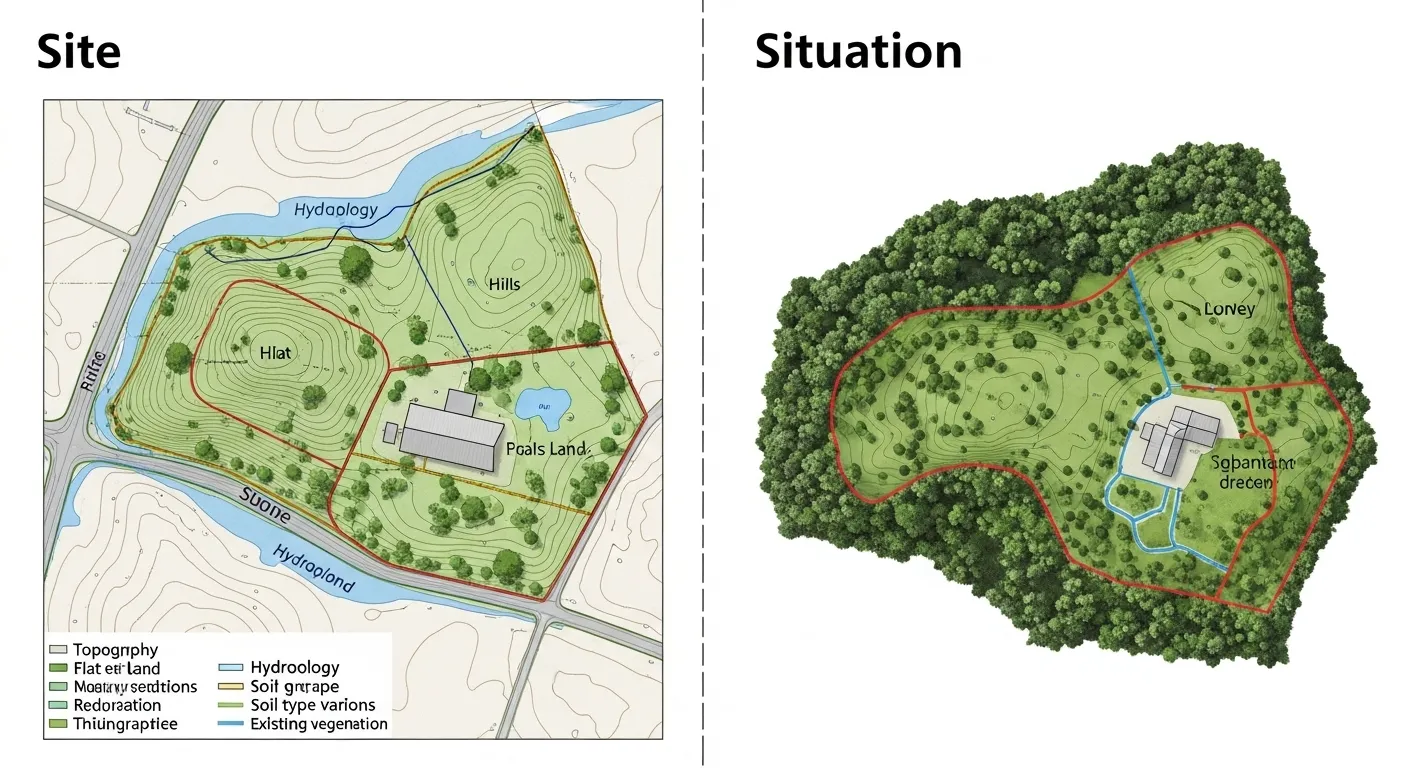
Imagine a group of builders planning a new school. First, they look at the place where the building will stand. That place is called the site.
Then they study the conditions around that place, such as nearby roads, weather, and the people living there. Those conditions create the situation.
This simple example helps us understand the difference between site and situation. A site means the exact location of something. A situation means the conditions or circumstances around that place or event. Many students mix these two words, so learning the difference between site and situation is important.
In geography, planning, and daily conversation, the difference between site and situation helps us explain locations more clearly. When you understand the difference between a site and a situation, it becomes easier to describe places and events in real life.
Pronunciation
Site
- US: /saɪt/
- UK: /saɪt/
Situation
- US: /ˌsɪtʃuˈeɪʃən/
- UK: /ˌsɪtʃuˈeɪʃən/
Before we explore the details, let us look closely at the difference between site and situation and how these words are used in real life.
Key Difference Between the Both
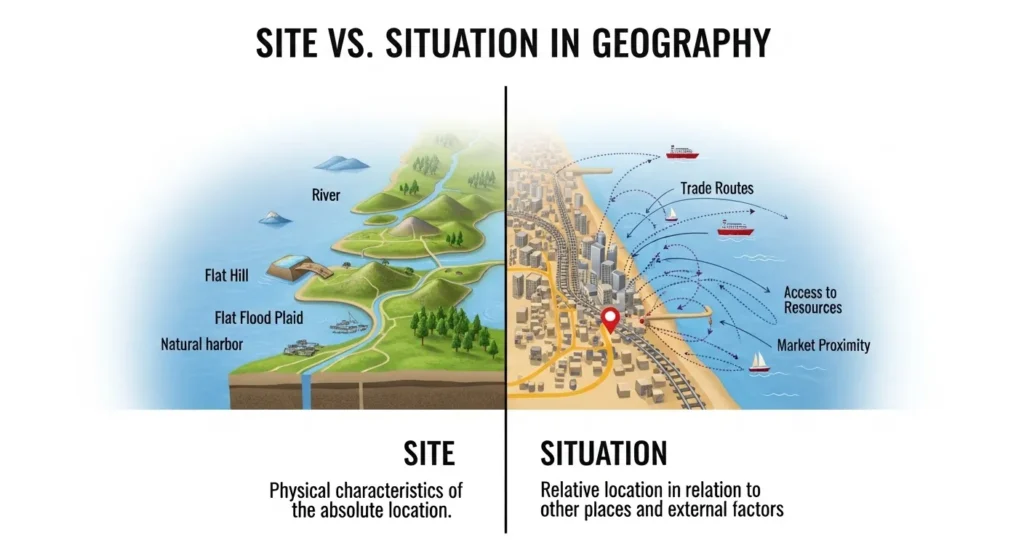
A site refers to the exact physical location where something exists or will be built.
A situation refers to the surroundings, environment, or conditions related to that place or event.
Example:
- The site of the hospital is near the river.
- The situation of the hospital is good because it is close to roads and homes.
Why Their Difference Is Important for Learners and Experts
Understanding the difference between site and situation is important in many fields like geography, architecture, city planning, and environmental studies.
For learners, these words help describe places more clearly. Students studying maps, cities, or buildings often use these terms.
For experts such as architects and planners, knowing the difference between site and situation helps them choose better locations for buildings, parks, and roads. A good site with a poor situation may cause problems like traffic or flooding.
In society, this knowledge helps create safer cities, better schools, and well-planned neighborhoods.
Difference Between Site and Situation
1. Meaning
Site: The exact location of something.
Example 1: The school site is on a small hill.
Example 2: Workers cleaned the building site.
Situation: The condition or environment around something.
Example 1: The town has a good economic situation.
Example 2: The house has a great situation near the park.
2. Focus
Site: Focuses on physical place.
Example 1: The temple site is very old.
Example 2: The new hospital site is near the highway.
Situation: Focuses on surrounding factors.
Example 1: The village situation is peaceful.
Example 2: The company improved its financial situation.
3. Field of Use
Site: Mostly used in geography and construction.
Example 1: Engineers studied the bridge site.
Example 2: The factory site was chosen carefully.
Situation: Used in daily life and social conditions.
Example 1: She explained her difficult situation.
Example 2: The country’s economic situation is improving.
4. Type of Word Meaning
Site: Physical and concrete.
Example 1: The accident site was closed.
Example 2: Tourists visited the historic site.
Situation: Abstract and descriptive.
Example 1: The teacher understood his situation.
Example 2: The situation became serious.
5. Scope
Site: Very specific and exact.
Example 1: The building site is behind the market.
Example 2: The park site is next to the lake.
Situation: Wider and broader.
Example 1: The city’s traffic situation is busy.
Example 2: The political situation changed.
6. Use in Geography
Site: Describes land features like rivers or hills.
Example 1: The city site is near a river.
Example 2: The fort site stands on a mountain.
Situation: Describes connections to other places.
Example 1: The city situation near trade routes helped growth.
Example 2: The port situation made trade easy.
7. Stability
Site: Usually permanent.
Example 1: The temple site has not changed.
Example 2: The school site remains the same.
Situation: Can change over time.
Example 1: The economic situation improved.
Example 2: The weather situation changed quickly.
8. Use in Conversation
Site: Used when talking about places.
Example 1: The hotel site is beautiful.
Example 2: Workers prepared the road site.
Situation: Used when talking about events or problems.
Example 1: He handled the situation calmly.
Example 2: The situation became better.
9. Planning
Site: Important when selecting land.
Example 1: Builders inspected the construction site.
Example 2: The stadium site was approved.
Situation: Important when studying surroundings.
Example 1: The traffic situation was studied.
Example 2: The social situation was analyzed.
10. Nature of Meaning
Site: Describes a location.
Example 1: The museum site is near the river.
Example 2: They protected the historic site.
Situation: Describes conditions.
Example 1: The family faced a hard situation.
Example 2: The emergency situation needed help.
Nature and Behaviour of Both
Site
A site is physical and fixed. It refers to land or place. It does not change easily.
Situation
A situation is flexible. It describes conditions and can change with time, people, or events.
Why People Are Confused About Their Use
People are confused because both words often appear in geography and location descriptions. Also, both relate to places. However, site means the exact place, while situation explains the conditions around it.
Table Showing Difference and Similarity
| Feature | Site | Situation | Similarity |
| Meaning | Exact location | Conditions around | Both describe place ideas |
| Type | Physical | Abstract | Both used in geography |
| Stability | Usually fixed | Changes often | Both explain location |
| Use | Construction and geography | Daily life and environment | Both used in description |
Which Is Better in What Situation?
A site is better when we talk about a specific location. For example, when building a school, hospital, or park, the site is very important.
Builders must choose safe land with strong ground. In construction and geography, the word site helps people understand exactly where something is.
A situation is better when we talk about conditions or problems. For example, a family situation, a financial situation, or a political situation.
This word helps explain the state of events or surroundings. It gives more information about what is happening around a place or person.
Use in Metaphors and Similes
Site metaphor
- “His mind became a battle site.”
Situation metaphor
- “Her life situation felt like a storm.”
Simile examples:
- “The building site looked like a busy ant hill.”
- “The situation changed like the weather.”
Connotative Meaning
Site – Neutral
Example: The historic site attracts visitors.
Situation – Can be positive or negative
Positive: She improved her life situation.
Negative: The war created a dangerous situation.
Idioms or Proverbs
Situation
- Handle the situation
Example: She handled the situation calmly. - A tricky situation
Example: He found himself in a tricky situation.
Site (rare in idioms but used in phrases)
- Historic site
Example: The castle is a famous historic site.
Works in Literature
- The Site of Memory Essay, Toni Morrison, 1995
- The Human Situation Philosophy, Hannah Arendt, 1958
Movies Related to the Keywords
- Situation Critical 2007, USA
- The China Syndrome (about a nuclear site) 1979, USA
Frequently Asked Questions
1. What is the main difference between site and situation?
A site is the exact place. A situation is the condition around it.
2. Is the site used in geography?
Yes, it describes the physical location of a place.
3. Can situations describe problems?
Yes, it often explains problems or conditions.
4. Can a site change?
Usually no. A site is normally fixed.
5. Can the situation change over time?
Yes, situations can change quickly.
How Both Are Useful for Surroundings
A site helps planners choose safe land for buildings. A good site prevents floods and damage.
A situation helps people understand the environment, economy, and social conditions around a place.
Together, they help create better cities and communities.
Final Words for Both
The word site tells us where something is.
The word situation tells us what conditions exist around it.
Both words are simple but powerful when describing places and events.
Conclusion
Understanding the difference between site and situation helps us communicate clearly about places and conditions. A site is the exact physical location of something like a building, park, or city. A situation describes the surrounding conditions, environment, or circumstances connected to that place or event.
In geography, planning, and daily life, these two words work together to give a full picture. The site tells us where, while the situation explains how things are around it. When students, planners, and writers use these words correctly, their ideas become clearer and easier to understand.
Learning the difference between site and situation improves language skills and helps people describe the world more accurately.

I am D. H. Lawrence (David Herbert Lawrence) an influential English novelist, poet, essayist, and literary critic born on September 11, 1885, in Eastwood, Nottinghamshire, England. He is widely regarded as one of the most important writers of the 20th century.
I work often explored human relationships, emotional intimacy, industrialization, and the conflict between modern society and natural instincts.