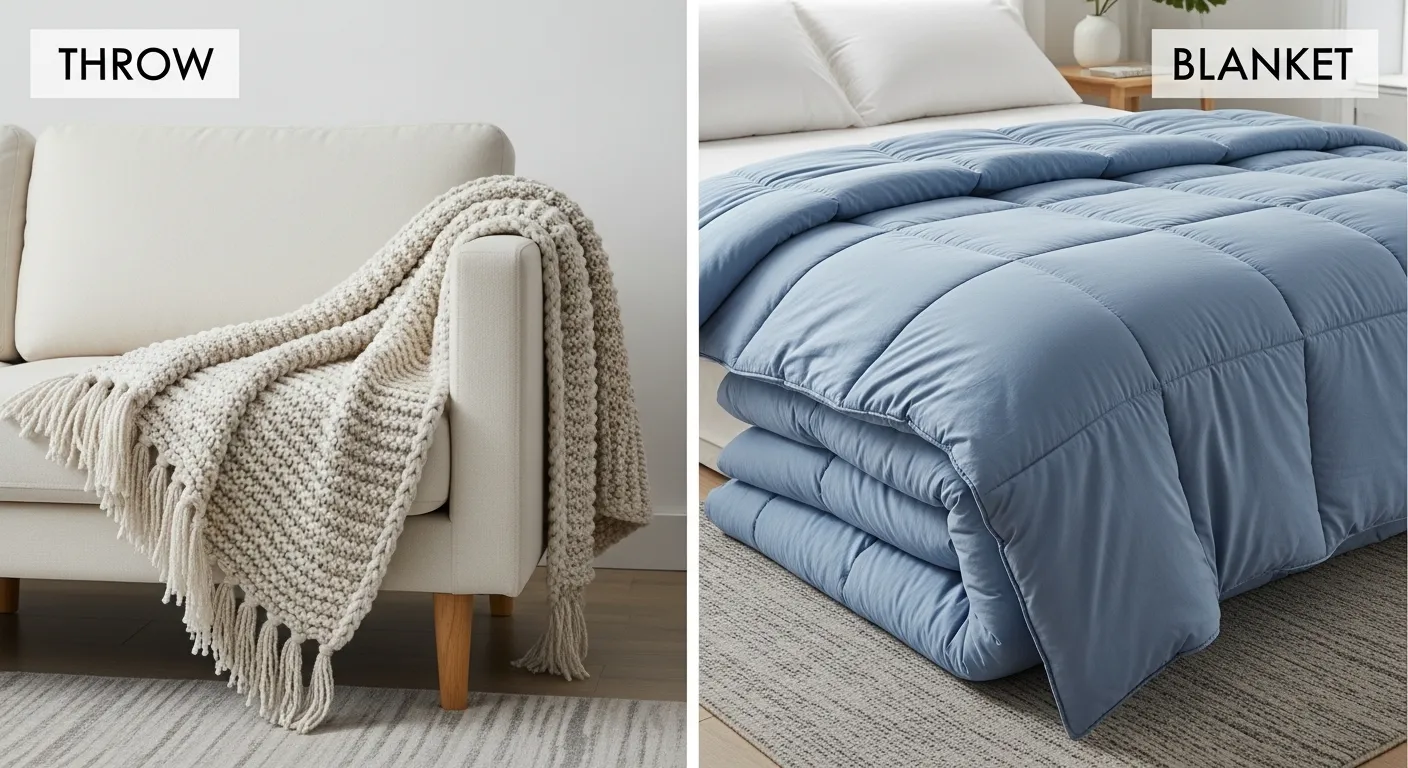
When you walk into a cozy living room on a chilly evening, you might spot two items that often cause confusion: a throw and a blanket.
While both serve the basic purpose of keeping you warm, they are not identical. A throw is usually smaller, decorative, and lighter, whereas a blanket is larger, functional, and primarily designed for warmth.
Understanding the difference between throw and blanket is essential for anyone furnishing their home, buying gifts, or simply looking to enhance comfort. From everyday use to interior décor, knowing how to distinguish a throw from a blanket ensures practical and aesthetic decisions. In this article, we will explore the distinctions, uses, and nuances of both, so you’ll never confuse them again.
Pronunciation:
- Throw: /θroʊ/ (US), /θrəʊ/ (UK)
- Blanket: /ˈblæŋ.kɪt/ (US & UK)
Now, let’s dive deeper into the main differences and uses of these cozy essentials.
Here are 10 key differences between a throw and a blanket:
- Size
- Throws are smaller, typically 50×60 inches.
- Example 1: She draped a soft throw over her sofa for decoration.
- Example 2: He grabbed a throw to wrap around his shoulders while reading.
- Example 1: She draped a soft throw over her sofa for decoration.
- Blankets are larger, covering the entire bed or person.
- Example 1: The blanket kept them warm through the winter night.
- Example 2: She bought a king-size blanket for her bed.
- Example 1: The blanket kept them warm through the winter night.
- Throws are smaller, typically 50×60 inches.
- Purpose
- Throws are decorative and functional.
- Example 1: A colorful throw added charm to the living room.
- Example 2: He used a throw to cover the chair from dust.
- Example 1: A colorful throw added charm to the living room.
- Blankets are primarily for warmth.
- Example 1: She wrapped herself in a blanket on the cold porch.
- Example 2: The child hugged the blanket for comfort at bedtime.
- Example 1: She wrapped herself in a blanket on the cold porch.
- Throws are decorative and functional.
- Material
- Throws are often made from lighter materials like cotton, acrylic, or polyester.
- Example 1: The wool throw felt soft yet lightweight.
- Example 2: A fleece throw was perfect for summer nights.
- Example 1: The wool throw felt soft yet lightweight.
- Blankets are thicker, heavier, and made for insulation.
- Example 1: The wool blanket blocked the winter chill effectively.
- Example 2: Heavy cotton blankets were used in guest rooms.
- Example 1: The wool blanket blocked the winter chill effectively.
- Throws are often made from lighter materials like cotton, acrylic, or polyester.
- Design
- Throws often feature intricate patterns and vibrant colors.
- Example 1: The embroidered throw became the centerpiece of the sofa.
- Example 2: A plaid throw added a rustic touch to the room.
- Example 1: The embroidered throw became the centerpiece of the sofa.
- Blankets are usually plain or simple in design.
- Example 1: The plain blanket blended with the bedspread.
- Example 2: She preferred neutral-colored blankets for the bedroom.
- Example 1: The plain blanket blended with the bedspread.
- Throws often feature intricate patterns and vibrant colors.
- Portability
- Throws are lightweight and easy to move around.
- Example 1: He carried a throw outdoors for a picnic.
- Example 2: The throw folded neatly in the basket.
- Example 1: He carried a throw outdoors for a picnic.
- Blankets are bulkier and less portable.
- Example 1: The large blanket was kept in the linen closet.
- Example 2: Carrying the blanket for camping required effort.
- Example 1: The large blanket was kept in the linen closet.
- Throws are lightweight and easy to move around.
- Seasonal Use
- Throws are suitable for all seasons.
- Example 1: She used a cotton throw in summer evenings.
- Example 2: A knitted throw was perfect for chilly spring nights.
- Example 1: She used a cotton throw in summer evenings.
- Blankets are mainly for cold weather.
- Example 1: Wool blankets are essential in winter.
- Example 2: The thermal blanket kept him warm in the snow.
- Example 1: Wool blankets are essential in winter.
- Throws are suitable for all seasons.
- Placement
- Throws are draped over sofas, chairs, or beds for decoration.
- Example 1: She spread a throw over the armchair.
- Example 2: The throw added style to the couch.
- Example 1: She spread a throw over the armchair.
- Blankets are used on beds or for wrapping oneself.
- Example 1: He pulled the blanket over him at bedtime.
- Example 2: The blanket covered the entire mattress.
- Example 1: He pulled the blanket over him at bedtime.
- Throws are draped over sofas, chairs, or beds for decoration.
- Care & Maintenance
- Throws are easier to wash and maintain due to their size.
- Example 1: The cotton throw was machine washable.
- Example 2: She cleaned the throw weekly to keep it fresh.
- Example 1: The cotton throw was machine washable.
- Blankets require more care, often needing larger washing machines or dry cleaning.
- Example 1: The wool blanket required gentle washing.
- Example 2: Heavy blankets are harder to dry after washing.
- Example 1: The wool blanket required gentle washing.
- Throws are easier to wash and maintain due to their size.
- Gift Potential
- Throws are often bought as decorative gifts.
- Example 1: She gifted a luxurious throw for housewarming.
- Example 2: The holiday-themed throw delighted her friend.
- Example 1: She gifted a luxurious throw for housewarming.
- Blankets are practical gifts.
- Example 1: A warm blanket was given to a college student.
- Example 2: Hospital blankets are practical gifts for patients.
- Example 1: A warm blanket was given to a college student.
- Throws are often bought as decorative gifts.
- Cost
- Throws are generally less expensive and stylish.
- Example 1: A synthetic throw was affordable and pretty.
- Example 2: Designer throws cost more but added elegance.
- Example 1: A synthetic throw was affordable and pretty.
- Blankets, especially large or woolen ones, are costlier.
- Example 1: The wool blanket was an investment for winter.
- Example 2: Thermal blankets tend to be more expensive than throws.
- Example 1: The wool blanket was an investment for winter.
- Throws are generally less expensive and stylish.
Nature and Behaviour
- Throws: Decorative, portable, versatile, lightweight, stylish.
- Blankets: Functional, insulating, heavy, warm, utilitarian.
Why People Are Confused
People confuse throws and blankets because both can provide warmth and come in soft, cozy fabrics. Additionally, modern throws are sometimes designed to double as small blankets.
Difference Between Throw and Blanket: Simple & Clear Guide
Throw vs Blanket: Table of Difference and Similarity
| Feature | Throw | Blanket | Similarity |
| Size | Small (50×60 in) | Large (bed-size) | Both cover a person partially |
| Purpose | Decorative + light warmth | Warmth | Both provide comfort |
| Material | Lightweight | Thick/insulating | Made from fabric |
| Design | Stylish & colorful | Simple | Both can be patterned |
| Portability | Easy to move | Less portable | Both can be folded |
| Seasonal Use | All seasons | Mainly cold | Used for warmth |
| Placement | Sofa, chairs | Bed | Can be draped |
| Care | Easy to wash | Needs care | Washable |
| Gift | Decorative | Practical | Used as gifts |
| Cost | Affordable | Expensive | Available in various price ranges |
Which is Better in What Situation?
- Throws: Ideal for living rooms, sofas, light warmth, or decoration. Perfect for layering and quick c
- omfort.
- Blankets: Best for bedtime, long nights, or extremely cold weather. Provides full coverage and maximum warmth.
Alternator vs Starter: Understanding the Real Difference
Metaphors and Similes
- Throw: “Her smile was like a soft throw over a weary heart.”
- Blanket: “The night fell like a heavy blanket over the village.”
Connotative Meaning
- Throw: Positive and stylish. Example: “A cozy throw brightened the room instantly.”
- Blanket: Neutral or comforting. Example: “The blanket kept him warm on winter nights.”
Idioms or Proverbs
- “Throw in the towel” give up (related word: throw)
- “Blanket statement” broad generalization (related word: blanket)
Works in Literature
- The Blanket of Night Novel, John Smith, 1985
- The Colorful Throw Short Story, Emily Brown, 2001
Cavapoo vs Cockapoo: What’s the Real Difference?
Movies
- Blanket of Dreams 2012, USA
- The Magic Throw 2015, UK
Frequently Asked Questions
- Can a throw replace a blanket?
- Sometimes, but it may not provide full warmth.
- Sometimes, but it may not provide full warmth.
- Are throws only decorative?
- Mostly, but they can provide light warmth.
- Mostly, but they can provide light warmth.
- Is a blanket portable?
- Not easily; it is usually large and heavy.
- Not easily; it is usually large and heavy.
- Which is better for gifting?
- Throws for decoration, blankets for practicality.
- Throws for decoration, blankets for practicality.
- Do both need washing?
- Yes, but throws are easier to maintain.
- Yes, but throws are easier to maintain.
How Both Are Useful for Surroundings
Throws and blankets add warmth, comfort, and aesthetic appeal to homes. Throws enhance décor, while blankets provide essential warmth. Together, they make spaces inviting and cozy.
Final Words
Both throws and blankets have their unique charm. Throws beautify living spaces and offer light comfort, while blankets ensure warmth and practical use. Choosing between them depends on your need for style, comfort, or function.
Conclusion
Understanding the difference between throw and blanket is essential for both home décor enthusiasts and practical users. Throws add style and versatility, while blankets provide comfort and insulation.
By knowing their differences, you can make informed choices, enhance interior spaces, and ensure warmth during cold nights. Both are integral to daily life, offering physical comfort and aesthetic satisfaction. Whether used separately or together, throws and blankets enrich our surroundings and daily experiences

I am Stephen King is a spiritual writer and digital creator dedicated to exploring the deeper meaning behind numbers, synchronicity, and divine guidance. Through his platform, spiritualdigits.com he shares insights on angel numbers, spiritual symbolism, and personal awakening to help readers align with their higher purpose. His work blends intuition, research, and practical wisdom to make spiritual concepts clear, accessible, and transformative.