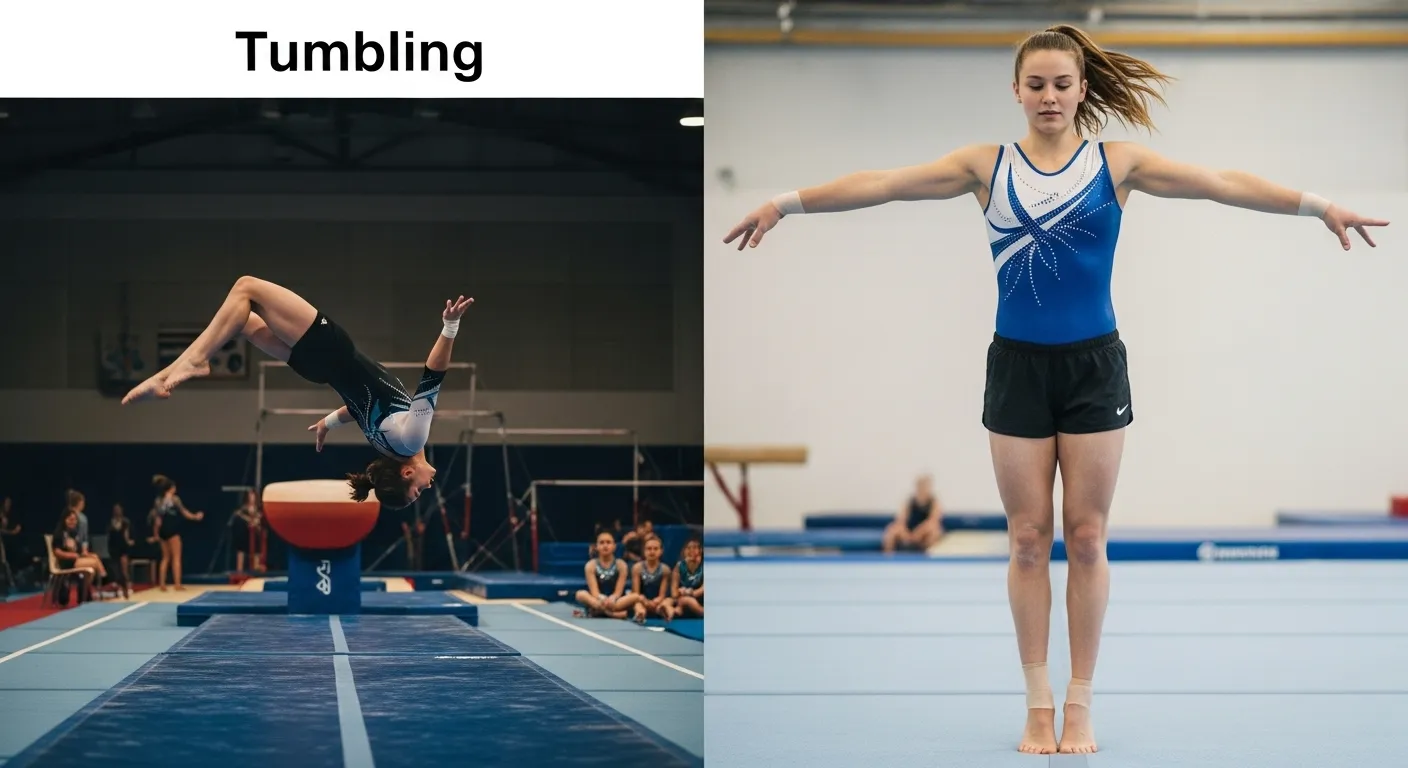
One day in a school sports hall, a coach asked two kids to show their skills. One child ran across the mat doing fast flips and handsprings.
The other child used bars, a beam, and floor moves with balance and grace. Many people watching asked the same question: Is this tumbling or gymnastics? This simple moment shows the difference between tumbling and gymnastics.
The difference between tumbling and gymnastics is important because people often use the words as if they mean the same thing. In truth, tumbling is a part of gymnastics, but it can also stand alone as its own sport skill.
Understanding the difference between tumbling and gymnastics helps students, coaches, and fans know what they are watching or learning. When people clearly know the difference between tumbling and gymnastics, they can choose the right training and sport path.
Key Difference Between the Both
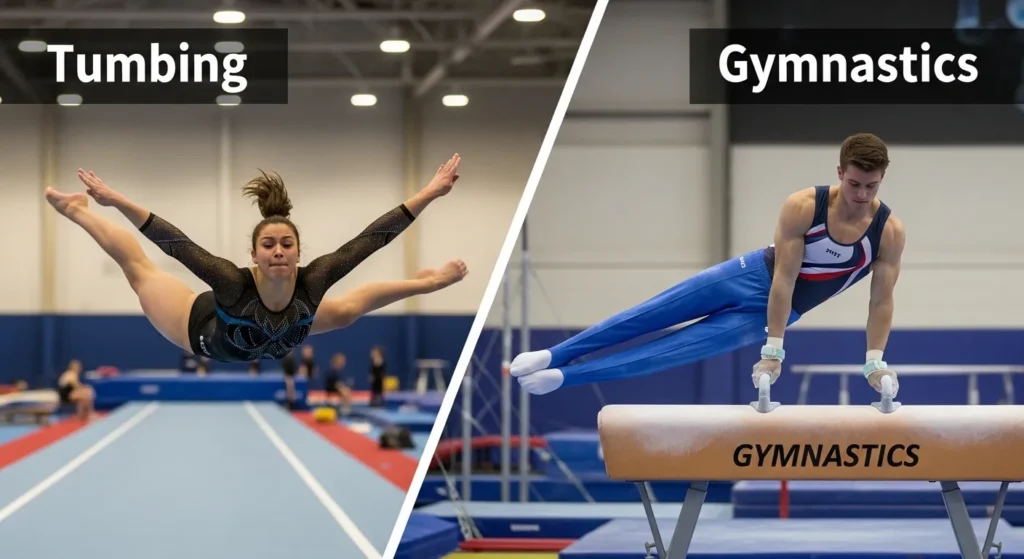
Tumbling mainly focuses on floor flips, rolls, and handsprings done in a line. Gymnastics is a larger sport that includes many events, such as bars, beam, vault, and floor routines.
Why It Is Important to Know the Difference
Knowing the difference between tumbling and gymnastics helps learners choose the right sport training. Coaches can also teach better when they know the focus of each skill. In society, sports schools, cheer teams, and fitness centers use both activities. Clear knowledge helps athletes stay safe and grow their skills step by step.
Pronunciation
| Word | US Pronunciation | UK Pronunciation |
|---|---|---|
| Tumbling | /ˈtʌm-blɪŋ/ | /ˈtʌm-blɪŋ/ |
| Gymnastics | /dʒɪmˈnæs-tɪks/ | /dʒɪmˈnæs-tɪks/ |
Before we explore more, let us look closely at the difference between tumbling and gymnastics in detail.
Difference Between Tumbling and Gymnastics
1. Scope of the Sport
Tumbling:
Tumbling is a single skill area. It focuses only on floor acrobatics.
Examples:
- A cheerleader doing back handsprings across a mat.
- An athlete performing flips in a straight line on a spring track.
Gymnastics:
Gymnastics is a full sport with many events.
Examples:
- A gymnast performing on the balance beam.
- A gymnast doing a routine on the uneven bars.
2. Equipment Used
Tumbling:
Mostly done on a soft mat or spring floor.
Examples:
- Practice on a long tumbling track.
- Training on a padded gym mat.
Gymnastics:
Uses many types of equipment.
Examples:
- Rings or parallel bars.
- Vault table or balance beam.
3. Skill Variety
Tumbling:
Skills are mostly flips, rolls, and handsprings.
Examples:
- Forward roll.
- Back tuck flip.
Gymnastics:
Skills include balance, strength, swings, and jumps.
Examples:
- Handstand on beam.
- Giant swing on bars.
4. Competition Events
Tumbling:
Competitions focus only on tumbling passes.
Examples:
- Running tumbling routines.
- Double flip sequences.
Gymnastics:
Competitions have several events.
Examples:
- Floor exercise routine.
- Vault performance.
5. Training Focus
Tumbling:
Focuses on speed, power, and flips.
Examples:
- Practicing fast back handsprings.
- Learning twisting flips.
Gymnastics:
Focuses on balance, strength, and flexibility.
Examples:
- Holding a handstand for balance.
- Stretch training for splits.
6. Common Use in Other Sports
Tumbling:
Often used in cheerleading and dance.
Examples:
- Cheerleaders doing tumbling passes.
- Dancers adding flips in shows.
Gymnastics:
Mostly practiced as its own Olympic sport.
Examples:
- Artistic gymnastics competitions.
- Gymnastics clubs training young athletes.
7. Performance Area
Tumbling:
Usually done in a straight line path.
Examples:
- Flip series across a mat lane.
- Tumbling track runs.
Gymnastics:
Done in different spaces and equipment.
Examples:
- Beam routines on a narrow bar.
- Ring routines hanging in the air.
8. Skill Progression
Tumbling:
Progress moves from simple rolls to flips.
Examples:
- Forward roll to round-off.
- Round-off to back handspring.
Gymnastics:
Progress includes many skill types.
Examples:
- Swing training on bars.
- Balance training on beam.
9. Team vs Individual Use
Tumbling:
Often used in team performances.
Examples:
- Cheer team routines.
- Group dance shows.
Gymnastics:
Mostly individual competition.
Examples:
- Solo floor routine.
- Individual vault score.
10. Olympic Presence
Tumbling:
Not always a main Olympic event.
Examples:
- Seen in cheer or acrobat shows.
- Used in training drills.
Gymnastics:
A major Olympic sport.
Examples:
- Artistic gymnastics events.
- Gymnastics medal competitions.
Nature and Behaviour of Both
Tumbling:
Tumbling is fast and energetic. It focuses on quick motion and strong jumps.
Gymnastics:
Gymnastics is balanced and artistic. It mixes power with control and grace.
Why People Are Confused
People are confused because tumbling is often part of gymnastics floor routines. Many gyms teach tumbling inside gymnastics classes. Because of this overlap, people think they are the same thing.
Difference and Similarity Table
| Feature | Tumbling | Gymnastics | Similarity |
|---|---|---|---|
| Main Focus | Floor flips | Full sport events | Both use body control |
| Equipment | Mat or track | Bars, beam, vault | Both need safety mats |
| Skills | Rolls and flips | Balance, swing, jump | Both need practice |
| Competition | Tumbling passes | Multiple events | Both judged in contests |
| Training | Speed and power | Strength and balance | Both need flexibility |
Which Is Better in What Situation?
Tumbling:
Tumbling is better when someone wants to learn fast flips and acrobatic skills. Cheerleaders, dancers, and stunt performers often choose tumbling. It is also good for beginners who want to build body control and confidence in flips.
Gymnastics:
Gymnastics is better for athletes who want a full sport with many skills. It builds strength, balance, and discipline. It is also the right choice for people who want to compete in international sports events.
Metaphors and Similes
- “Her ideas moved like tumbling waves of creativity.”
- “His training was as strong as a gymnastics routine on the rings.”
- “The project failed and plans went tumbling down.”
Connotative Meaning
Tumbling
Positive:
- “The kids had a tumbling day of fun in the gym.”
Negative:
- “The company profits came tumbling down.”
Neutral:
- “She practiced tumbling after school.”
Gymnastics
Positive:
- “Mental gymnastics helped him solve the puzzle.”
Negative:
- “The speech had too much political gymnastics.”
Neutral:
- “She joined the gymnastics club.”
Idioms or Proverbs
“Go through mental gymnastics”
Meaning: think very hard or in a complex way.
Example: “He did mental gymnastics to solve the math problem.”
“Come tumbling down”
Meaning: collapse suddenly.
Example: “The tower of blocks came tumbling down.”
Works in Literature (Mentioning the Keywords)
- Gymnastics for Youth – Sports Guide, 1998
- The Tumbling Team – Children’s Sports Story, 2005
Movies Related to the Topics
- Stick It – 2006, USA
- Full Out – 2015, USA
Frequently Asked Questions
1. Is tumbling part of gymnastics?
Yes. Tumbling is one skill area that is also used in gymnastics floor routines.
2. Do tumblers use equipment?
Mostly mats or spring floors.
3. Which sport is harder?
Gymnastics is usually harder because it includes many different events.
4. Can cheerleaders learn tumbling only?
Yes. Many cheerleaders train only in tumbling skills.
5. Are both good for fitness?
Yes. Both improve strength, flexibility, and body control.
How Both Are Useful for the Surroundings
Tumbling and gymnastics help build strong and active communities. Sports centers teach kids discipline and teamwork. These activities also keep people healthy and active.
Final Words for Both
Tumbling shows speed, energy, and fearless movement. Gymnastics shows balance, beauty, and strength. Both sports celebrate the power of the human body.
Conclusion
The difference between tumbling and gymnastics becomes clear when we look at their scope, skills, and training style. Tumbling focuses on fast floor acrobatics such as flips and handsprings.
Gymnastics is a wider sport that includes many events like beam, bars, vault, and floor routines. Both activities help people build strength, confidence, and flexibility. Although they share some skills, their goals and training paths are different.
By understanding the difference between tumbling and gymnastics, learners, coaches, and sports fans can better appreciate each activity. Whether someone chooses tumbling for quick acrobatics or gymnastics for full athletic training, both offer exciting ways to stay active and disciplined.

I am James Anderson an English author known for his insightful and engaging writing in contemporary literature. With a focus on [insert genre, e.g., fiction, non-fiction, or specific themes], he explores complex human emotions and social dynamics, blending thought-provoking ideas with accessible storytelling. His work has earned recognition for its clarity, depth, and ability to connect with a wide audience, establishing him as a respected voice in modern English literature.