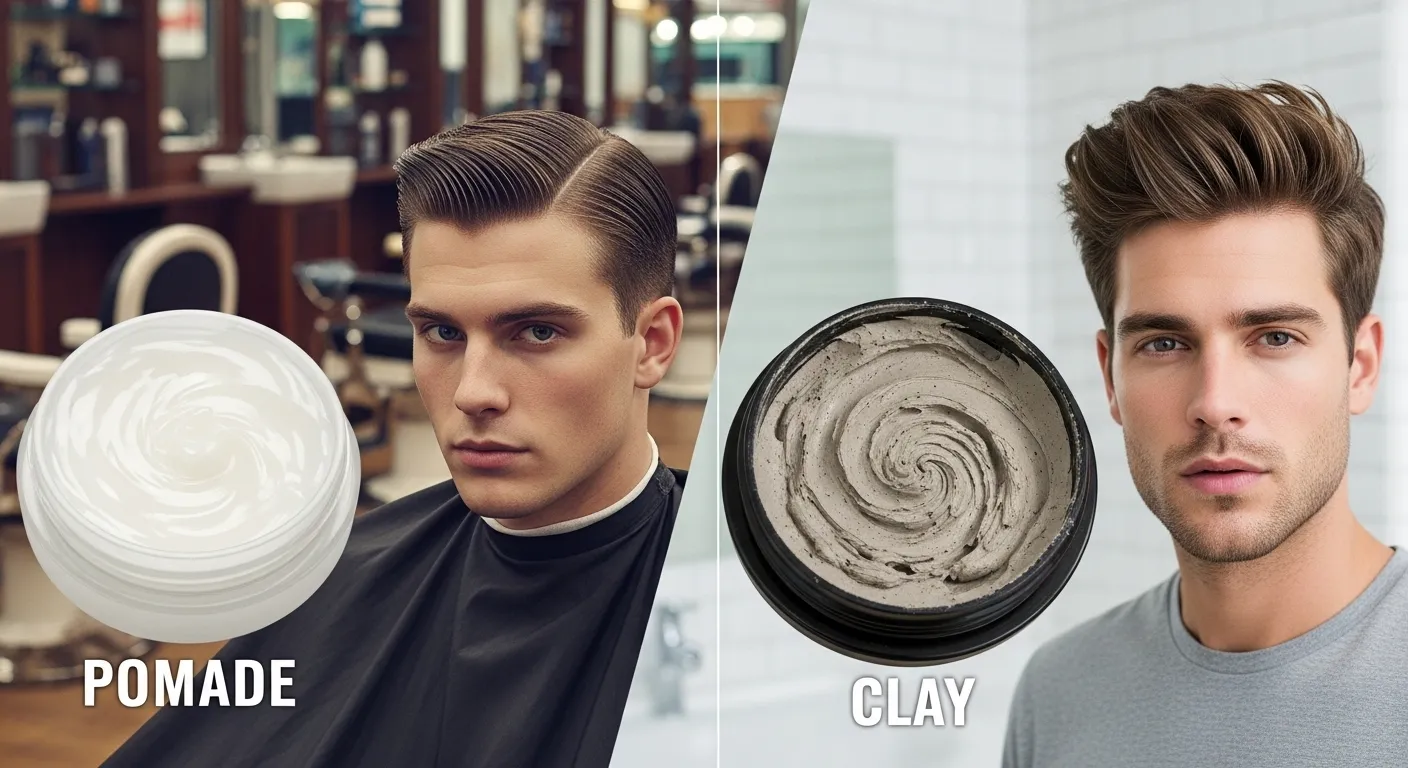
Ali stood in front of the mirror before a wedding, holding two small jars. One said pomade. The other said clay. He wanted a clean, stylish look but which one should he use?
The barber had mentioned both before, yet Ali never understood the real difference between pomade and clay.If you’ve ever faced the same confusion, you’re not alone. Both are popular hair styling products.
Both promise strong hold. But they create very different looks and feels. Understanding the difference between pomade and clay can save you from a bad hair day and maybe even a little embarrassment.
So, let’s break it down in simple words and help you choose the right product with confidence.
What Is Pomade?
Pomade
- US pronunciation: puh-MAHD
- UK pronunciation: puh-MAAD
Pomade is a creamy or gel-like hair product used to give shine and smooth control. It has been popular for decades and is often linked to classic hairstyles like slick backs and side parts.
Pomade gives your hair a polished, “red carpet” look. Think smooth, neat, and glossy like a freshly waxed car.
What Is Clay?
Clay
- US pronunciation: KLAY
- UK pronunciation: KLAY
Hair clay is a thicker, more textured styling product. It usually contains natural clay (like bentonite or kaolin) that adds volume and a matte finish.
Clay gives your hair a rough, natural, “I woke up like this” vibe. Instead of shine, it focuses on texture and movement.
Now that we understand both products, let’s clearly explore the difference between pomade and clay step by step.
Key Differences Between Pomade and Clay
Shine Level
Pomade: High to medium shine.
Clay: Matte or low shine.
Example:
- If you’re attending a formal dinner and want a glossy side-part, pomade is perfect.
- If you’re going for a casual coffee meet-up with a textured look, clay fits better.
Pomade shines like glass. Clay absorbs light like sand.
Hold Strength
Pomade: Medium to strong hold (flexible).
Clay: Medium to strong hold (firmer and drier).
Example:
- Pomade lets you restyle your hair during the day.
- Clay keeps your hairstyle locked in place for hours.
Clay acts like cement. Pomade acts like flexible glue.
Hair Finish
Pomade: Smooth and sleek.
Clay: Thick and textured.
Example:
- Slick-back hairstyles use pomade.
- Messy quiffs or crop cuts look better with clay.
If pomade is silk, clay is denim.
Best Hair Type
Pomade: Works well for thick, straight, or wavy hair.
Clay: Great for fine or thin hair needing volume.
Example:
- If your hair lies flat easily, clay can lift it.
- If your hair is heavy and hard to control, pomade smooths it.
Washability
Pomade: Oil-based pomades are harder to wash out; water-based are easier.
Clay: Usually washes out easily with shampoo.
Example:
- Traditional pomade may need two washes.
- Clay usually comes out in one rinse.
Volume Effect
Pomade: Adds weight, reduces volume.
Clay: Adds volume and thickness.
Example:
- Pomade is better for flat styles.
- Clay works well for spiky or lifted styles.
Feel in Hair
Pomade: Feels smooth and sometimes slightly greasy.
Clay: Feels dry and light.
Pomade feels like lotion in your hair. Clay feels more natural and airy.
Weather Performance
Pomade: Can lose shape in hot weather.
Clay: Handles heat better due to dry texture.
Example:
- In summer heat, clay holds stronger.
- Pomade may melt slightly if it’s oil-based.
Why Do People Get Confused Between Pomade and Clay?
The confusion happens because both products:
- Provide hold
- Are used for styling
- Come in similar containers
- Are applied with fingers
- Are marketed as “strong hold”
Also, modern brands blur the lines. Some pomades offer matte finish. Some clays offer slight shine. So the difference between pomade and clay isn’t always obvious by just reading the label.
It’s like choosing between tea and coffee both are drinks, but they give very different experiences.
Comparison Table
| Feature | Pomade | Clay | Similarities |
| Shine | High to medium | Matte/low | Both style hair |
| Hold | Flexible medium-strong | Firm medium-strong | Long-lasting hold |
| Texture | Smooth & sleek | Thick & textured | Applied by hand |
| Volume | Low volume | High volume | Suitable for men & women |
| Washability | Sometimes harder | Easier | Needs shampoo |
| Best For | Formal styles | Casual textured styles | Daily styling use |
Best Usage Situations
When to Use Pomade
Use pomade when:
- You want a classic gentleman look
- You’re attending weddings or formal events
- You prefer shine and smooth finish
- You want the ability to restyle during the day
Pomade is like wearing a tailored suit, sharp, elegant, and refined.
When to Use Clay
Use clay when:
- You want a modern textured hairstyle
- You have thin hair needing volume
- You prefer a natural, matte finish
- You live in hot climates
Clay is like wearing smart casual relaxed but stylish.
Metaphorical View: Pomade vs Clay
Pomade is the “polished executive.”
Clay is the “creative artist.”
Pomade says, “I mean business.”
Clay says, “I woke up cool.”
Both are good, it depends on your personality and occasion.
SEO-Optimized FAQs
1. What is the main difference between pomade and clay?
The main difference between pomade and clay is shine and texture. Pomade gives shine and smoothness, while clay gives a matte and textured finish.
2. Is clay better than pomade for thin hair?
Yes, clay is usually better for thin hair because it adds volume and thickness without weighing hair down.
3. Can I use pomade every day?
Yes, especially water-based pomade. However, oil-based pomade may require deeper washing to prevent buildup.
4. Does clay damage hair?
No, good-quality clay does not damage hair. Many contain natural ingredients that are safe for daily use.
5. Which lasts longer: pomade or clay?
Clay often lasts longer in hot weather because it has a dry texture. Pomade may soften under heat.
Conclusion
Choosing between pomade and clay doesn’t have to be confusing. The difference between pomade and clay mainly comes down to shine, texture, and style preference.
If you love sleek, shiny, and classic hairstyles, pomade is your go-to product. If you prefer natural, matte, and textured looks with extra volume, clay is the smarter choice.
Think about your hair type, the occasion, and the finish you want. There’s no “better” option, only the one that fits your style.So next time you stand in front of the mirror like Ali, you’ll know exactly which jar to pick. And that confidence? That’s the real finishing touch.