A few months ago, a man named Ahmed visited a clinic because he felt sharp pain during bowel movements. At first, he thought it was just hemorrhoids, something many adults experience.
However, after a medical examination, the doctor explained that it was actually an anal fissure, a small tear in the lining of the anus. This situation highlights the difference between hemorrhoids and fissures, a topic many people misunderstand.
Hemorrhoids and fissures both affect the anal area and can cause pain, discomfort, and bleeding. Because their symptoms appear similar, people often confuse them. Understanding the difference between hemorrhoids and fissures helps individuals choose the right treatment and avoid complications.
In medical discussions and everyday health awareness, knowing the difference between hemorrhoids and fissures can prevent unnecessary fear and promote early diagnosis. For both learners and healthcare professionals, the difference between hemorrhoids and fissures is an important concept in digestive health.
Pronunciation of the Words
Hemorrhoids
- US: /ˈhɛmərɔɪdz/ (HEM-uh-roydz)
- UK: /ˈhemərɔɪdz/
Fissures
- US: /ˈfɪʃərz/ (FISH-erz)
- UK: /ˈfɪʃəz/
Understanding these medical conditions requires a deeper look into how they differ in cause, symptoms, and treatment. Let’s explore the difference between hemorrhoids and fissures in detail.
Difference Between Hemorrhoids and Fissures
1. Basic Definition
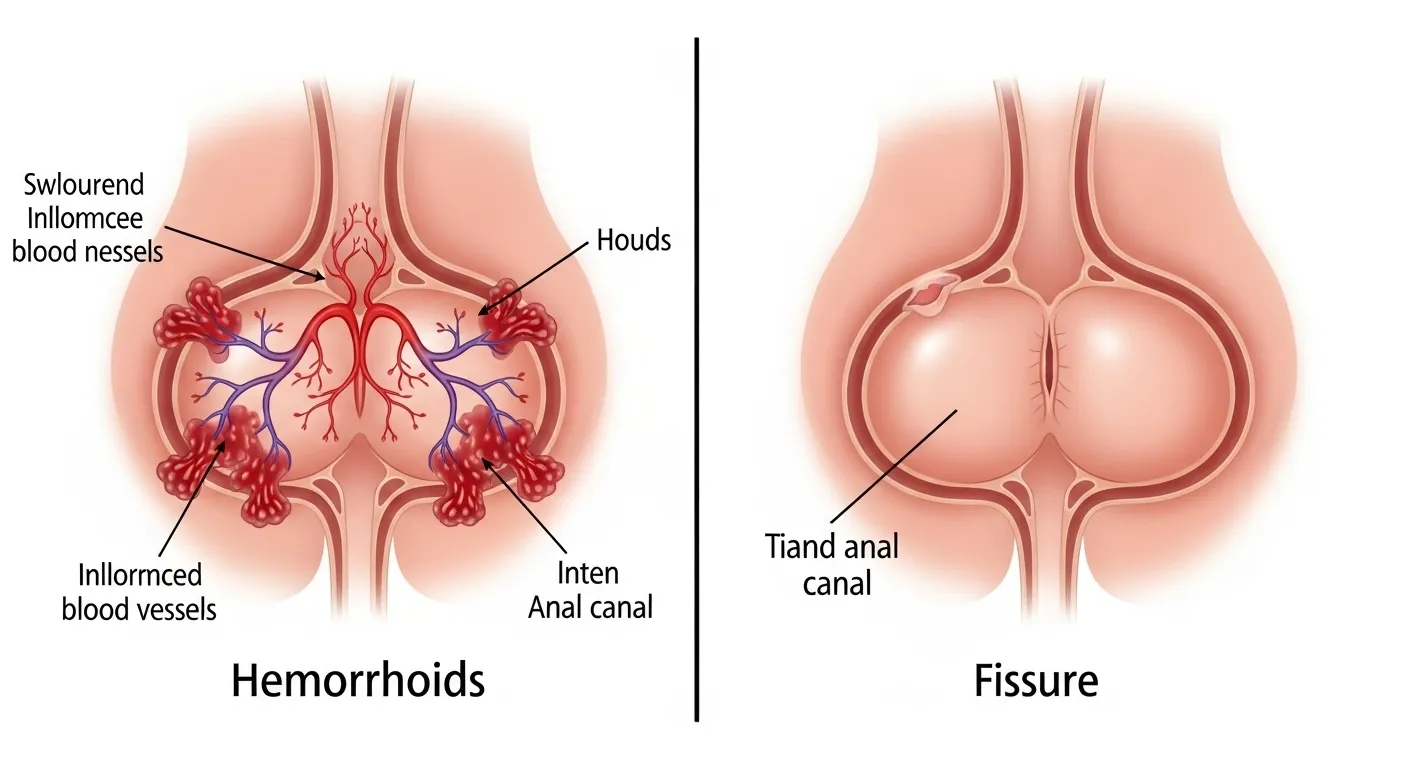
Hemorrhoids are swollen veins in the rectum or anus. They occur when blood vessels become enlarged due to pressure.
Example 1: A person who sits for long hours may develop hemorrhoids.
Example 2: Pregnant people sometimes experience hemorrhoids due to increased pelvic pressure.
Fissures, on the other hand, are small tears in the lining of the anus.
Example 1: Passing hard stool may cause an anal fissure.
Example 2: Severe constipation can lead to a painful fissure.
2. Cause
Hemorrhoids usually occur due to pressure on rectal veins.
Example 1: Chronic constipation.
Example 2: Long sitting during office work.
Fissures are caused by injury or tearing of the anal skin.
Example 1: Passing a large stool.
Example 2: Anal trauma.
3. Type of Pain
Hemorrhoids usually cause mild discomfort or itching.
Example 1: Burning sensation while sitting.
Example 2: Itching around the anus.
Fissures cause sharp and severe pain during bowel movements.
Example 1: Pain lasting several minutes after stool.
Example 2: A stabbing pain during defecation.
4. Bleeding Pattern
Hemorrhoids often cause painless bleeding.
Example 1: Bright red blood on toilet paper.
Example 2: Blood drops in the toilet bowl.
Fissures cause painful bleeding.
Example 1: Blood with severe pain during stool.
Example 2: Small streaks of blood with sharp discomfort.
5. Physical Appearance
Hemorrhoids may appear as lumps or swollen tissue around the anus.
Example 1: External swelling.
Example 2: Protruding veins during bowel movement.
Fissures appear as small cuts or cracks in the skin.
Example 1: A thin tear in the anal lining.
Example 2: Red inflamed crack near the anus.
6. Duration
Hemorrhoids can be temporary or chronic.
Example 1: Temporary hemorrhoids from pregnancy.
Example 2: Chronic hemorrhoids due to lifestyle habits.
Fissures usually heal within weeks but may become chronic.
Example 1: Acute fissure healing in 2 weeks.
Example 2: Chronic fissure lasting several months.
7. Treatment Approach
Hemorrhoids often respond to lifestyle changes and medications.
Example 1: Fiber-rich diet.
Example 2: Warm sitz baths.
Fissures require healing of the tear.
Example 1: Stool softeners.
Example 2: Healing ointments.
8. Risk Groups
Hemorrhoids commonly affect adults and pregnant people.
Example 1: Office workers sitting long hours.
Example 2: Older adults with constipation.
Fissures can affect anyone, even children.
Example 1: Babies with constipation.
Example 2: Young adults with hard stool.
9. Medical Complications
Hemorrhoids may lead to thrombosis.
Example 1: Clotted hemorrhoid causing swelling.
Example 2: Severe external hemorrhoids.
Fissures may lead to infection or chronic tears.
Example 1: Recurrent fissures.
Example 2: Anal muscle spasm.
10. Surgical Need
Hemorrhoids sometimes require surgery.
Example 1: Hemorrhoidectomy.
Example 2: Rubber band ligation.
Fissures rarely need surgery but may require it in severe cases.
Example 1: Lateral internal sphincterotomy.
Example 2: Surgical repair of chronic fissure.
Nature and Behaviour of Both
Hemorrhoids are mainly vascular problems involving swollen veins. They often develop gradually and may fluctuate depending on diet, lifestyle, and bowel habits.
Fissures are injuries to the anal lining. They behave like wounds that require healing and can cause intense pain during bowel movements.
Why People Are Confused About Their Use
People confuse these terms because both conditions occur in the same area of the body and share symptoms like pain and bleeding.
Additionally, many people use the word “piles” broadly for any anal discomfort, which adds to the misunderstanding.
Table: Difference and Similarity
| Aspect | Hemorrhoids | Fissures | Similarity |
| Definition | Swollen veins | Tear in anal lining | Both affect anus |
| Pain | Mild discomfort | Sharp severe pain | Pain during bowel movement |
| Cause | Pressure on veins | Tear from hard stool | Often linked to constipation |
| Appearance | Swelling or lump | Small cut | Visible in anal area |
| Healing | May persist | Usually heals faster | Both need treatment |
Which Is Better in What Situation?
Hemorrhoids Situation
Hemorrhoids are generally less painful and often manageable with diet changes and medication.
For people who experience mild bleeding or swelling without intense pain, hemorrhoids may be easier to handle medically. Many cases improve with increased fiber intake and proper hydration.
Fissures Situation
Fissures are more painful but often heal completely once the tear closes. In cases where pain during bowel movement is severe but temporary, a fissure might be the condition rather than hemorrhoids. Proper treatment helps healing faster.
Use in Metaphors and Similes
Though medical terms are rarely used metaphorically, they may appear figuratively in discussions about discomfort or irritation.
Examples:
- “The issue became a hemorrhoid for the company—constantly painful and difficult to ignore.”
- “The disagreement created a fissure in their friendship.”
Connotative Meaning
Hemorrhoids
Connotation: Negative
Example:
- “The constant problem became a hemorrhoid in the project.”
Fissures
Connotation: Neutral to Negative
Example:
- “Political fissures divided the community.”
Idioms or Expressions Related
There are no direct idioms, but similar expressions exist.
Example:
- “A pain in the neck” means a troublesome problem.
Sentence:
- The paperwork became a pain in the neck for the manager.
Works in Literature Mentioning the Terms
- Gray’s Anatomy Medical textbook by Henry Gray (1858)
- The Body: A Guide for Occupants Non-fiction by Bill Bryson (2019)
Movies Related to the Topic
Few movies are directly about these conditions, but medical documentaries sometimes mention them.
- The Human Body (2001, UK)
- Inside the Human Body (2011, UK)
Frequently Asked Questions
1. What is the main difference between hemorrhoids and fissures?
Hemorrhoids are swollen veins, while fissures are tears in the anal lining.
2. Which condition is more painful?
Fissures usually cause more severe pain than hemorrhoids.
3. Do both cause bleeding?
Yes, both conditions may cause bleeding during bowel movements.
4. Can diet help prevent them?
Yes, high-fiber diets and hydration reduce the risk.
5. When should someone see a doctor?
If pain or bleeding continues for more than a week.
How Both Are Useful for Surroundings
Understanding these conditions helps people maintain digestive health and avoid spreading misinformation.
Medical awareness encourages healthier lifestyles, early treatment, and improved public health knowledge.
Final Words for Both
Hemorrhoids and fissures may appear similar but represent different medical issues. Recognizing their differences ensures correct treatment and better health management.
Conclusion
The difference between hemorrhoids and fissures lies mainly in their cause, symptoms, and physical nature. Hemorrhoids are swollen veins caused by pressure in the rectal area, while fissures are small tears in the anal lining often caused by hard stools.
Although both conditions share symptoms like pain and bleeding, their treatments and healing processes differ. Understanding the difference between hemorrhoids and fissures helps people respond to symptoms correctly and seek appropriate medical advice.
For learners, patients, and healthcare professionals, this knowledge promotes better digestive health awareness. Ultimately, recognizing these differences can reduce confusion and help individuals manage their health more effectively.

I am Stephen King is a spiritual writer and digital creator dedicated to exploring the deeper meaning behind numbers, synchronicity, and divine guidance. Through his platform, spiritualdigits.com he shares insights on angel numbers, spiritual symbolism, and personal awakening to help readers align with their higher purpose. His work blends intuition, research, and practical wisdom to make spiritual concepts clear, accessible, and transformative.