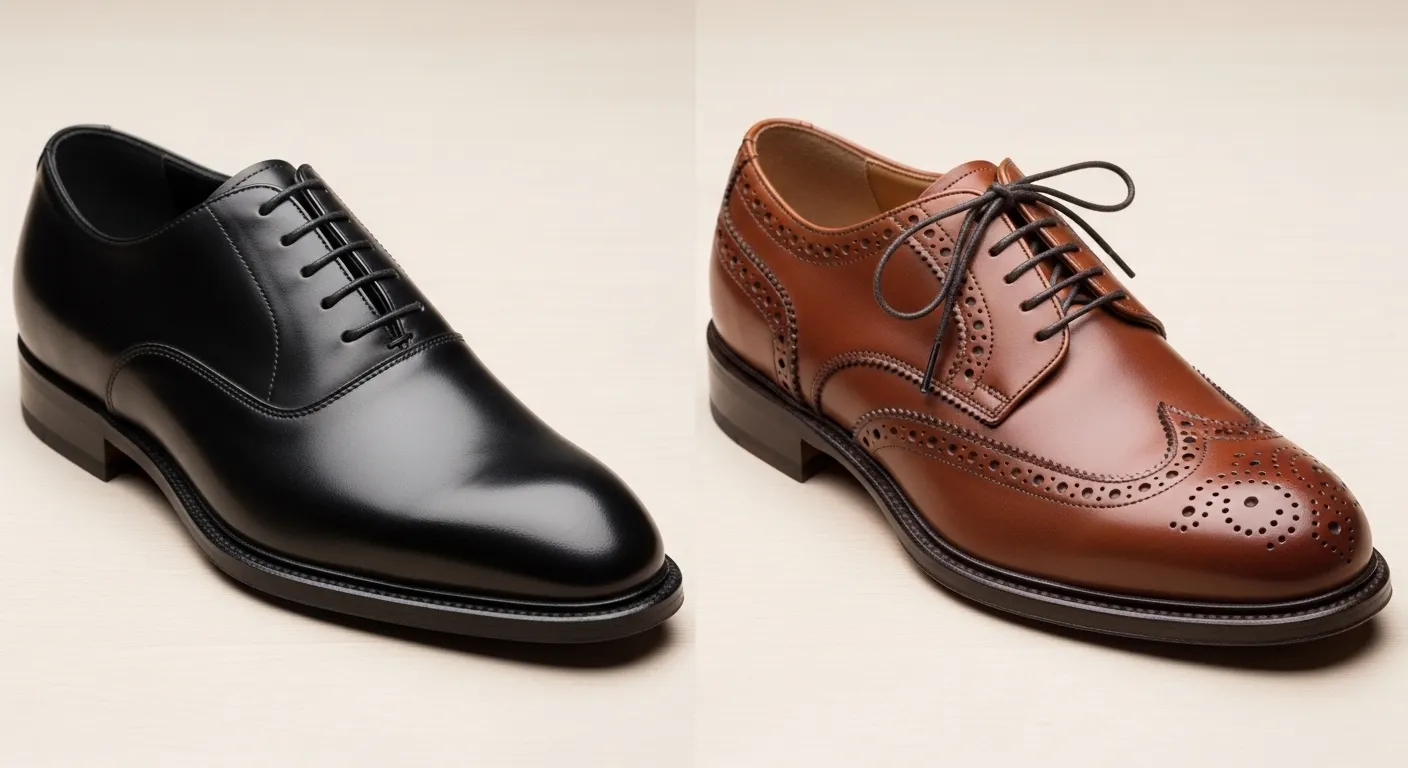
A few months ago, a young professional walked into a shoe store looking for a formal pair for an important job interview. The salesman showed him two elegant styles: Oxfords and Brogues.
At first glance, both looked formal and stylish. However, the salesman explained that there was a clear difference between Oxfords and Brogues.Oxfords are known for their closed lacing system, giving them a sleek and formal appearance.
Brogues, on the other hand, are recognized by their decorative perforations and patterns on the leather. Many people searching for formal footwear often wonder about the difference between Oxfords and Brogues, because both styles are popular in professional settings.
Understanding the difference between Oxfords and Brogues helps people choose the right shoe for the right occasion. Whether for a wedding, office meeting, or casual event, knowing the difference between Oxfords and Brogues can improve both style and confidence.
Key Difference Between the Both
The main difference lies in design and decoration.
- Oxfords are plain, sleek, and more formal.
- Brogues feature decorative perforations and patterns, making them slightly less formal and more stylish.
Why Is Their Difference Necessary to Know for Learners and Experts?
Understanding the difference is important for both fashion learners and professionals. In modern society, clothing and footwear communicate personality, professionalism, and style awareness.
For learners, knowing the difference between Oxfords and Brogues helps them build a strong sense of fashion basics. For professionals such as stylists, fashion bloggers, and designers, this knowledge helps them recommend appropriate footwear for different occasions. In workplaces, wearing the right shoes with a suit can create a strong first impression.
Therefore, recognizing the difference is not just about fashionit reflects cultural awareness, professionalism, and social etiquette.
Pronunciation
| Word | US Pronunciation | UK Pronunciation |
| Oxfords | /ˈɑːks.fərdz/ | /ˈɒks.fədz/ |
| Brogues | /broʊɡz/ | /brəʊɡz/ |
Linking Hook
Now that we understand their meanings and importance, let us explore the detailed difference between Oxfords and Brogues through practical points and examples.
Difference Between Oxfords and Brogues
1. Lacing Style
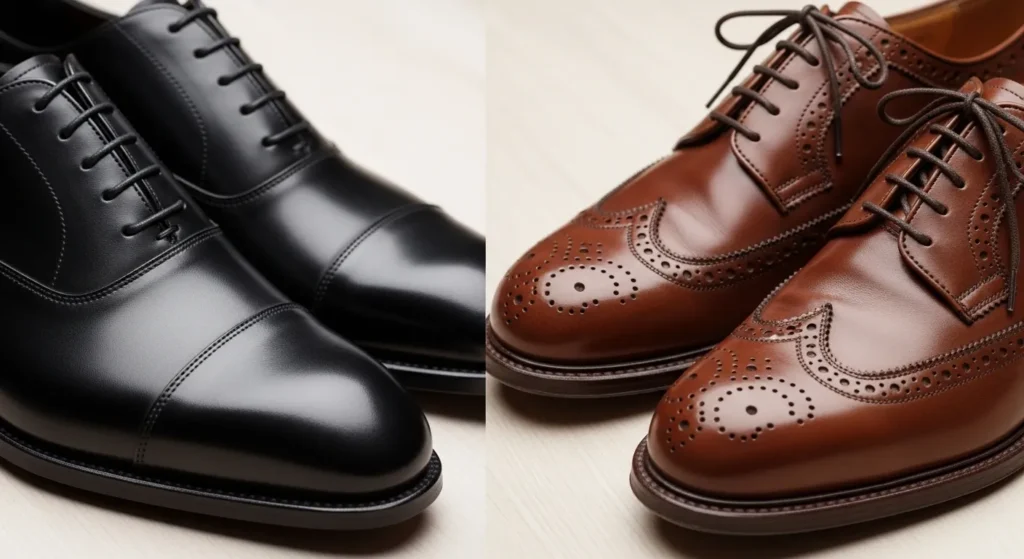
Oxfords use a closed lacing system, while Brogues may have either open or closed lacing.
Examples:
- A black Oxford worn with a tuxedo.
- A formal Oxford used at a business meeting.
Examples for Brogues:
- A brown brogue worn with a tweed suit.
- A brogue paired with smart casual trousers.
2. Decoration
Oxfords are usually plain with minimal decoration. Brogues have decorative holes.
Examples:
- Plain Oxford for a wedding suit.
- Patent Oxford for a formal dinner.
Examples for Brogues:
- Wingtip brogues with perforations.
- Semi-brogues with decorative patterns.
3. Formality
Oxfords are more formal than brogues.
Examples:
- Oxford shoes for corporate meetings.
- Oxford shoes for black-tie events.
Examples for Brogues:
- Brogues for casual office wear.
- Brogues for weekend events.
4. Design Pattern
Oxfords have a clean design. Brogues show patterned perforations.
Examples:
- Smooth leather Oxford shoes.
- Minimalist Oxford design.
Examples for Brogues:
- Wingtip brogue design.
- Full brogue with decorative lines.
5. Origin
Oxfords originated in formal academic fashion, while brogues started as outdoor shoes in Scotland and Ireland.
Examples:
- Oxford worn by university students.
- Oxford used in formal ceremonies.
Examples for Brogues:
- Brogues used by farmers in wet areas.
- Brogues worn in countryside fashion.
6. Leather Style
Oxfords often use smooth leather. Brogues may use textured leather.
Examples:
- Polished leather Oxford.
- Patent leather Oxford.
Examples for Brogues:
- Grain leather brogue.
- Suede brogue.
7. Occasion
Oxfords are best for formal events. Brogues suit semi-formal occasions.
Examples:
- Oxford for a wedding ceremony.
- Oxford for an executive interview.
Examples for Brogues:
- Brogues for office casual day.
- Brogues for social gatherings.
8. Appearance
Oxfords appear sleek and elegant. Brogues look stylish and decorative.
Examples:
- Elegant black Oxford with a tuxedo.
- Classic Oxford with a suit.
Examples for Brogues:
- Fashionable brogues with jeans.
- Decorative brogues with chinos.
9. Variety
Oxfords have fewer style variations. Brogues have many types.
Examples:
- Plain toe Oxford.
- Cap-toe Oxford.
Examples for Brogues:
- Wingtip brogue.
- Longwing brogue.
10. Popular Usage
Oxfords dominate formal fashion. Brogues dominate smart-casual fashion.
Examples:
- Oxford worn by executives.
- Oxford used in formal uniforms.
Examples for Brogues:
- Brogues worn by creative professionals.
- Brogues popular in street fashion.
Nature and Behaviour of Both
Oxfords:
They represent elegance, simplicity, and professionalism. Their clean design reflects a classic and disciplined fashion style.
Brogues:
They show creativity and decorative craftsmanship. Brogues often represent personality and stylish individuality.
Why People Are Confused About Their Use
People often confuse Oxfords and Brogues because both look similar and are worn with formal clothing.
Some brogues also have closed lacing, which makes them resemble Oxfords. Additionally, modern fashion blends styles, making the distinction less obvious.
Table Showing Difference and Similarity
| Feature | Oxfords | Brogues |
| Lacing | Closed | Open or closed |
| Decoration | Plain | Decorative perforations |
| Formality | Highly formal | Semi-formal |
| Design | Clean and simple | Patterned |
| Origin | Formal academic style | Outdoor footwear |
| Similarity | Both are leather dress shoes | Both used in formal fashion |
Which Is Better in What Situation?
Oxfords:
Oxfords are best for highly formal situations. They are ideal for weddings, corporate meetings, interviews, and black-tie events.
Their clean design complements suits and tuxedos perfectly. Because they look professional and elegant, they are often the first choice for business environments.
Brogues:
Brogues are better for semi-formal and stylish occasions. They can be worn with business casual outfits, smart trousers, and even jeans.
Their decorative design adds personality to an outfit. For social gatherings, creative workplaces, and casual formal events, brogues are often the better option.
Metaphors and Similes
- “His style was as polished as a pair of Oxfords.”
- “Her fashion sense was decorated like elegant brogues.”
Connotative Meaning
Oxfords (Positive/Neutral)
- Elegance
- Professionalism
Example: “The CEO walked confidently in classic Oxfords.”
Brogues (Positive/Neutral)
- Creativity
- Stylish personality
Example: “His brogues reflected his artistic style.”
Idioms or Proverbs (Related Contextual Expressions)
- “Put your best foot forward.”
Example: He wore his best Oxfords to put his best foot forward in the interview. - “Walk the walk.”
Example: Wearing stylish brogues, he walked the walk of confidence.
Works in Literature Featuring the Keywords
- The Picture of Dorian Gray Oscar Wilde (Novel, 1890) – mentions fashionable Oxford shoes.
- The Great Gatsby F. Scott Fitzgerald (Novel, 1925) – references stylish brogues in elite fashion.
Movies Featuring the Keywords
- Kingsman: The Secret Service 2014 (UK/USA) – features classic Oxford dress shoes in gentleman fashion.
- The Great Gatsby 2013 (USA) – characters wear elegant brogues and formal shoes.
Frequently Asked Questions
1. Are brogues more casual than Oxfords?
Yes, brogues are generally less formal because of their decorative design.
2. Can brogues be worn with suits?
Yes, especially semi-brogues or darker colors.
3. Are Oxfords the most formal shoes?
Yes, especially plain black Oxfords.
4. Do brogues always have holes?
Yes, the perforations are the defining feature.
5. Can Oxfords have brogue patterns?
Sometimes, but they are usually considered brogues if decorative perforations exist.
How Both Are Useful for Surroundings
Both types of shoes contribute to professional appearance and social etiquette. In workplaces, formal footwear promotes a sense of discipline and professionalism.
In social settings, stylish shoes enhance personal expression and cultural fashion trends.
Final Words for Both
Oxfords symbolize timeless elegance, while brogues represent stylish craftsmanship. Each style has its own role in fashion and social expression.
Conclusion
Understanding the difference between Oxfords and Brogues is essential for anyone interested in fashion and professional dressing.
While Oxfords are known for their clean design and high formality, brogues stand out because of their decorative perforations and stylish character. Both shoes have historical importance and continue to influence modern fashion.
By recognizing their differences, people can choose the right footwear for every occasion. Whether attending a formal event or a casual gathering, selecting between Oxfords and brogues allows individuals to express both professionalism and personal style. In the end, both styles remain timeless classics in men’s footwear.

I am David, a passionate blog writer who loves creating informative and easy-to-understand content. I write articles that explain the difference between common topics, language concepts, and everyday knowledge. My goal is to help readers learn new things in a simple and clear way. Through research and practical examples, I try to provide useful and reliable information for students, learners, and curious readers around the world.